
Where Do Blue Whales Go When They Leave Dana Point? Migration Patterns Explained
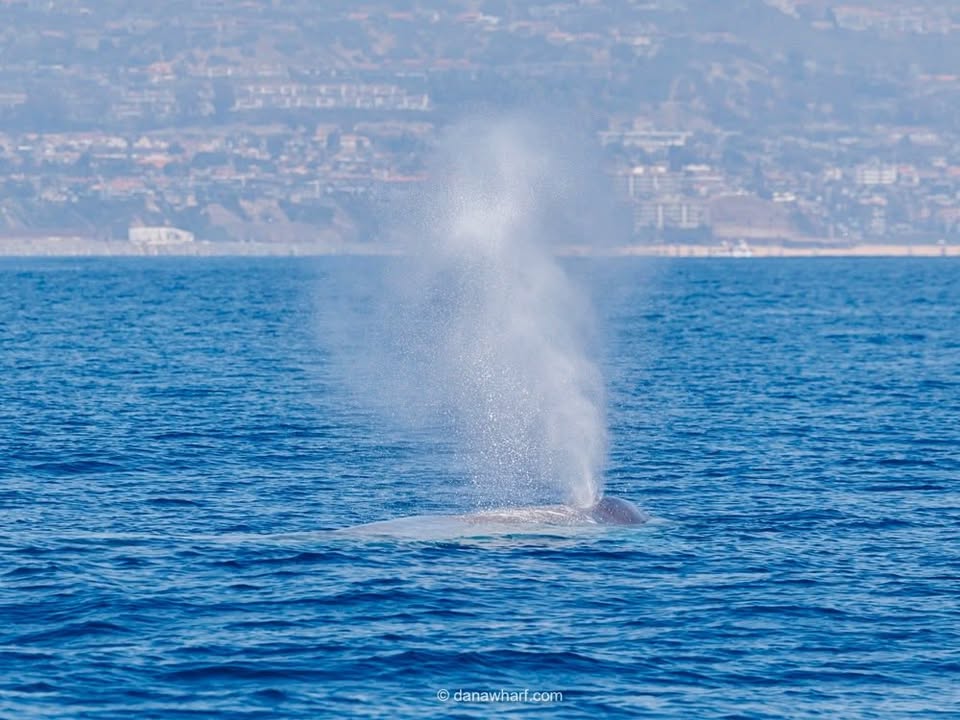
One of the questions guests ask most often once a blue whale is alongside the boat is some version of: where does this thing go when summer ends? The whale we’re looking at off Dana Point right now does not stay here. Blue whales move. The ones that show up in the Southern California Bight in July are doing something specific, and they are heading somewhere specific when they leave.
This is what we know about the Eastern North Pacific blue whale population, from the perspective of people who watch these animals every summer and who have been tracking their patterns through decades of conversation with the marine biologists who study them.
The Population We See
The blue whales that feed off Dana Point belong to the Eastern North Pacific population, sometimes called the California-Oregon-Washington stock. NOAA’s most recent stock assessment estimates this population at roughly 1,898 animals, which makes it one of the larger blue whale populations remaining in the world.
This is a small fraction of what existed before commercial whaling. Pre-whaling blue whale numbers globally are estimated as high as 350,000. The Eastern North Pacific population is a recovery story, slow but real, after the species was listed as Endangered by the IUCN.
Where They Come From
Blue whales we see from Dana Point arrive from feeding areas farther south earlier in the spring, or from migratory positions offshore that we don’t fully understand yet. Satellite tagging studies done by Oregon State University and NOAA’s Southwest Fisheries Science Center over the last two decades have given us a much clearer picture than we used to have.
The general pattern: blue whales spend the warm months (roughly May through October) feeding along the California coast and the wider Southern California Bight. They concentrate where krill is concentrated, which means they move between hotspots — the Channel Islands, the waters off Dana Point and San Diego, the Monterey Bay, and the broader offshore banks.
Where They Go in Winter
This is where the story gets interesting and where the science has changed in the last 15 years.
The older theory held that Eastern North Pacific blue whales migrated south to breed and calve in tropical waters near the Costa Rica Dome, an upwelling area in the Eastern Tropical Pacific roughly 300 miles off Central America. That model still holds for a portion of the population. Satellite tags consistently track some individuals to the Costa Rica Dome between November and February.
The newer picture is more complex. Tagging data suggests not all Eastern North Pacific blue whales make the full migration every year. Some appear to stay in Mexican waters off Baja California through winter, feeding opportunistically rather than fasting through a long migration. Others spend the winter in the Gulf of California. The population behaves less like a single unified migration and more like a flexible group that responds to where the food is.
The Costa Rica Dome appears to be the main calving area for those whales that do head south. Mother-calf pairs have been documented there consistently. The dome’s persistent upwelling keeps zooplankton abundant year-round, which is part of why this area matters.
How Far They Go
The migration from Southern California to the Costa Rica Dome is roughly 3,000 miles one way, or 6,000 miles round trip for the whales that make the full journey. That is shorter than the gray whale migration we see off Dana Point in winter (which is closer to 10,000 to 12,000 miles round trip) but still one of the longer animal migrations on Earth.
For context, our season guide covers what you can see in each part of the year, including the gray whales that pass our harbor while the blue whales are away.
What They Are Doing While They’re Here
Feeding. Almost entirely feeding. A blue whale needs roughly 4 tons of krill per day during the summer feeding season to put on the energy reserves that fuel the long migration and the lean winter months. They lunge-feed at the surface, gulping enormous mouthfuls of water that they filter through baleen plates.
The krill they target along the California coast are mostly two species: Thysanoessa spinifera and Euphausia pacifica. Both swarm in dense patches in cold upwelled water. The 2017 NOAA studies on California Current blue whale feeding ecology document a pronounced peak in surface lunge-feeding between mid-June and mid-August, exactly when we see the most dramatic feeding action from our boats out of Dana Point.
We wrote about this feeding behavior up close in our 4-ton diet post.
How We Know Individual Whales
Blue whales can be identified individually by the pigmentation pattern on their backs and sides, which is unique to each animal. Researchers and naturalists maintain photo-ID catalogs that have tracked individual blue whales for decades. Some whales seen off Dana Point in recent summers have been documented in earlier years off Monterey, off Baja, and off the Costa Rica Dome.
Long-term photo-ID work has confirmed individual fidelity to feeding areas (the same whales return to the same coastal zones in many years) while also showing that individuals will shift their feeding range based on krill availability.
Why They Pick the Southern California Bight
The Bight, including the waters off Dana Point, sits at the southern end of the California Current upwelling system. Cold water rises from depth, nutrients bloom, krill explode, and the whales follow the food. The combination of bathymetry, current, and seasonal upwelling makes this one of the most productive blue whale feeding zones in the world during summer.
If you have read our where to see blue whales guide, this is the science behind why Dana Point is one of the answers.
What This Means for When You See Them
The practical implications for whale watching:
- Late spring (May): Earliest blue whale arrivals. Numbers building. The water is warming and the krill blooms are starting.
- Summer (June through August): Peak feeding. Multiple blue whales per trip on many days. Our July guide covers the strongest single month.
- Early fall (September and October): Numbers begin to taper as some whales start moving south. Sightings remain strong.
- Winter (November through April): Most blue whales have left for southern wintering areas. The harbor shifts to gray whale migration season; see our month-by-month guide for what’s around when.
Are They Coming Back?
Yes. The Eastern North Pacific blue whale population is one of the success stories of marine mammal conservation. The whaling moratoriums of the 20th century, combined with the species’ protection under the Marine Mammal Protection Act and the Endangered Species Act, have allowed this population to grow steadily for decades.
Threats remain: vessel strikes along the migration corridor, entanglement in fishing gear, and ocean noise from shipping. NOAA’s voluntary speed reduction zones in the Santa Barbara Channel are aimed specifically at reducing blue whale ship strikes. But the overall trajectory is positive.
For more on conservation status, our post on whether blue whales are still endangered walks through the IUCN classification and what it actually means.
What You Can Do
If you want to see this migration up close, the Dana Point summer is the highest-leverage window. The animals come close to shore, the captains know exactly where to look, and the science we know about where they’re heading next gives every sighting more context. Booking is at our whale watching page, daily trip recaps are on the fish count page, and the FAQ covers other questions.
The next blue whale that surfaces 50 yards off your bow has likely been to Costa Rica and back. Worth thinking about when you watch it breathe.