
Whale Watching in Dana Point in July: A Local’s Guide to Peak Blue Whale Season
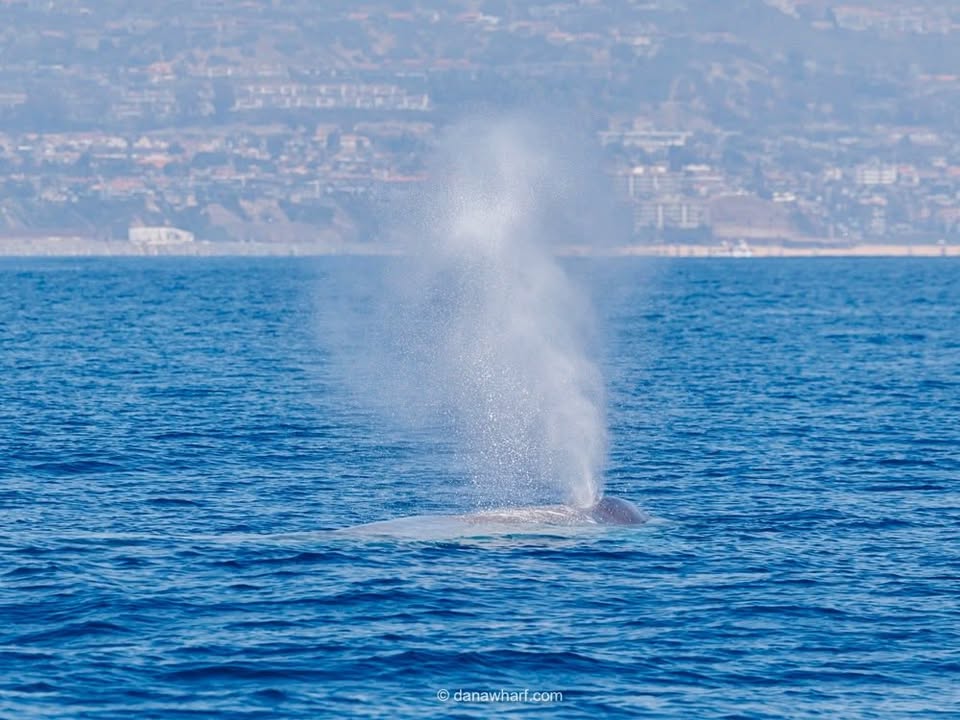
If you only get one shot at whale watching in Southern California this year, do it in July. We say that as people who run these boats every single day, in every season, year-round. July is the month when the biggest animal that has ever lived on Earth shows up a few miles off the Dana Point coast and stays for weeks.
Blue whales. The 80 to 100 foot kind. Heart the size of a small car. Heading along the Southern California coast in numbers you do not see anywhere else in the world. By the first week of July, we are typically running multiple confirmed blue whale trips a day on the Dana Pride and the Clemente, and the sightings stretch from inside the kelp line out to the 14 mile bank.
This is a local’s guide to what July whale watching out of Dana Point actually looks like. What species are showing, what the water is doing, what time of day works best, and what to wear when the sun is high and the wind is up. If you have read our June guide, this picks up where it leaves off.
Why July Is the Peak Month for Blue Whales
Blue whales follow krill. Specifically, they follow Thysanoessa spinifera and Euphausia pacifica, two species of cold-water krill that swarm in dense patches along the California Current. From late spring through summer, upwelling along the coast pushes nutrient-rich cold water to the surface, the krill explode, and the blue whales follow them right into our backyard.
That feeding window peaks in July. By the time we get to the second week of the month, we are seeing the largest concentration of blue whales of the year along the Southern California Bight. The Channel Islands National Marine Sanctuary and the waters off Dana Point sit inside one of the most reliable blue whale feeding grounds on the planet during summer.
The science backs up what our captains see from the wheel. A 2017 NOAA study tracking blue whale feeding patterns off California documented a sharp peak in surface lunge-feeding activity between mid-June and mid-August, with the densest aggregations sitting on the underwater banks 6 to 12 miles offshore. Those are the exact spots we run to.
What You Will Actually See on a July Tour
July is busy out there. On a typical 2.5 hour trip in early July we are looking at:
- Blue whales. The headliners. We routinely see one to four blue whales on a single trip during peak weeks. They lunge-feed at the surface, then dive for 8 to 15 minutes, then come back up. Patient boats get rewarded.
- Fin whales. The second largest animal on Earth. We see these year-round but July is one of the strongest months. Sleeker, faster, often traveling in pairs.
- Minke whales. Smaller, shyer, harder to spot. When they show up on a July trip it is a treat.
- Common dolphins. By the hundreds. Sometimes by the thousands. A megapod day in July is one of the best things you can witness on the water, and our captains know how to read the bird activity that signals one is forming.
- Bottlenose dolphins. The bigger inshore dolphins. Almost always working the kelp line within a mile of the harbor mouth.
- Mola mola (sunfish). Big, weird, prehistoric-looking. They love warm summer surface water and we see them more in July than any other month.
- Loggerhead sea turtles and ocean sunfish sunbathing on the surface.
If you want a deeper walk-through of the supporting cast, our season-by-season marine life guide covers what shows up when.
What the Water Looks Like in July
The Pacific in July off Dana Point is, by California standards, warm and friendly. Surface temps run 64 to 70 degrees most of the month. The morning gray cloud cover (June gloom holding over) usually burns off by 10 a.m. and you get glassy mornings followed by an afternoon westerly breeze that puts a small chop on the water by 2 p.m.
Swell is typically small in July, a couple feet of long-period south swell from the Southern Hemisphere winter mixing with a small northwest windswell. Translation: it is the smoothest ride of the year out there. If you are worried about seasickness, July is the easiest month to take your first trip.
Best Time of Day for July Whale Watching
We get this question constantly. Our honest answer for July: the morning trips are the sweet spot. The water is glassier before noon, the light is good for spotting blows from a mile off, and the blue whales tend to feed actively on the morning krill push.
That said, July afternoon trips have an underrated edge. The sun is high and the visibility into the water is excellent, which means when a whale dives below the surface you can sometimes follow the shape of it underwater for a few seconds longer. Plus the harbor sea lions on the south jetty are usually hauled out and barking by mid-afternoon, which is a fun start to the trip.
For a more detailed breakdown, we wrote up our captains’ take on morning vs afternoon tours last year. Same logic applies in July.
What to Wear in July
This is where people get caught off guard. It might be 85 degrees and dry on the freeway driving down, but 8 miles offshore in a 12 knot westerly it can feel 15 to 20 degrees cooler with windchill. The combination of moving boat, sea breeze, and ocean evaporation strips heat fast.
Our standard July recommendation:
- Lightweight long-sleeve layer over a t-shirt
- A windbreaker or light shell you can ball up if you do not need it
- Sunglasses with polarized lenses (huge for spotting whales underwater)
- A hat with a chin strap or a beanie if you have a hood
- Closed-toe shoes with grip. Flip flops are not your friend on a moving deck.
- Reef-safe sunscreen, reapplied. The sun off the water is brutal.
For the full breakdown we keep updated, our season-by-season what-to-wear guide is the running reference.
Booking and Practical Notes
July is our busiest whale watching month of the year. Saturdays and Sundays book out a week or more in advance. If you can do a Tuesday, Wednesday, or Thursday trip you get a less crowded boat, often a better viewing position at the bow rail, and the same shot at the same whales.
Trips run from our main whale watching schedule and we add summer trips through the season as the demand grows. Kids under 12 get a discount, and on the rare day we do not see a whale we will give you a free standby pass to come back. That is the Dana Wharf Guarantee, and we have honored it since 1971.
If you are coming up from the south, we also run trips out of our Oceanside Harbor location in summer. Smaller boats, same waters, slightly different angle on the migration corridor.
Why Dana Point Is the Best Whale Watching in Southern California in July
This is the part where, if you read other guides, you sometimes see writers hedge. We will not. Dana Point sits at the closest point on the Southern California coast to one of the most active blue whale feeding grounds in the world. Our harbor mouth is 14 minutes from the kelp line and 35 minutes from blue whale water on a fast boat. No other Southern California harbor has that combination.
On top of that, our captains have been running these exact waters for decades. They know which underwater banks the krill aggregate over, which way the whales are moving at which tide, and how to read a fluke print and a bird raft from miles away. That experience is the single biggest factor in whether you actually see a whale, and it is not something a younger operation can compete with.
If July is your window and Dana Point is on your map, take the trip. Even after 55 years on this water, we still think a blue whale surfacing 50 yards off the rail is one of the best things you can see in nature anywhere.
Plan Your July Whale Watching Trip
To book, head to our whale watching page for the live July schedule, or check the fish count and trip recap page to see what we have been logging this week. If you have questions a guide cannot answer, our FAQ covers the rest, and our crew is on the phone seven days a week.
See you on the water.