
Whale Watching in Dana Point in June: A Local’s Guide to Peak Blue Whale Season
By the second week of June, the water off Dana Point starts feeling like a different ocean. The fog burns off earlier, the dolphins stop traveling in tight little pods and start moving in herds you can hear before you can see, and somewhere along the underwater canyons a few miles offshore, the blue whales are settling in for the summer. June is the month when peak season actually starts to feel like peak season, and if you have been holding off on booking a tour, this is the window we wait for all year.
Below is what we tell guests who walk up to the ticket window in June, in plain terms. What is actually out there, what the trip looks like, and why anyone who works on these boats will tell you the same thing: if you only get one whale watching trip a year, make it a June one.
Why Is June So Good for Whale Watching in Dana Point?
Two things line up in June that do not line up at any other time of the year.
The first is the krill. Big concentrations of krill bloom along the underwater canyons just a few miles off the coast as the water warms and the days get long. Blue whales are following that food, and Dana Point sits right on top of one of the most reliable feeding zones on the entire West Coast. A blue whale eats roughly four tons of krill a day during the feeding season, which is part of why we see them lingering in the same general area for days at a time instead of passing through.
The second is the weather. By June we are usually past the worst of the spring wind. Mornings can still start gray (locals call it June Gloom), but it tends to lift by late morning and the afternoons turn into long, mild, glassy stretches that make spotting spouts on the horizon easy. Calm water also means more dolphins on the surface, more visible flukes, and a smoother ride for anyone who worries about the boat motion.
That combination is what makes Dana Point the Dolphin and Whale Watching Capital of the World in summer. We are not driving for hours to find marine life. The food is here, so the whales are here.
What Whales Will You Actually See in June?
The headline animal is the blue whale, but there is more going on out there than just one species.
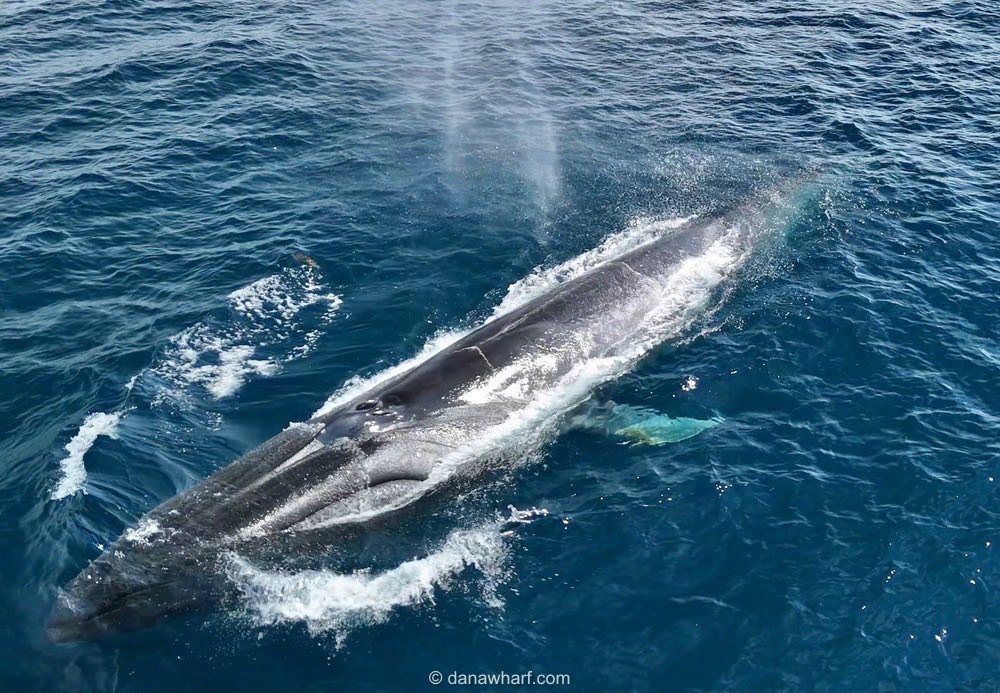
Blue whales. The largest animal that has ever lived. Adults run roughly 70 to 100 feet long, and the bigger females can weigh up to 150 tons. They show up off Southern California starting in May, and by June they are settled into feeding mode. From the boat what you usually see first is the spout, which on a blue whale is a tall, narrow column that can climb 30 feet into the air. Then the long blue-gray back rolling forward, almost slow motion, and if you are lucky a glimpse of the fluke as it dives. Most blue whale dives off Dana Point last roughly 5 to 15 minutes, so we time our positioning to where the next surfacing should be. For more on the species, our guide to how big a blue whale really is puts the size in real-world terms.
Fin whales. The second-largest animal on the planet, and a quiet regular off Dana Point. Fin whales are around year-round but are easier to spot in summer because the surface conditions are better. They look a lot like a smaller blue whale at first glance, until you notice the asymmetrical white jaw and the more sloped dorsal fin.
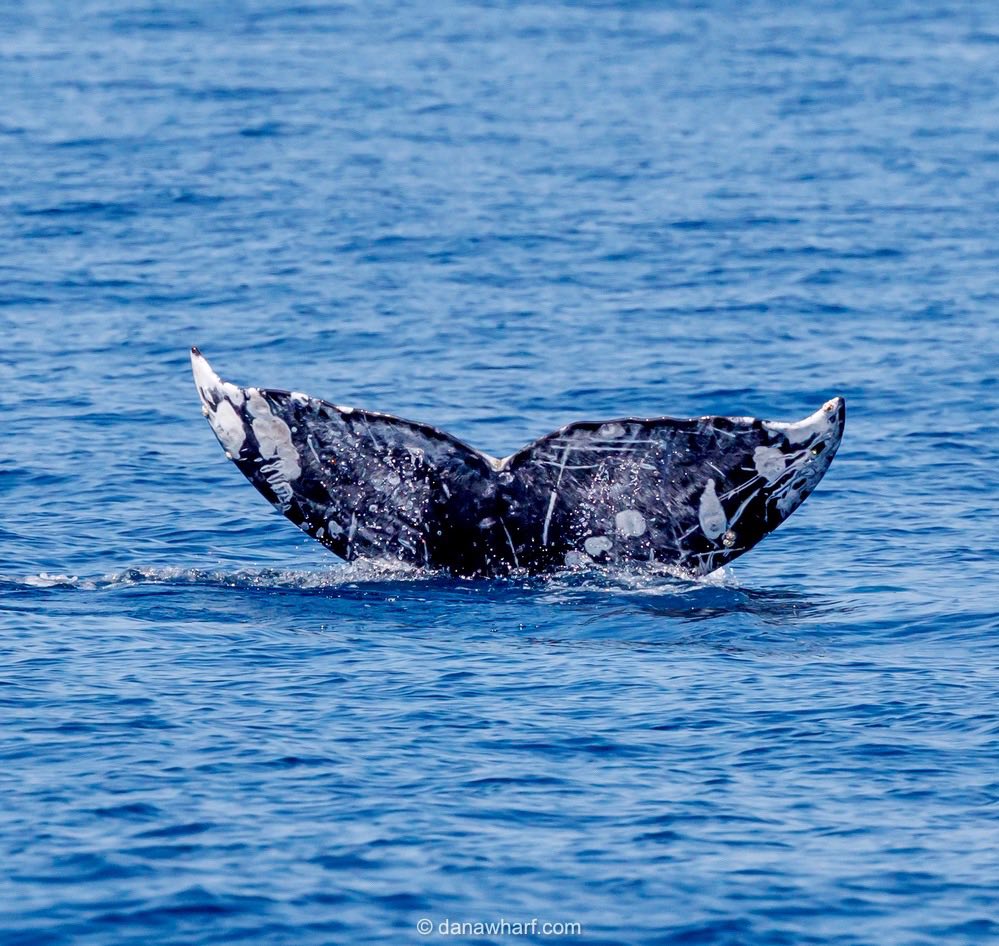
Humpbacks. Less predictable than blues but always possible. Humpbacks are the showy ones, the breachers and tail-slappers, so when one shows up everyone on the boat knows it. June humpback sightings are usually animals working their way through on the way north or south depending on what year it is.
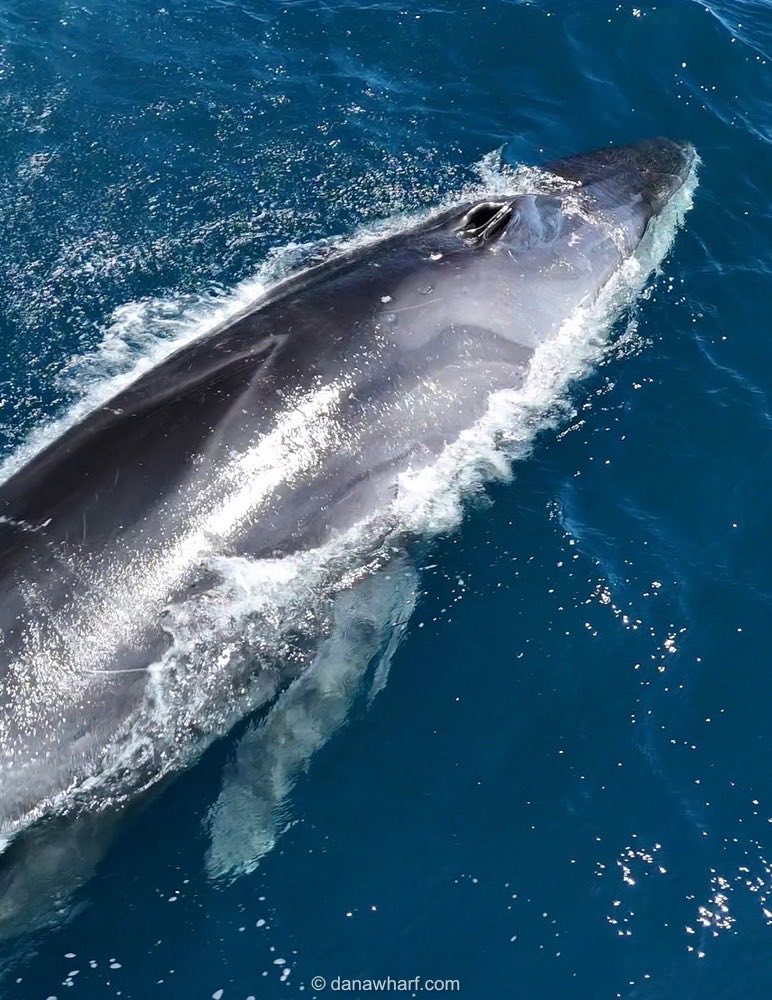
Minke whales. Smaller, shy, and easy to miss if you do not know what you are looking at. They surface quickly and roll back under without much drama, so the naturalists usually call them out before guests notice them.
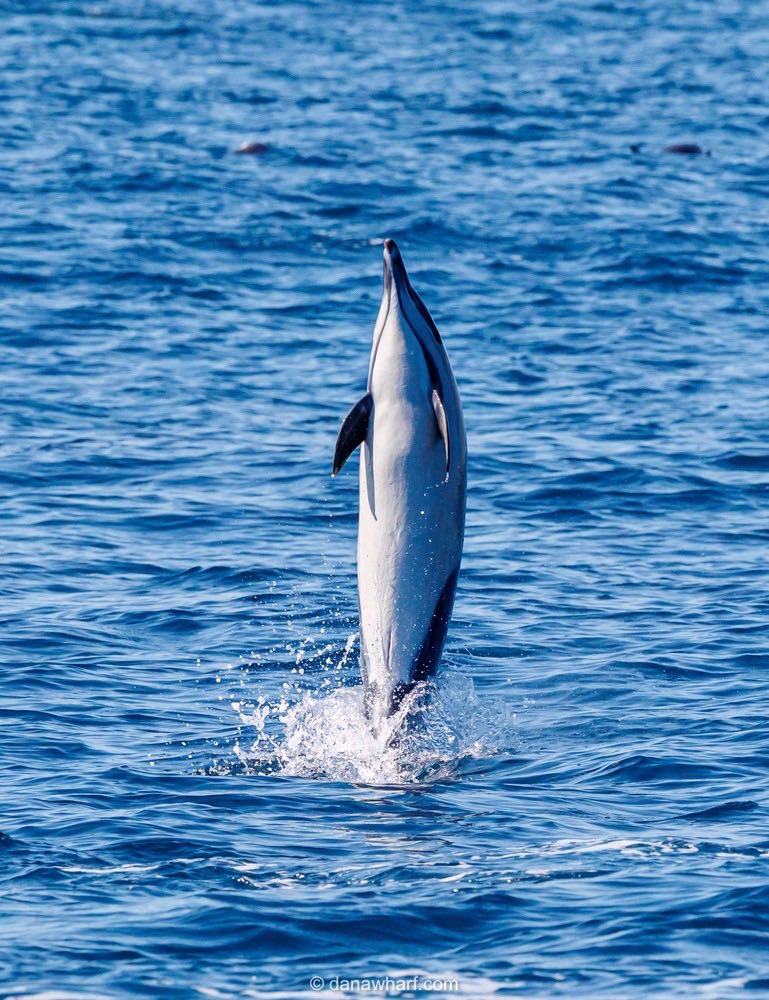
Dolphins, in absurd numbers. June is when the common dolphin pods get big. We routinely run into super pods of a few hundred to several thousand animals stretched out for hundreds of yards, riding the bow, leaping, slapping the water. Bottlenose, Risso’s, and Pacific white-sided dolphins also show up, and orca pods occasionally pass through chasing dolphins. If your trip never finds a whale (rare in June, but it happens), the dolphin encounters alone usually justify the ticket. Our naturalists always remind first-timers about the actual odds of seeing a whale on a tour, and June is the high end of that range.
What Does a June Whale Watching Trip Actually Look Like?
A standard tour out of Dana Wharf is about two hours and runs three or four times a day in the summer. You board at the harbor, the captain takes you out past the breakwater, and from there it is open water and whatever the day delivers. Every boat has a working naturalist on the mic the whole time, telling you what you are looking at and pointing out behavior you would otherwise miss.
If two hours is not enough, the longer summer trips are worth a look. We run extended whale watch tours during peak blue whale weeks that give you more time on the water to track an animal across multiple surfacings, which is when you really see the size sink in. For a complete walk-through of the experience, our what to expect on a Dana Wharf whale watching tour guide covers it start to finish. And if you are debating between a morning and afternoon trip, our breakdown of morning vs. afternoon tours explains the trade-offs (short version: mornings are calmer, afternoons get more sun and often more dolphins).
What Should You Wear and Bring in June?
The biggest mistake people make in June is dressing for the parking lot instead of the boat. The harbor can be 75 degrees and sunny while the air ten miles offshore is fifteen degrees cooler with a steady breeze. You will be glad you brought a jacket even if you do not end up wearing it. Layers, closed-toe shoes, a hat, sunglasses, and reef-safe sunscreen are the basics. We have a full what to wear whale watching guide with the season-by-season specifics.
One June-specific tip: bring polarized sunglasses. The summer glare off the water is the difference between seeing a spout three miles out and missing it entirely.
Is It Worth Booking a Private Charter in June?
For groups of ten or more, or for anyone who wants to stay on the water longer than the standard trip, a private charter is the way to do it. We can build the trip around your schedule, mix whale watching with sportfishing, or just hand you a longer block of time to track whatever the day surfaces. June private charters fill up fast because of the wedding and reunion calendar, so book early if you are eyeing a weekend.
When Should You Book a June Whale Watching Tour?
Honestly, as soon as you know your dates. The standard tours run multiple times a day so weekday slots usually have flexibility, but weekends in mid to late June book up. Father’s Day weekend and the days leading up to the Fourth of July are the busiest stretches. If you are flexible, we tell guests to aim for a weekday morning trip. The boats are quieter, the water is calmer, and you have a better shot at the longer feeding sequences.
The good news is that even if you miss June, blue whale season runs into October and the conditions stay strong all summer. But the first true peak window is right now. The whales are here, the water is finally warm enough to be on, and the days are long enough that you can be home for dinner after an afternoon tour.
Pick a date and we will see you on the boat. Book a whale watching tour from the wharf and bring the layers. The rest, we handle.