
Dana Point vs Newport Beach for Whale Watching: An Honest Local Comparison
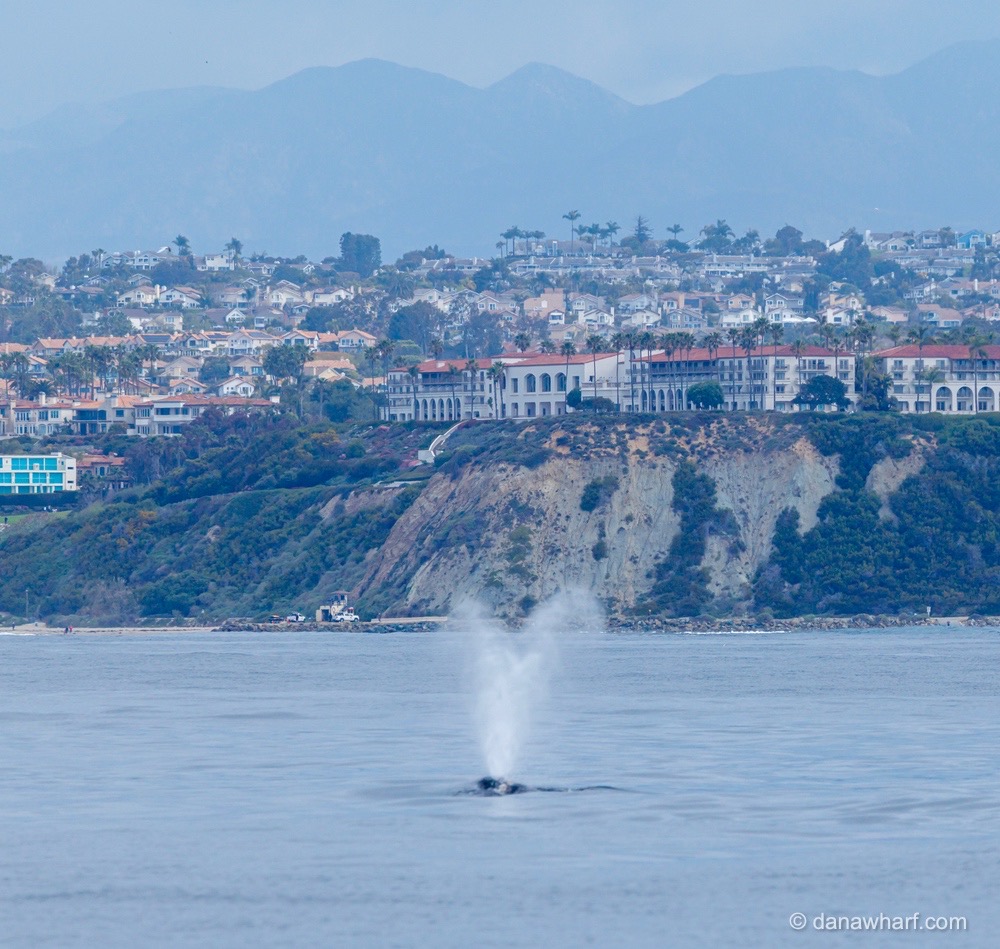
You’re planning a whale watching trip on the Orange County coast, and you’ve narrowed it down to two harbors: Dana Point and Newport Beach. Both put boats in the water. So which one should you choose?
Dana Point. After 55 years of running whale watching trips out of Dana Point Harbor (we were the first company to offer them in Orange County), the differences between these two ports are real, and they tilt decisively in Dana Point’s favor. Here’s why.
The Geography Is the Whole Story
If you take only one thing from this post, take this: how quickly your boat reaches deep water determines how long you spend with whales versus how long you spend getting to whales. And the two harbors are very different on this point.
The continental shelf drops off close to shore in Dana Point. Within a few minutes of leaving the harbor, our boats are in water deep enough for blue whales, fin whales, and the deep-diving species that follow the bait into the canyon edge. That’s why Dana Point earned its reputation as the “Dolphin and Whale Watching Capital of the World” and why the city is home to one of the largest concentrations of marine mammals on the California coast.
Newport Beach sits over a wider, gentler shelf. The run from Newport Harbor or the Balboa Pavilion is longer to reach the same deep water where the bigger pelagic species feed. On a two-hour tour, that math matters. Less time in the engine room means more time with the animals.
What You’ll See, Port to Port
Both ports share the same migratory corridor in a broad sense. Gray whales pass both in winter. Common dolphins, bottlenose dolphins, and Risso’s dolphins range across the entire Southern California Bight.
The differences show up in frequency and access. Off Dana Point, our captains routinely report:
- Blue whales from roughly May through October, feeding on krill that gets pushed up against the deeper water just offshore
- Fin whales year-round, the second-largest animal on the planet
- Megapods of common dolphins, sometimes a thousand or more animals moving together
- Gray whales in winter and spring as they migrate between Alaska and Baja
- Humpbacks, minkes, and the occasional rare sighting: orcas, sperm whales, false killer whales
Newport Beach trips see most of the same species, but the sightings skew more toward dolphins and the migratory grays. If you want a real shot at blue whales, fin whales, or the dramatic megapod encounters that put Dana Point on the map, you want to leave from a harbor with deep water just past the breakwater. That’s Dana Point.
The Boats Are Not All the Same
This is the part most visitors don’t think about until they’re standing on the dock. The vessel matters as much as the location, and the difference between a narrow monohull and a wide catamaran is the difference between a comfortable trip and a queasy one for many guests.
Our Dana Point fleet runs purpose-built catamarans alongside our larger sportfishing-style vessels. Catamarans like Ocean Adventures and Lot’ A Fun ride two parallel hulls, which means less rolling in chop and more deck space to move around. The New Pride carries up to 149 passengers but stays remarkably steady. If you’re prone to motion sickness, the boat you’re on matters more than the harbor you leave from, and our fleet is purpose-built for stability on whale watching tours.
We’ve put together a full breakdown of our fleet here if you want to compare hull shapes and capacities before you book.
Drive Time, Parking, and the Harbor Itself
Newport Beach is roughly 25 minutes north of Dana Point on Pacific Coast Highway, traffic permitting. From most of inland Orange County, the drive times are comparable, so the question becomes: which harbor is the better experience once you arrive?
Dana Point Harbor is compact and walkable. Parking is straightforward, our check-in building sits right at the waterfront, and you’re within a five-minute walk of restaurants, the Ocean Institute, and the small shops along Dana Wharf Drive. A whale watching trip slots naturally into a half-day on the harbor, which is part of why visitors tell us they keep coming back.
Newport’s harbor is bigger, more spread out, and weaving through a denser tourist district means longer walks and tougher parking, especially in summer and on weekends. Dana Point keeps things simple.
Tour Length and Pricing
Most whale watching tours out of either harbor run about two hours and price within the same band, give or take a few dollars and whatever weekday or seasonal promotion is in play. We run our 1/2 Price Tuesdays whale watching deal year-round, which is the easiest way to compare directly: a Dana Point trip on a Tuesday often costs less than the standard rate anywhere else in Orange County.
Beyond standard tours, we also offer private charters, sunset cruises, and longer departures during peak blue whale season. If you’re planning something special, a birthday, an out-of-town guest, or a corporate group, our private whale watching charter page walks through the options. The flexibility you get with a private charter, including departure time and route, often outweighs the per-person savings on a public tour.
The Heritage Question
This is the one we’ll own outright. Dana Wharf Whale Watching began in 1971, founded by Captain Don Hansen, and we were the first whale watching company in Orange County. More than 50 years of continuous operation out of the same harbor has produced something you can’t recreate quickly: institutional memory. Our captains know which lines the gray whales hold in March, which spots the blue whales return to in July, and how the ocean changes after a Santa Ana wind. That knowledge is the difference between hoping you see a whale and knowing where to find one.
If you want the longest-running operation on this stretch of coast, working out of the harbor that’s earned its “Whale Capital” reputation, you want Dana Point.
So Which Port Should You Choose?
Dana Point, in almost every case. To make it concrete:
- You want the best odds of seeing big whales, especially blue whales in summer and fall
- You want a wider, more stable boat (catamaran)
- You’re motion-sensitive and want the shortest run to the wildlife
- You’re combining the trip with the Ocean Institute, harbor walks, or dining at the wharf
- You value depth of experience and want crews who’ve been reading these waters since the 1970s
The geography tilts the answer toward Dana Point. The deep water is closer, the species list is broader, the boats are wider, and the heritage is real. The extra fifteen miles south puts you on the water faster once you arrive.
A Few More Reads Before You Book
If you’ve decided Dana Point is the right port (and we hope you have), our month-by-month best time guide will tell you exactly which species are likely the week you’re booking. Our what-to-expect post walks through arrival to disembarkation. And if you’re still weighing California options against destinations farther up the coast, we’ve already written about how Dana Point compares to Monterey.
Whichever harbor you pick, get out there. The whales are running, the dolphins are everywhere, and the Pacific in May is the kind of clean blue that makes you forget about everything that isn’t the water.
Ready to come see for yourself? Browse our whale watching tours and book your trip, or call us at (888) 224-0603. We’ll save you a spot on the rail.