
Where Can You See Blue Whales? (A Local’s Guide from Dana Point, California)
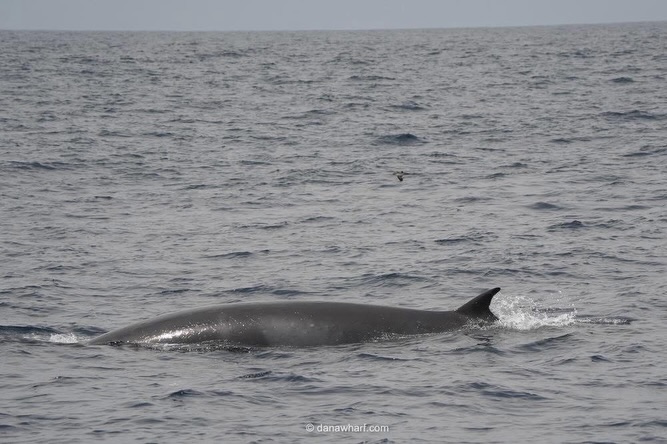
Blue whales are the largest animals that have ever lived. Bigger than any dinosaur. The size of a Boeing 737. A single one of them can weigh as much as a fully loaded semi truck, and the heart that pumps through that body is roughly the size of a small car. For most people, the idea of actually standing close to one of these animals feels like a stretch. The good news is that it is more accessible than you would think, if you know where and when to look.
Below is a straightforward guide to where blue whales can actually be seen in the wild, why a small handful of coastlines tend to produce most of the world’s sightings, and why Dana Point sits at the top of that list every year from late spring through fall.
Where Can You See Blue Whales in the World?
Blue whales live in every ocean except the Arctic, but they are not evenly spread out. They follow food, and the food they eat (krill) only blooms in dense enough numbers in a few specific places. Those handful of feeding grounds are where the sightings happen. The rest of the ocean, you could sail for weeks and not find one.
Here are the well-known places in the world where blue whale sightings are realistic for visitors:
- Southern California, USA. The stretch of coast from Monterey down past San Diego, with Dana Point as the most reliable spot in California. Season is roughly May through November.
- Sri Lanka, off Mirissa and Trincomalee. A famous winter season for blue whales, peaking December through April.
- The Azores, Portugal. Spring migration corridor. Sightings cluster around April and May.
- Iceland, off Husavik and Eyjafjordur. Short summer season in June and July, weather dependent.
- Saguenay, Quebec, Canada. A small population in the Saint Lawrence Estuary, summer and fall.
- Baja California, Mexico, around Loreto. Late winter and early spring sightings in the Sea of Cortez.
That is essentially the global short list. Of those, Southern California is the most accessible for North American travelers, has the longest reliable season, and produces the highest concentration of sightings on any given week during the season. Within Southern California, Dana Point has earned a particular reputation, and there are real reasons why.
Why Dana Point Is One of the Best Places on Earth to See Blue Whales
If you draw a line straight out from our harbor for about three to nine miles, you cross the edge of the continental shelf. The water depth drops dramatically from a few hundred feet to several thousand feet in a very short horizontal distance. That underwater cliff is the San Mateo and Newport submarine canyon system, and it is the reason blue whales bother to come here in the first place.
Cold, nutrient-rich water rises up the canyon walls in spring and summer. That upwelling fertilizes massive blooms of krill, the tiny shrimp-like crustaceans that blue whales eat. A blue whale can put away roughly four tons of krill in a single day during feeding season. Our canyon delivers that kind of menu, year after year, just a short ride from the dock.
That is a big part of why Dana Point is recognized as the Dolphin and Whale Watching Capital of the World, and why we became the first Whale Heritage Area in the Americas. We did not have to build it. The geology built it for us. We just have to take you there.
If you want a deeper read on what blue whales are actually doing while they are here, our captains broke down their feeding behavior in The 4-Ton Diet: How Blue Whales Feast in Dana Point.
When Is Blue Whale Season in Dana Point?
The short answer is May through November. The slightly longer answer is that the season ramps up through May, hits a strong stride in June, peaks somewhere between July and September depending on the year, and tails off through October and into early November.
What that looks like in practice on our boats:
- May. Early season. First sightings of the year. Numbers are still building. Other whale species (gray whale calves heading north, fin whales, minkes) make up the rest of the trip.
- June. Things really pick up. Blue whales settle into the canyon and we are usually finding them on a regular basis, sometimes more than one in a day.
- July through September. Peak. This is the part of the year where blue whales become a near-given on a tour, and where guests routinely see fluke dives, side rolls, and lunge feeding behavior.
- October. Strong but slowing. Krill availability shifts. Sightings remain consistent, especially earlier in the month.
- November. Late season. Sightings still happen, but the gray whale southbound migration is starting to show, which makes for a transitional and interesting trip.
For a broader month-by-month look at every species off our coast, our complete whale watching season guide walks through the full calendar.
What Does a Blue Whale Sighting Actually Look Like?
The first thing most guests notice is the spout. A blue whale exhale is a tall, thin column of mist that can reach 30 feet straight up into the air. On a calm day, you can see one a mile or more away. Our captains read those spouts on the horizon and adjust the boat well before guests would ever spot the whale themselves.
Once we are in the area, the rhythm settles in. A feeding blue whale typically surfaces several times in a row to breathe, then arches its back and slips into a deep dive that can last 10 to 20 minutes before it surfaces again. The arch and the slow lift of the fluke (tail) at the end of that sequence is what most photographers come for. It is one of the more surreal things you can witness, because the body is so long that the head can be coming up while the tail is still down.
If you want a quick visual cheat sheet on how to tell a blue whale spout from a fin whale or a humpback at distance, our captains put one together in The Blowhole Breakdown.
How Close Will You Actually Get?
Closer than you would think, and from a boat that is built for the encounter. Our captains follow the strict NOAA guidelines for distance and approach, which sounds restrictive but is actually the reason whales in our area tend to stay calm and surface for long sessions instead of moving off. A relaxed blue whale on a feeding pattern will often surface within easy viewing distance of one of our purpose-built whale watching boats, and on the right day will lift its tail clean out of the water on a fluke dive a stone’s throw from the rail.
It is worth setting expectations honestly. These are wild animals. They are not on a schedule, they are not corralled, and the captain cannot make a blue whale do anything in particular. What our captains can do, and what 50-plus years of running this stretch of coast has taught us, is read the water, work the spouts, and put the boat in the right place at the right time. That is the difference between a tour that finds whales and a tour that misses them.
What Else Will You See During Blue Whale Season?
This is the part most first-timers underestimate. A blue whale tour off Dana Point in summer is rarely a one-species trip. On a typical day in the heart of the season, you might encounter:
- Fin whales. The second-largest whale on the planet, sleeker and faster than blues. Fin whales are essentially full-time residents off our coast and turn up reliably on summer tours.
- Humpback whales. Showy, surface-active, the species most likely to breach. Numbers off our coast have been climbing for years.
- Minke whales. Smaller, shy, and quick. A minke surfacing near the boat is one of those quiet wins that makes a tour feel personal.
- Common dolphin megapods. Sometimes a thousand or more animals moving together. Watching that many dolphins at once changes how you think about the ocean.
- Bottlenose and Risso’s dolphins, sea lions, ocean sunfish, and the occasional orca. Less predictable but absolutely on the menu.
For a deeper read on everything that moves through the water off Dana Point and when, our season-by-season marine life guide walks through every species you might cross paths with.
Tips for Actually Seeing Blue Whales on Your Tour
A few small things make a real difference in your odds and in your enjoyment.
- Pick a calm-sea day if you can. Glassier water makes spouts visible from much farther away, and our captains can cover more ground efficiently. Calm seas also feel much better on a long tour.
- Book the morning or early afternoon trip when conditions allow. Both work well, but morning tours often launch into glassier water with better visibility. Our breakdown in Morning vs Afternoon Tours covers the trade-offs.
- Dress warmer than the parking lot suggests. The harbor can be 75 and sunny while the canyon edge feels 15 degrees colder with a steady breeze. Layers and a windproof outer shell are the most useful thing you can pack. Our what-to-wear guide has the season-by-season breakdown.
- Bring any kind of zoom. The captain will get the boat into a great position, but blue whales are huge animals in big water and a phone alone will struggle on the wider shots.
- Listen to the naturalist. Our certified naturalists are usually the first to call out which way to look. They have done this thousands of times. Trust the call.
How to Book a Blue Whale Tour out of Dana Point
Tours run multiple times a day from May through November, with departures every day of the week through the heart of the season. The simplest way to lock in a date is to book directly through our whale watching page. Tickets include the boat, the captain and naturalist narration, and a 50 percent discount voucher for a second tour, which is how a lot of guests turn one trip into a return visit later in the season.
If you are planning a private group, a corporate outing, a milestone birthday, or a memorial service on the water, we run private charters as well. Reach out through our whale watching charters page and our team will help you build the trip you have in mind.
For everything else, our FAQs page covers parking, refunds, accessibility, and the questions families tend to ask before they book.
Why Seeing a Blue Whale Stays With You
It is hard to explain ahead of time what it is like to be in the presence of an animal this large. Photos do not really do it. Video does not do it. The closest comparison most guests reach for is the moment of seeing something at a scale your brain has not had to deal with before, and adjusting in real time. The spout you spot a mile away is taller than a four-story building. The body that follows it is longer than the boat you are standing on. And then it is gone, and the ocean closes back over it as if it was never there.
If you have been waiting for the right reason to finally book a whale watching trip, this is the season. Blue whales only show up in a few places on the planet. Dana Point is one of them. We will see you on the water.