
Whale Watching in Dana Point in May: What to Expect (Including the Start of Blue Whale Season)
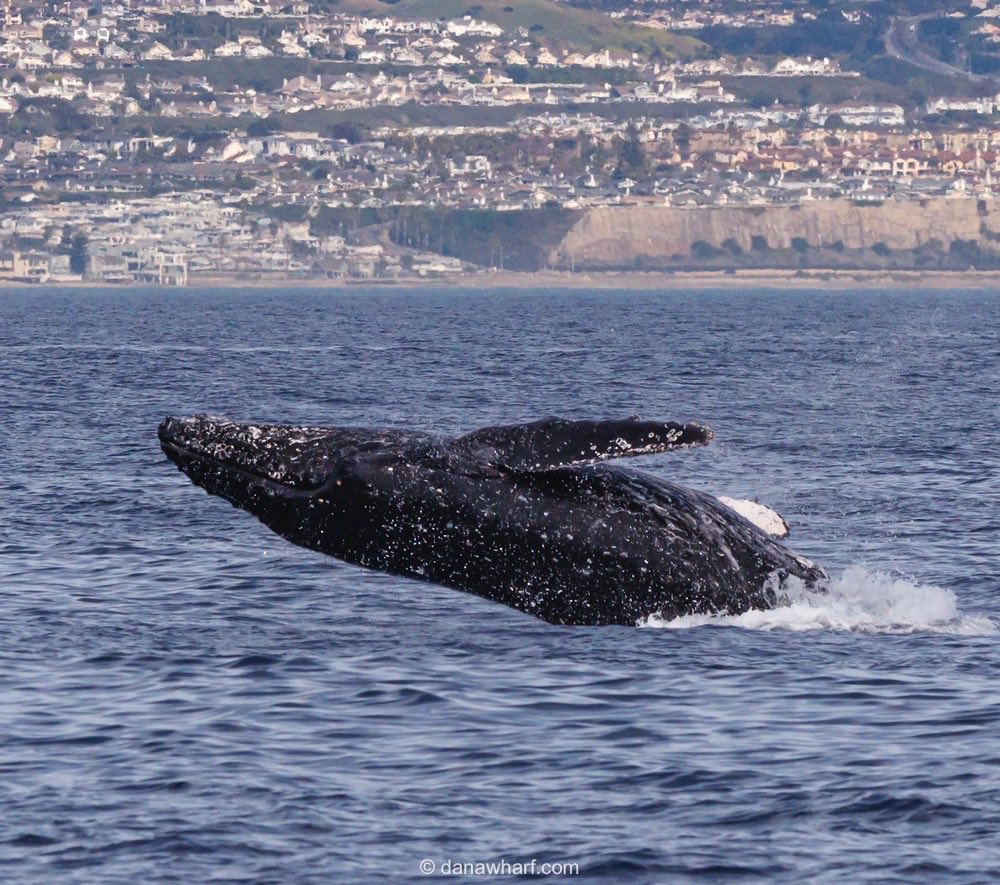
Every year, May does something to the water off Dana Point. The gray whales that we have been watching all winter are heading north toward Alaska, the dolphins are running in pods that look more like rivers, and somewhere off the edge of the continental shelf, the largest animals that have ever lived on this planet start showing up to feed. If you are planning a whale watching trip in May, this is the post you want before you book.
Below is everything we tell first-timers when they walk up to the ticket window at Dana Wharf in May. What you will actually see, what the tour looks like, what to wear, and why locals quietly consider this one of the best months of the year to be on the water.
Why Is May Such a Big Deal for Whale Watching in Dana Point?
Two things happen at the same time in May, and they are the reason this month gets circled on so many calendars.
First, the gray whale migration is wrapping up. Mothers and calves are still trickling north through the Catalina Channel, and they tend to travel close to shore, which means short distances from the harbor and beautifully visible surface behavior. Second, blue whale season is starting. Blue whales arrive off Southern California in May and stay through roughly November, drawn here by huge concentrations of krill that bloom along the underwater canyons just a few miles off our coast.
Dana Point sits right on top of one of those feeding zones. That is a big part of why we are recognized as the Dolphin and Whale Watching Capital of the World, and the first Whale Heritage Area in the Americas. We are not driving for hours to find marine life. It is, quite literally, in our backyard.
Add the fact that the weather has finally settled into long, mild, golden afternoons, and May becomes the kind of month where every tour feels like it earned its money before the boat even reached open water.
What Whales Will You Actually See in May?
The honest answer is that nature does not run on a schedule, but here is what our captains realistically expect to encounter on May tours:
- Blue whales. The headliner. These are the largest animals known to have ever existed, reaching up to 100 feet long and 200 tons. Sightings ramp up through the month, and by late May we are usually finding them on a regular basis along the canyon edges.
- Gray whales. Northbound mothers and calves, often closer to shore than the blue whales. The calves are roughly the size of a minivan and learning to breathe on a calm interval, which makes them easy and rewarding to watch.
- Fin whales. The second-largest whale on the planet, faster and sleeker than blues. Fin whales tend to live offshore year round but show up reliably in May.
- Minke whales. Smaller, shy, and quick. A minke surfacing near the boat is one of those quiet little wins that makes a tour feel personal.
- Common and bottlenose dolphins. Megapods of common dolphins, sometimes a thousand strong, are routine off Dana Point. Watching that many animals move as one organism is, for a lot of guests, the moment that ends up on their phone background.
- Risso’s dolphins, sea lions, sunfish (mola mola), and the occasional orca. Less predictable but absolutely on the menu in May.
If you want a deeper look at the surface clues we use to tell different whale species apart from a quarter mile away, our captains broke down the visual cheat sheet in The Blowhole Breakdown.
What Does a Dana Wharf Tour Actually Look Like?
Tours leave from Dana Point Harbor and run roughly two and a half hours from dock to dock. Here is the rhythm of a typical trip in May.
You check in at the Dana Wharf ticket office, walk down the dock, and board one of our purpose-built whale watching boats. The captain gives a quick safety briefing, and then we head out past the breakwater. From there it is usually a 10 to 25 minute run to where the action is. Sometimes that is right outside the harbor mouth. Sometimes that is a few miles out near the canyon edge. The captain and crew are in radio contact with other Dana Wharf and partner boats, so we do not waste your time hunting blind.
Once we find animals, the boat slows down and we work the area calmly. Our captains follow the strict NOAA guidelines for distance and approach, which sounds like a constraint but is actually the reason whales in our area tend to stay relaxed and surface for long sessions instead of moving off. A relaxed whale is a whale that breaches, lobs its tail, and rolls on its side to look at you. That is what you want.
You will hear narration over the speakers from the captain and from a certified naturalist, who will tell you exactly what species you are looking at, how to read the spout, and what behavior to watch for next. Bring your questions. The naturalists love them.
What Should You Wear and Bring on a May Tour?
May in Dana Point is one of those tricky weather months. The harbor parking lot can be 75 degrees and sunny while the open ocean three miles out feels 15 degrees colder with a steady breeze. We see a lot of guests underdressed in May because the dock fooled them.
The short version: layers, closed-toe shoes, sunglasses, sunscreen. A windproof outer layer is the single most useful thing you can bring. For a more detailed breakdown by season, we put together a complete what-to-wear guide that covers spring conditions specifically.
A few other things worth packing:
- A hat with a chin strap or a tight fit. The wind moves.
- Reef-safe sunscreen. The reflection off the water doubles your sun exposure.
- Water and a small snack. The cafe on board has both, but having your own is nice on a long tour.
- Your phone or a real camera with a zoom lens. Any kind of zoom helps. The captains will get the boat into a great position, but whales are still big animals far away in big water.
If anyone in your group is prone to motion sickness, take a non-drowsy preventive about an hour before boarding and stand mid-ship outdoors during the tour. May seas off Dana Point are usually mild, but the open ocean is the open ocean.
Morning or Afternoon Tour: Which Is Better in May?
This is one of the most common questions we get at the ticket window. The truthful answer is that both work, but they offer different experiences.
Morning tours tend to launch into glassier water with better visibility for spotting spouts on the horizon. Animals are often coming off a quieter night and feeding actively. Light is softer, which photographers love.
Afternoon tours in May tend to have warmer air, more dolphin activity, and longer surface intervals as whales settle into their afternoon feeding patterns. The wind picks up a bit, but for most guests it is comfortable in a windbreaker.
If you want a deeper comparison with examples from our captains, we wrote that up in Best Time of Day for Whale Watching. Either one is a great choice in May. The most important factor is going on a day with calm seas, which our crew can advise you on at booking.
Will You Definitely See Whales?
We are the original whale watching operation in Dana Point. We have been doing this since 1971, and our sighting rates in May are strong. That said, no one can guarantee a wild animal will appear on cue. What we can guarantee is that if you do not see a whale on your tour, you can come back and try again on us. That free reride is honored on any of our regularly scheduled trips, and there is no expiration date worth worrying about.
In practice, the vast majority of our May guests do see at least one whale, and often several. The dolphins are essentially a given.
Megapods, Megafauna, and the May Bonus Round
One thing that does not happen in winter but starts happening in May is the megapod phenomenon. When water temperatures and bait conditions line up, common dolphins gather in groups so large that the surface of the ocean looks like it is boiling for a half mile in every direction. Watching one of those events from the rail is hard to put into words. Our captains call it a megapod, and we wrote about when to expect them in a separate post.
If you want a sense of just how much marine life moves through Dana Point as the seasons change, our season-by-season guide to local marine life walks through every animal you might encounter and the months they tend to show up.
How to Book Your Dana Point Whale Watching Tour in May
Tours run multiple times a day in May, including weekday and weekend departures. The simplest way to lock in a date is to book directly through our whale watching page. Tickets include the boat, the naturalist narration, and a 50 percent discount voucher for a second tour, so most guests use May as the gateway and come back in summer once the blues are around in force.
If you are planning a private group, a corporate outing, a birthday, or a memorial service on the water, we run private charters as well. Reach out through our whale watching charters page and our team will help you build the trip you want.
For everything else, our FAQs page covers parking, refunds, accessibility, and the questions families tend to ask before they book.
Why May Will Stick With You
Most of the people who book a May whale watching tour with us are doing it because of the blue whale buzz, and that buzz is real. But what tends to surprise them is everything around it. The gray whale calves rolling at the surface. The first humpback breach of the season. A pod of common dolphins so dense it changes the color of the water. The way the sun feels at four in the afternoon coming back into the harbor. May is the month our captains start telling their families to come out, and that is usually the best recommendation we can give.
If you have been waiting for the right time to finally do this, this is it. We will see you on the water.