Whale Watching with Kids in Dana Point: A Parent’s Guide
Every weekend from the deck of the Dana Pride, we watch the same thing happen. A kid who was quietly scrolling on a phone in the harbor parking lot spots a spout on the horizon, and five minutes later they are pressed against the rail shouting at their parents to come look. That moment is why we do this. If you are thinking about taking your kids whale watching in Dana Point, you probably have a dozen practical questions about ages, seasickness, what they will actually see, and whether it is worth the drive. This guide answers all of them in the order families usually ask.
Dana Point calls itself the Whale Watching Capital of the World for a reason. The continental shelf drops off about a mile from the harbor mouth, which means we get deep-water species closer to shore than almost anywhere else in California. For families, that translates to shorter boat rides, less open-ocean motion, and more actual whale time per trip. Our two-hour whale and dolphin tours are specifically designed around that geography.
What age is the right age to bring kids whale watching?
There is no minimum age on our boats. We regularly have infants sleeping in carriers, toddlers in dad’s arms, school-age kids running between viewing decks, and teenagers who pretend not to be excited until a pod of common dolphins starts riding the bow wave.
Here is the ticketing breakdown so you can plan the cost side:
- Infants under 2: $9.00 (they ride on your lap)
- Children 3 to 12: child pricing
- Ages 13 and up: standard adult pricing
- Seniors 55+: discounted rate
Peak season pricing on July and August weekends runs higher, and we offer half-price Tuesdays most weeks. If you are booking a group with multiple kids, Tuesday can cut the trip cost in half.
The honest answer on age is that it depends more on the kid than the number. Very young children sometimes sleep through the whole trip, which is not a problem. The sweet spot for active interest is roughly 4 to 10, when kids are old enough to follow the captain’s narration and young enough to still find a dolphin blowhole objectively magical. But we have taken plenty of two-year-olds who had the time of their lives and plenty of teenagers who ended up in the wheelhouse asking the captain about sonar.
What will my kids actually see on a whale watching trip?
This is the question that decides whether the trip is worth it. The answer changes with the season, so here is the straightforward version.
Winter and early spring (December through April)
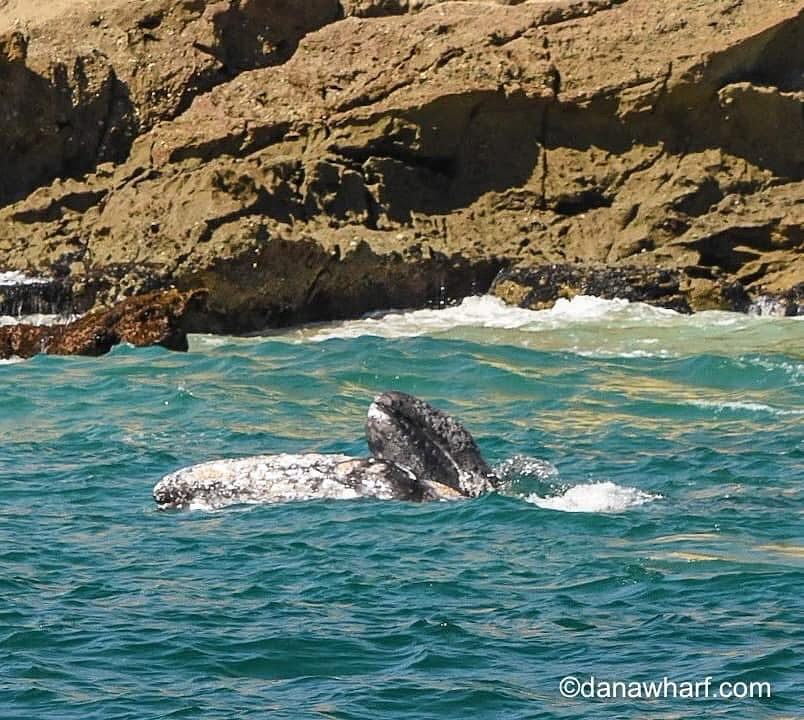
Gray whale season. These are the migrating whales doing the longest mammal migration on earth, traveling roughly 10,000 to 12,000 miles round trip between the Arctic feeding grounds and the calving lagoons of Baja Mexico. In February and March we see cows with their calves making the slow trip north, which is the single best window for families. Moms stay close to shore to protect the babies from orcas, which means we are often watching them from just outside the harbor.
Late spring and summer (May through September)
Blue whale season. The largest animal ever to exist on this planet feeds off our coast in the summer. A blue whale can be 90 to 100 feet long, and watching one surface next to a 45-foot catamaran is a scale moment that kids do not forget. If your family can only go once, a summer trip during blue whale season is the high-drama option.
Year-round
Common and bottlenose dolphins, usually in pods of 50 to 500 animals, sometimes in megapods of several thousand. For most kids, the dolphins are actually the headliner. They come right up to the boat, ride the pressure wave off the bow, and leap out of the water inches from the rail. If you want to understand why this happens, we wrote a whole piece on dolphin megapods in Dana Point.
You will also regularly see California sea lions, harbor seals, pelagic birds, mola mola (ocean sunfish), and occasionally sharks. If you want a month-by-month breakdown before booking, our Dana Point whale watching season guide has the full calendar.
Which boat is best for a family?
We run three main vessels on our whale and dolphin tours, and the right one depends on your group.
Dana Pride is the largest in the fleet, with capacity for up to 149 passengers. She has the most indoor seating, the biggest galley, and the most stable ride in choppy water. If you have a grandparent in your group or a kid who gets motion sick easily, Dana Pride is usually the right call.
Ocean Adventures is our luxury eco-friendly catamaran with a raised EYE SPY viewing platform that puts kids literally above the water. Capacity is 59, which means more personal space and a naturalist who can give your family specific attention. The platform is the single best vantage point in the harbor for spotting whales at distance.
Lot’ A Fun is our newest catamaran, a 45-passenger state-of-the-art boat with 360-degree unobstructed views. For families who want the smaller-group feel without compromising visibility, this is the one.
All three boats have restrooms onboard, indoor cabin space for warming up, and galleys serving snacks and drinks. Bring a stroller if you need one, but plan to keep it folded during the active portion of the tour so kids can move freely between viewing areas.
How do we handle seasickness with kids?
The two most common reasons a family hesitates to book are seasickness worries and fear of not seeing a whale. Let’s handle both.
Our two-hour tours stay in relatively protected water compared to the longer offshore fishing trips. Dana Point sits in the lee of the peninsula, the swell tends to be modest, and we are back in the harbor before most kids have time to get uncomfortable. That said, motion sickness is real. Here is what actually works:
- Give kids a real breakfast. Empty stomachs get seasick faster than full ones. A bagel or pancakes an hour before the trip is gold.
- Sit on the main deck, outside, facing forward. Indoor cabin seating seems intuitive but actually makes motion sickness worse for most people because your inner ear disagrees with what your eyes see.
- Look at the horizon, not the water right next to the boat. We tell kids to find a mountain and stare at it.
- Skip reading, tablets, and games during the ride.
- Dramamine or Bonine for kids age 2 and up works well if given 30 to 60 minutes before boarding. Check with your pediatrician on dosing. Sea-Bands (the acupressure wristbands) are a non-medicated option that some families swear by.
- Ginger chews or ginger candies are the old captain’s remedy and they actually work.
If a kid starts feeling off on the water, get them outside, fresh air, horizon view, cold water on the wrists. That combination handles most cases before they escalate.
What should kids wear and what should parents pack?
Layering is the whole strategy. The Dana Point harbor can feel warm at departure and 15 degrees cooler once we are a mile offshore with a sea breeze. Kids especially need a wind layer that parents can put on and take off during the trip.
Short version of the packing list:
- Closed-toe shoes with non-slip soles (wet decks)
- Layered tops with a warm outer layer, even in summer
- Sunscreen (reef-safe if possible) and hats with chin straps
- Polarized sunglasses for kids who will tolerate them
- Refillable water bottles
- Snacks for very young kids (we sell them onboard but a familiar snack prevents meltdowns)
- A phone or camera on a lanyard
For the full seasonal breakdown, we wrote a what to wear whale watching guide that covers the cold-weather winter trips and the warmer summer days separately.
What happens if we do not see a whale?
This is the question we get most often from parents. The honest truth is that nature does not follow a schedule, and on rare days whales do not show up in our sighting area. We have handled this for decades the same way.
Every two-hour whale watching trip carries our sighting guarantee. If our captain determines the trip did not deliver a whale or a strong dolphin showing, every passenger receives a Whale Check valid for a complimentary return trip, with no expiration date. Come back next weekend, come back next summer, come back in five years. The Whale Check does not expire.
In practice, we see marine life on the vast majority of trips. Dolphin pods are close to a lock year-round, and most families collect a whale check they use as a bonus second trip rather than a replacement. Knowing the guarantee exists is what gets a lot of hesitant families to book in the first place.
What else should first-time families know?
A few things that do not fit cleanly into the sections above, but that parents always appreciate knowing in advance:
- Arrive 30 to 45 minutes before departure. Parking at the harbor fills up on summer weekends, and you want time to use the restroom and buy snacks before boarding.
- Our naturalists narrate the entire trip with species information, behavior context, and answers to kid questions. The best part of bringing children is watching them ask the naturalist things like why dolphins have belly buttons.
- Private charters are available for birthdays, school field trips, and multi-family groups who want their own boat.
- Photos are allowed and encouraged. We recommend a wrist strap or lanyard for phones because the rail drop to the water is a one-way trip.
- For a fuller breakdown of the tour itself, read our what to expect on a Dana Wharf whale watching tour guide.
Ready to come down to the wharf?
The best time to book a family trip is four to six weeks before summer vacation, when you can still get the boat and sailing time you want. Weekday morning trips in early summer are our quietest and most kid-friendly. If you are coming in winter for gray whale season, a weekend afternoon sail gives you the best chance of seeing cow and calf pairs close to shore.
Book your whale and dolphin watching trip directly through our site, or call the harbor office with questions. We run trips year-round, and the captains and naturalists have probably answered every question you can think of from a parent. Bring the kids. They will remember the first time they saw a spout on the horizon for the rest of their lives.