How to Avoid Seasickness on a Whale Watching Tour (Tips from Our Captains)
Every week, someone calls the wharf and asks us the same question in a slightly different way. “Will I get seasick?” “Do people throw up?” “My wife gets car sick on a straight highway. Can she handle a whale watching trip?”
Fair questions. Nobody wants to spend $50 and three hours hanging over a rail, missing the blue whale that just surfaced fifty yards off the bow. The honest answer is that a small minority of our guests do feel queasy on any given tour, most of them mildly, and almost all of them could have prevented it with a little prep. We’ve been running whale watching trips out of Dana Point Harbor since 1971, and our captains and deckhands have seen every variation of this. This guide is everything we tell guests at the ticket booth when they ask what to do before the boat leaves the dock.
If you’d rather get the broad strokes on your trip first, our complete guide to planning a whale watching trip in Dana Point covers the booking, timing, and logistics side. This post is specifically about the single most common worry we hear: the boat and your stomach.
Why You Get Seasick in the First Place
Seasickness is not about being weak or dramatic. It’s a real neurological response. Your inner ear senses motion. Your eyes, if they’re locked on a book or a phone or the floor of the boat, send the opposite message: “we are still.” Your brain gets two contradictory signals and responds the way it responds to most toxic inputs, with nausea and the urge to vacate whatever you just ate.
That’s the whole mechanism. Almost every prevention tip below targets one of two things: giving your brain consistent sensory signals, or dampening the response with medication or gut-settling compounds like ginger.
How Often Do People Actually Get Seasick Off Dana Point?
Less often than you’d think. Dana Point sits in a protected stretch of Southern California coast. The waters between our harbor and the whale watching grounds are generally calmer than the more exposed open ocean you’d hit farther north or offshore on a long fishing run. On a typical morning tour in spring or summer, we’d estimate fewer than one in twenty guests feels any real queasiness, and most of those manage it without needing to leave the rail.
That said, conditions change. A windy afternoon in late fall or winter can bring two to four foot swells, and the ride gets livelier. That’s the main reason our captains often point guests toward morning tours over afternoon tours when someone mentions motion sensitivity. The water is usually glass before the wind picks up.
Medications That Actually Work (and What the Difference Is)
If you know you’re motion-sensitive, take something. Every captain at the wharf will tell you this. The two drugstore options our guests use most are Bonine and Dramamine, and there’s some useful nuance here.
- Bonine uses meclizine hydrochloride, typically 25 mg. It’s marketed as “less drowsy” and that’s generally accurate. It works for roughly 24 hours per dose.
- Dramamine Original uses dimenhydrinate, 50 mg. It kicks in faster but makes most people noticeably sleepy.
- Dramamine Less Drowsy is a different product. It uses meclizine, the same active ingredient as Bonine. From a pharmacology standpoint, the two are interchangeable.
For a three-hour whale watching trip, our honest recommendation is the meclizine version of whichever brand you find first. You want to stay alert enough to see the whales. Taking Dramamine Original and then sleeping through a blue whale surfacing is a real letdown.
Timing matters more than dose. Meclizine needs a head start. Take one dose the night before your tour and a second dose one hour before departure. If you wait until you’re already on the water feeling off, the medication has to fight an uphill battle.
If you have any medical conditions, are pregnant, or take other prescription drugs (especially sedatives, antihistamines, or anticholinergics), talk to your pharmacist or doctor before the trip. There’s also a prescription patch called scopolamine that sits behind your ear for three days. Some of our repeat guests swear by it for longer fishing trips, but it’s overkill for a whale watching tour and has its own side effects.
What to Do the Night Before
Sleep matters more than people realize. A well-rested brain handles sensory conflict better than a tired one. Go to bed at a reasonable hour. Don’t drink heavily the night before your tour, even if you’re on vacation. Alcohol still in your system the next morning is one of the most reliable ways to turn a mild queasy feeling into an actual problem.
If you’re taking meclizine, this is also the night you take your first dose. Eat a normal dinner, not spicy or particularly greasy, and drink a full glass of water before bed.
Where to Stand on the Boat
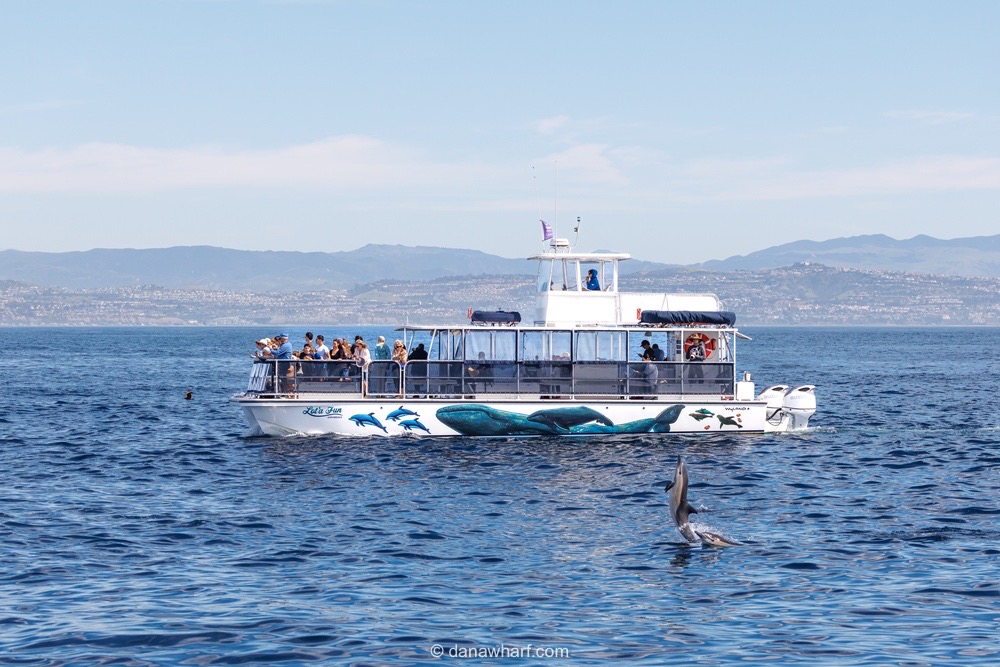
This is the single most underrated tip, and it costs you nothing. The middle of the boat moves the least. The bow and stern pitch up and down the most. If you’re on the Dana Pride, our 95-foot flagship, that means the main deck mid-ship is your friend. On the Ocean Adventure catamaran, the raised viewing platform is great for sightings but adds motion, so stay on the main deck level if you’re feeling iffy.
Stay outside. Fresh air is a real thing, not just an old wives’ tale. The enclosed salon smells like engine and coffee and, on a bad day, other people’s lunch. Get to the rail, face forward, and keep your eyes on the horizon. Your brain needs a stable visual reference to match what your inner ear is telling it. Reading a book, scrolling your phone, or staring at the deck is the fastest way to get sick.
One more thing: stay out of the tight clusters near the rail where someone is already feeling unwell. It sounds cold, but seasickness has a cascade effect in a group. If you see it starting, move to the other side of the boat.
For a sense of which boats we run on which tours, our guide on why boat size matters for whale watching gets into why a bigger, heavier hull rides out chop better than a small inflatable. The physics are on your side on our vessels.
What to Eat Before You Board
Don’t skip breakfast. An empty stomach is almost as bad as a full greasy one. Eat something bland and substantial an hour or two before the tour. Toast, oatmeal, a bagel, a banana. Avoid anything greasy, fried, spicy, or heavy with dairy. Coffee is fine for most people, but if you know caffeine makes you jittery, skip it today.
Bring crackers or pretzels in your pocket. Plain carbs settle a queasy stomach better than almost anything else. Ginger candies work too, which brings us to the next section.
Do Natural Remedies Actually Work?
Ginger has real evidence behind it. A 1988 controlled trial on Danish naval cadets at sea found that 1 gram of powdered ginger root significantly reduced vomiting and cold sweating compared to placebo, with a calculated 72% protection index for vomiting. Later work has proposed that ginger helps by stabilizing the gastric rhythms that go haywire during motion sickness. Nausea and dizziness improvements in these studies are less consistent, but the anti-vomiting effect is well supported.
Practically, that means ginger candies, crystallized ginger, ginger ale with real ginger, or ginger capsules are all reasonable tools. Take them before you start feeling sick, not after. They’re not a replacement for meclizine if you’re truly prone to motion sickness, but they’re a useful layer for mild cases or for kids who can’t take adult medication.
Acupressure wristbands (Sea-Bands and similar) are the other non-drug option. The clinical evidence is mixed, but the bands are cheap, have zero side effects, and some guests swear by them. If they help you feel more in control, the placebo effect alone is worth the $10.
What to Do If You Start Feeling Queasy During the Tour
First rule: don’t panic. A little queasiness usually passes within 10 to 20 minutes if you respond correctly.
- Get outside immediately if you’re inside the salon.
- Find a spot along the rail near the middle of the boat.
- Face forward and fix your eyes on the horizon. Pick a distant point of land if you can see one, like San Clemente Island or the coastline.
- Breathe slowly through your nose. Deep, unhurried breaths.
- Eat a plain cracker if you have one. Sip cold water.
- If you have ginger candy, unwrap one and let it dissolve.
- Ask a deckhand. They will not be surprised or embarrassed on your behalf. They’ll point you to the best spot on that particular boat and often have saltines and ginger ale at the bar.
If it gets bad enough that you need to be sick, use the leeward rail, meaning the side the wind is blowing toward, not away from. The deckhands will help you find it. Everyone on the boat has seen this before. You are not the first person to get sick on a whale watching trip and you won’t be the last. Most people recover and enjoy the rest of the tour.
Who Should Check With a Doctor Before Taking Anything
A few categories of guests should have a conversation with their doctor before relying on over-the-counter motion sickness medication:
- Anyone pregnant or nursing. Meclizine is generally considered low-risk in pregnancy but it’s a call for your provider, not us.
- Anyone on other sedating medications, including certain antidepressants, sleep aids, or anti-anxiety prescriptions.
- Anyone with glaucoma, an enlarged prostate, or certain urinary conditions. The antihistamine class can aggravate these.
- Anyone with a history of severe vertigo or inner ear disorders. Your doctor may have a better-targeted prescription like scopolamine.
- Kids. Check dosing on the package and talk to a pediatrician before your trip.
Non-medication strategies (positioning, ginger, sleep, timing) are safe for almost everyone.
The Short Version
If you remember nothing else from this page, remember four things. Book a morning tour when the water is calmest. Take meclizine the night before and an hour before departure. Eat something bland, not nothing. Stand outside at midships and look at the horizon. That combination handles 95% of motion sensitivity.
We’ve had guests who get carsick on winding roads come off our boats raving about the whales they saw without a single moment of queasiness. We’ve also had marathon runners in excellent shape go green in 20-knot winds. Individual biology varies, and there’s no shame in either outcome. The goal of this guide is to tilt the odds as far toward “great day on the water” as possible.
Ready to book? Pick a morning slot on our Dana Point whale watching tours page. Spring is prime time for gray whale tail ends of the migration and the first blue whales of the season, and early mornings are consistently the smoothest ride of the day. If you’re still working out the details, our what to expect on a Dana Wharf whale watching tour post and our tour length and what’s included post will cover the rest.
See you at the dock.