
Whale Watching in San Diego vs Dana Point: An Honest Local Comparison
The question lands in our inbox almost every week, especially from people planning their first trip to Southern California. They’ve Googled around, seen tour options in both regions, and want a straight answer: should they drive to San Diego or Dana Point to go whale watching?
The straight answer is Dana Point. After twenty-five years of watching guests come back to the wharf with a story, I’ve got a pretty clear sense of where the differences actually show up. Here’s the honest version, from the people running the boats.
The Short Answer
Drive to Dana Point. The sighting odds are better, the boats are more naturalist-driven, and the harbor itself is part of the experience instead of a holding lot. There’s a reason this little harbor was trademarked the Dolphin & Whale Watching Capital of the World in 2019, and a reason the World Cetacean Alliance designated it the first Whale Heritage Site in North America. We’ll explain.
What You’ll See in Each Region
The species lineup overlaps between San Diego and Dana Point because we share the same migratory water. The Southern California Bight runs from Point Conception down to the Mexican border, and the same whales that swim past Mission Bay swim past the Dana Point Headlands about an hour later (or earlier, depending on which way they’re going).
What you can expect to see:
- Gray whales on their annual migration, mid-December through April. More than 20,000 grays move past Southern California each year on the longest mammal migration on the planet.
- Blue whales in summer and early fall, roughly late May through October. The largest animal that has ever lived shows up to feed on the krill blooms off our coast.
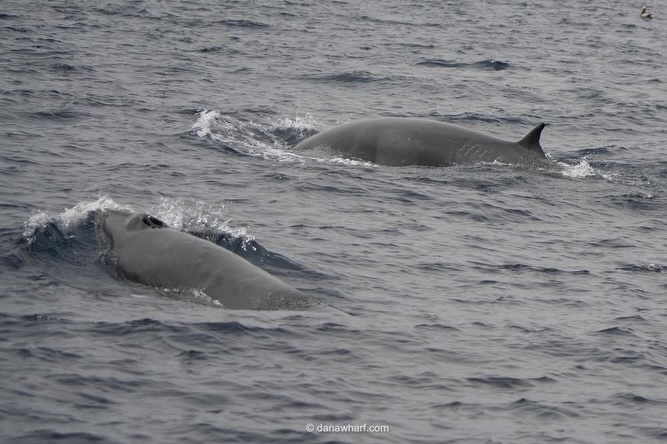
- Fin whales year-round, with a strong spring and summer presence. Fin whales are the second-largest animal on Earth and right now they’re stacked up just outside our harbor.
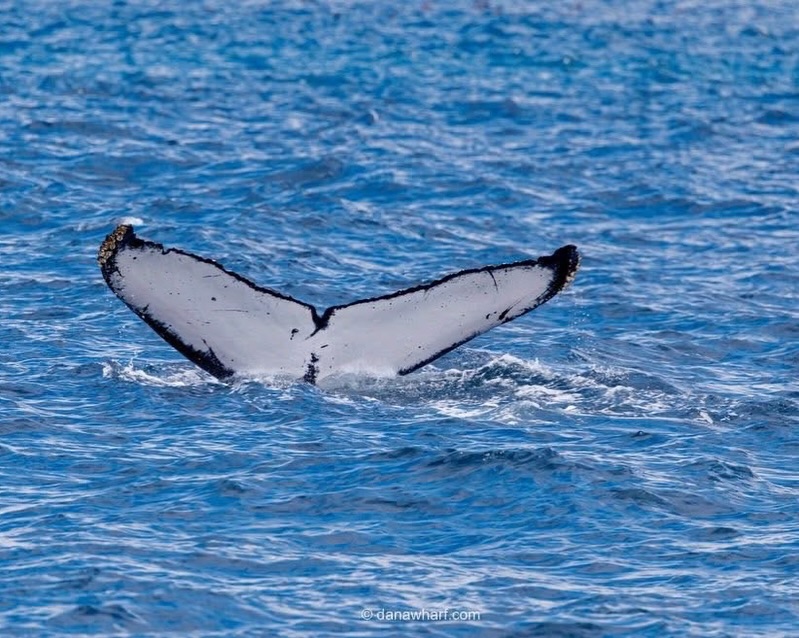
- Humpback whales sporadically, more often in summer.
- Minke whales occasionally.
- Orcas rarely, but it happens, usually around the gray whale migration.
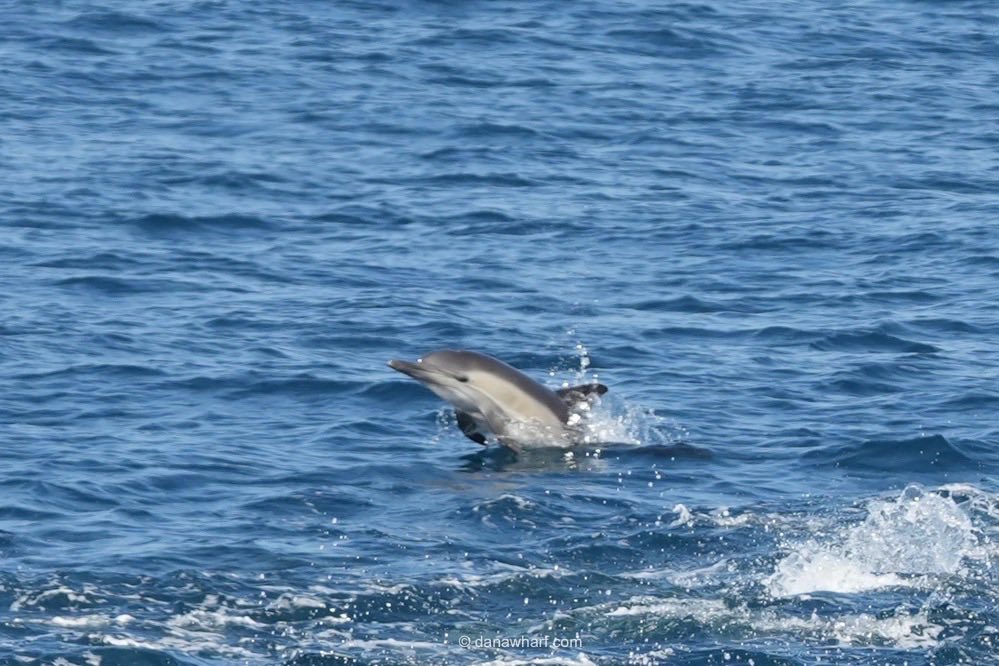
- Common dolphins in massive numbers. Southern California holds an estimated 450,000 resident common dolphins, more per square mile than anywhere else on Earth.
- Bottlenose dolphins year-round.
- Risso’s dolphins, Pacific white-sided dolphins, sea lions, harbor seals, mola mola, occasional fur seals.
So if your question is “will I see whales?” the answer is yes from either port. The question is how close, how often, and what the trip around the sighting looks like.
Why Dana Point Has the “Capital” Title
This isn’t marketing fluff. It’s geography. The continental shelf drops off remarkably close to shore here. The seafloor goes from a few hundred feet of water to well over a thousand feet just two miles off the Dana Point Headlands. That dramatic drop-off, and the cold-water upwelling it produces, is what concentrates krill, anchovies, and sardines right outside our harbor. Whales follow the food.
Practically, that means the whales pass closer to shore in Dana Point. On a typical April or May trip, we’re spotting fin whales two to four miles outside the harbor mouth. Gray whale migration hugs the coast as it passes our headlands; you can sometimes see spouts from the cliffs at Dana Point Headlands Conservation Park before you even buy a ticket.
San Diego’s whales are out there too, but the geometry is different. Early-season gray whales tend to be within three to five miles of the coast, but the northbound return migration runs nine to twelve miles out. That’s a longer ride to the sighting and a longer ride home.
The other thing the “Capital” designation refers to is the resident dolphin population. Common dolphin megapods, sometimes ten thousand animals strong, are a Dana Point specialty. They’re everywhere off Southern California, but the bait balls and feeding conditions in our local waters draw them in close, day after day. We see dolphins on the overwhelming majority of our trips year-round.
The Sighting Frequency Question
Dana Wharf’s Whale Watching Guarantee means if your trip doesn’t produce a sighting, we rebook you for free. So you’re never paying for nothing.
The more interesting number isn’t whether you’ll see a whale, it’s how many you’ll see and how close. Across the last several years our internal logs (we record sightings on every trip) show that during peak gray whale migration in February and March, our boats average two to four gray whales per trip, often within a quarter mile of the vessel. During blue whale season in June and July, single trips frequently produce two blue whales plus a handful of fin whales plus dolphins.
That density is partly the geography, partly the captains. The boats out of Dana Point talk to each other on the radio constantly. The harbor’s small enough that the whole whale-watching fleet works as a loose network, and your boat benefits from a dozen other boats’ eyes.
Boats, Naturalists, and the Vibe
Dana Point feels different from any larger commercial whale watching operation. Our fleet runs purpose-built whale and dolphin watching vessels, typically in the 65 to 95 foot range. Our boats carry fewer passengers than the big cruise-style vessels you’ll find in larger harbors, which means more deck space per person, easier circulation when a whale shows up on one side, and a more direct line of sight from any seat. Our naturalists, most of whom are working marine biologists or longtime sighting log volunteers, stay with you the whole trip. You can corner them with questions. They want you to.
The harbor itself is part of it. Dana Point Harbor is small enough that you walk from your car to your boat in five minutes. There’s no parking deck, no waiting for a shuttle. The whole arrival and departure feels low-friction, which matters more than you’d think on a tour you’re already paying for.
Cost, Tour Length, and Booking
Prices are surprisingly close. Adult tickets in both regions tend to run in the same range, typically $50 to $70 for a standard 2 to 3 hour trip, with kids meaningfully cheaper.
Dana Wharf’s standard whale watching trips are two hours, which is the sweet spot most guests prefer. Long enough to get out, find whales, and get a real sighting. Short enough that kids don’t get bored and seasickness-prone passengers don’t push their limit. We also run private group charters if you want the boat to yourselves.
Booking-wise, Dana Wharf runs multiple trips daily during peak seasons. We fill up on weekends and holidays. The trick is to book at least a few days ahead from May through August (blue whale season) and from February through March (peak gray whale).
Drive Time: The Real Decision-Maker
For most of our guests, this is the actual variable that decides it.
From LA proper, Dana Point is about an hour with normal traffic. San Diego is two-plus hours. From Anaheim or Irvine, Dana Point is 30 to 45 minutes; San Diego is 90+ minutes. From north San Diego County (Carlsbad, Oceanside, Encinitas), it’s actually closer to come up to Dana Point than to drive into downtown San Diego with parking.
From downtown San Diego itself, Dana Point is an hour and fifteen minutes north on the 5. For an experience this much better, that’s an easy drive.
The Option Nobody Mentions
Dana Wharf also runs whale watching trips out of Oceanside, which sits halfway between San Diego and Dana Point on the coast. If you’re in north San Diego County, Oceanside is the natural middle-ground choice: closer than Dana Point for SD-area residents, and operating in the same productive water that gives Dana Point its sighting reputation. Same crew, same trip philosophy, different harbor.
Whichever port you pick, the whales are out there year-round. Fin whales right now, blue whales starting in a few weeks, and a parade of gray whales coming back through next winter. If you end up choosing Dana Point, you can book a trip here or call us at the wharf with any questions. We’ll save you a spot on the rail.