
What to Wear Whale Watching in Summer: A Local’s Light-Layer Guide
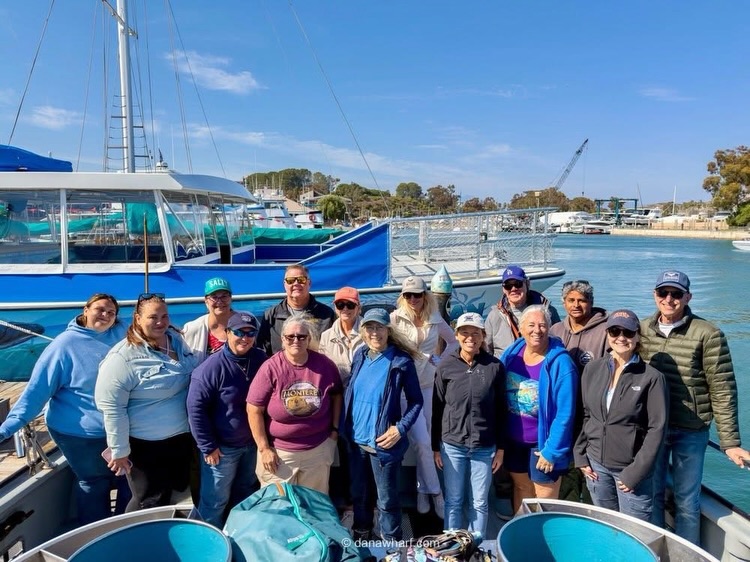
The most underdressed group of whale watching guests we see all year shows up between June and September. People look at the inland forecast, see 87 degrees, dress for a pool day, and walk down the dock in shorts and a tank top. Then the boat clears the breakwater, the westerly comes up at 12 knots, and they spend the next two hours cold.
Summer whale watching out of Dana Point is the best version of the trip all year, but it has its own dress code. This is the running guide we give first-timers in June, July, August, and September. The principle is simple: you are dressing for the wind off the water, not the temperature on the freeway.
The Summer Layering System
The system that actually works:
- Base: A regular t-shirt or short-sleeve top. Anything you’d wear to lunch.
- Mid: A light long-sleeve over it. Sun shirt, light fleece, light hoodie, anything you can pull on and off easily.
- Shell: A thin windbreaker or rain shell. Doesn’t have to be heavy. Just has to break the breeze.
That is the entire dress code on top. You probably won’t wear all three at once, but you will rotate between them as the boat moves through different wind conditions. The first 20 minutes out is breezy. The middle hour when we are sitting on a whale is calmer. The return run is breezy again. Layering lets you match the moment.
The Number One Mistake
Skipping the shell. People think “windbreaker” sounds like overkill in July. It is not. The boat moves at 18 to 22 knots in transit. The wind across the deck is the boat speed plus or minus the natural breeze. Even a glassy day creates a 20 knot apparent wind on the deck when we’re heading out. That strips heat from exposed skin fast. A $30 thin shell from a sporting goods store solves it for the entire trip and packs down to nothing when you don’t need it.
Bottoms
Shorts work for summer in most cases. The trade-off: bare legs are colder in transit and easier to sunburn. If you’re sensitive to either, lightweight pants or capri-length leggings are a better call. Stay away from anything that drags or flares — we are constantly stepping around rope, cleats, and deck hardware, and loose hems catch.
Shoes (Non-Negotiable)
Closed-toe with grip. Sneakers, deck shoes, sandals with a heel strap and a flat rubber sole. The non-starters: flip flops, slides, anything backless, heels. The deck moves under you, and your foot needs to be planted. We have watched too many flip-flops fly overboard in 15 years to be neutral on this one.
The Hat Question
Two options work. A wide-brim sun hat gives the most shade. A baseball cap is easier to keep on in the breeze. Both share one risk: a 15 knot gust will take a hat off your head the second you lean over the rail to look at a whale.
Three solutions:
- A chin strap on whatever hat you have
- A cheap hat you don’t mind losing
- The hood of your shell instead of a hat
The hood is the most underrated choice. It tightens against your head, blocks the sun, and stays put no matter what the wind does.
Sunglasses (Polarized, Always)
Polarized lenses do two things: they cut the glare off the water so you can see whales below the surface, and they prevent the headache that comes from the sun bouncing up at you for two and a half hours. We will not be subtle about it: if you bring one piece of gear on a summer trip, make it polarized sunglasses. Cheap polarized works fine. The brand doesn’t matter as long as the lens does.
Sun Protection on Your Skin
The ocean breeze masks the burn. People walk off the boat looking like cooked lobsters because the wind hid the heat going on. The fix:
- Reef-safe sunscreen, applied before you board (give it 15 minutes to soak in)
- Reapply once during the trip, especially nose, ears, the back of your neck, and the tops of your hands
- Lip balm with SPF
- If you wear glasses, consider a clip-on UV layer or just remember sunglasses cover most of the eye area
Reef-safe matters because the runoff from the deck and the spray off the harbor goes right back into the kelp ecosystem that supports a lot of what you came to see. The big brands now sell reef-safe lines and they work fine.
What Not to Wear
The list of things people wear on a summer whale watching trip and regret:
- Bathing suits. You’re not swimming. The deck is harder on a bare lower back than you’d think, and the wind on damp skin is colder than dry skin.
- Long flowy dresses or skirts. The wind catches them, and the hem catches deck hardware.
- Brand-new white sneakers. Saltwater spray will mark them up. Wear shoes you don’t mind.
- Heavy denim. Holds wet, dries slow, takes forever to warm back up if you get sprayed.
- Dressy clothes for after. If you have dinner plans right after the trip, bring a change of clothes for the car. The boat is a working environment.
- Jewelry you can’t afford to lose. Earrings, watches, rings can all go overboard when you lean over the rail.
What to Bring Beyond Clothes
The accessories we recommend separately from clothing:
- A small backpack or drawstring bag to keep gear in
- Reusable water bottle (hydration on a sunny boat is underrated)
- Phone with a wrist strap or lanyard (drop one phone overboard and you’ll learn)
- Camera if you have one, plus an extra battery and a memory card
- Cash for the snack bar and the crew tip jar
- Bonine or Dramamine if you’re sensitive to motion (take one before you board)
For the full pre-trip packing list, our summer packing guide covers everything.
Special Cases
A few groups need different advice:
Kids: Same layering system, but kids overheat and overcool faster than adults. Bring an extra layer for them you can swap in. Closed-toe shoes are even more important. Our whale watching with kids guide covers the full kid-specific list.
Seniors: Bring an extra mid-layer. Body temperature regulation slows down with age and the wind off the water hits older bodies harder. The interior cabin is heated and comfortable if at any point you need to step out of the wind.
People prone to seasickness: Dress so you don’t have to layer on and off (which can make nausea worse). Pre-set the layers you’ll need, take Bonine before boarding, and stay outside on the deck where you can see the horizon. Our seasickness guide covers more.
Photographers: Add a wind-cutting collar like a buff or neck gaiter. You’ll be standing in one spot for long stretches and the chest wind is the part that gets you. Our whale photography guide covers the rest.
The Two-Sentence Summary
Dress in light layers with a thin shell on top, closed-toe shoes, polarized sunglasses, and reef-safe sunscreen. Skip the shorts-and-tank-top-only mistake and you’ll be one of the comfortable people on the boat from minute one.
For the full year-round breakdown, our season-by-season what-to-wear guide covers winter, spring, and fall. Live schedule is at our whale watching page. See you on the boat.