
Whale Watching in Dana Point in November: A Local’s Guide to Fall Whales and the First Gray Whales
Ask anyone at the wharf which month gets slept on, and November comes up fast. The summer crowds have thinned out, the blue whales that made July and August so loud have mostly headed south, and a lot of people just assume the good whale watching is done until the new year. It is not. Not even close.
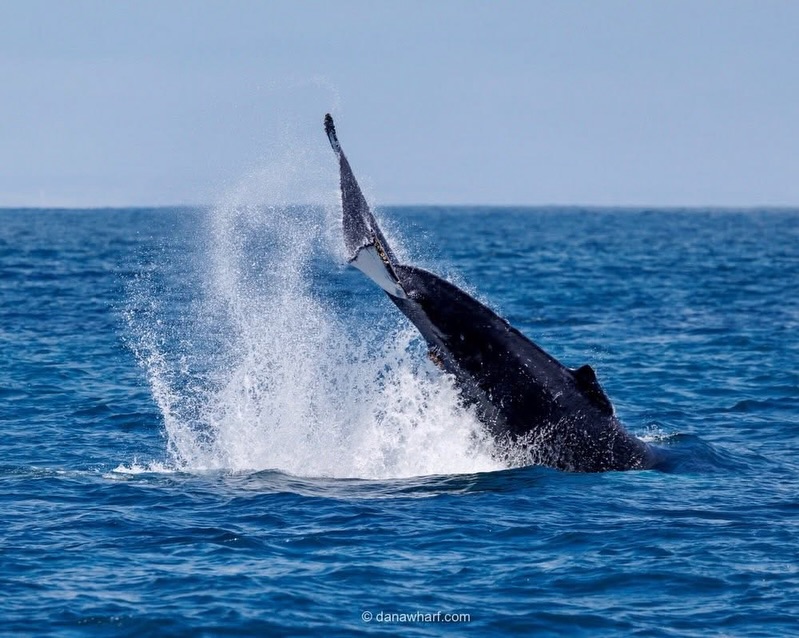
November in Dana Point is a changeover month, and that is exactly what makes it one of our favorites. On a single trip out of Dana Point Harbor you might have a humpback throwing its tail, a fin whale, the second-largest animal that has ever lived, sliding past the rail, a couple of minke whales, and dolphin pods so big they turn the water silver. Then, right at the tail end of the month, the first gray whales of the season start trickling down the coast on their way to Baja. You get the last of fall and the very first of winter on the same ticket.
Here is what we actually see in November, straight from the people who run these boats every day. If you want the bigger-picture rhythm of the whole year, our October guide covers the month right before this one.
What Whales Can You See in Dana Point in November?
November is a genuine mixed bag, and we mean that in the best way. Here is the short list of what shows up off Dana Point this time of year:
- Humpback whales. Still the headliners in November. Fall is prime humpback time off Southern California, and they are the most likely species to give you a breach or a big tail throw.
- Fin whales. The second-largest animal on the planet after the blue whale, and one we see nearly year-round off this coast. Late fall is a very reliable stretch for them.
- Minke whales. Smaller, shy, and here all year. They do not put on a show like a humpback, but a good captain will find them.
- Gray whales. The new arrivals. The leading edge of the southbound migration starts passing us in the back half of November.
- Dolphins, every single trip. Common dolphin, bottlenose, and Risso’s, often in the thousands.
The one species winding down is the blue whale. A few stragglers can still turn up early in the month, but the giants that feed here all summer have mostly moved on toward their winter waters by November. If a blue is what you are after, plan for next summer instead.
Are the Humpbacks and Fin Whales Still Around in November?
Yes, and this is the part people miss. Humpbacks are the most acrobatic whale we see, and November is still well inside their season here. When a humpback decides to put on a show, it throws its flukes high before a deep dive, slaps its long pectoral fins, and sometimes launches its whole body out of the water. There is nothing else like it. If you want the deep dive on this species, we wrote a full guide to humpback whales.
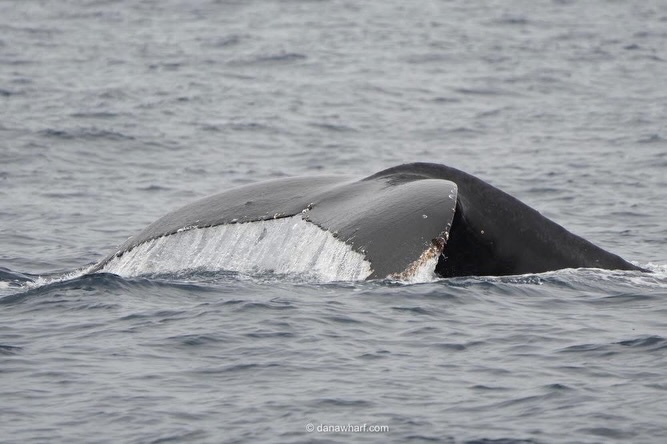
Fin whales are the quiet stars of late fall. They do not breach and they rarely lift their tails, but they are enormous, fast, and unmistakable once you know what to look for: a tall, columnar spout followed by a long, sleek back that seems to roll on forever. Watching a 70-plus-foot fin whale surface next to the boat is a different kind of thrill than a humpback breach, and November is one of the best months of the year to catch one.
When Do the First Gray Whales Show Up?
This is the question we get most in November, and the honest answer is: late in the month, and not in big numbers yet. Gray whales leave their Arctic feeding grounds in the fall and swim south to the warm lagoons of Baja California to breed and give birth. It is one of the longest migrations of any mammal, roughly 10,000 to 12,000 miles round trip.
The leading edge of that migration is mostly late-pregnant females in a hurry to reach the lagoons before they calve. Those first travelers usually start passing Dana Point in the second half of November and early December, and they tend to move solo and move fast. The big numbers, and the mothers with new calves, come later. The southbound parade really peaks from late December through February, so if a wall of gray whales is your goal, November is the warm-up act and the dead of winter is the main event. Our guide on the best time to see gray whales in Southern California breaks down that whole window, and if you want to know the animal itself, start with our complete gray whale guide.
What that means for a November trip: you have a real shot at being among the first people of the season to spot a gray whale, while everything else from fall is still around. That overlap is unique to this month.
What About the Dolphins?
If you take one thing from this whole guide, take this: the dolphins do not leave. Dana Point sits inside the permanent home range of several dolphin species, and we see them on the overwhelming majority of trips no matter the month. November is no exception.
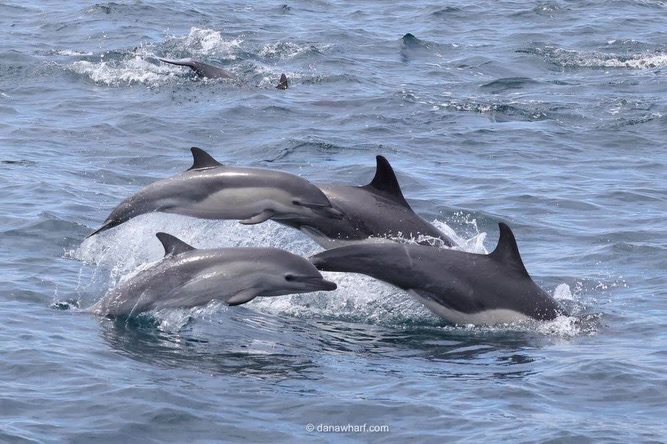
Common dolphin are the ones that steal the show. They travel in pods that can number in the hundreds and sometimes the thousands, a churning, leaping mass of animals that will ride the bow wave right in front of you. When a pod gets that big we call it a megapod, and there is a real art to timing them, which we cover in our megapod guide. You will also see chunky bottlenose dolphin cruising the coastline and, if you are lucky, the big scarred-up Risso’s dolphin that hunt squid out in deeper water. On a slow whale day, the dolphins alone are worth the trip.
What Is the Weather and the Water Like in November?
November mornings off Dana Point are cool, often in the 50s and 60s, and the ocean has usually calmed down from the wind of early fall. It can be crisp leaving the harbor and pleasant by mid-morning once the sun is up. The water is chilly, the light is gorgeous, and the boats are far less crowded than they are in July.
The move is layers. A warm top, a windbreaker or a jacket you can shed, closed-toe shoes, sunglasses, and sunscreen even on a gray day. We break down the full seasonal packing list in our what-to-wear guide. If you are prone to motion sickness, the ocean can have a little more roll this time of year, so read our tips on avoiding seasickness before you come down. A few simple habits make a big difference.
Is November a Good Time to Go Whale Watching in Dana Point?
It is one of the most underrated months on our calendar, and here is the case for it. You get the last of the fall humpbacks and fin whales, dolphin pods that show up nearly every trip, the very first gray whales of the season, smaller crowds, softer light, and lower demand than the summer peak. Dana Point is recognized as a Whale Heritage Site and gets called the whale watching capital of the world for a reason: deep offshore canyons sit unusually close to shore here, which brings the food, which brings the whales, closer to the harbor than almost anywhere else on the West Coast. That does not switch off in November.
If you are choosing a single stretch of coast in Southern California to see whales this month, Dana Point is the one to book. We run trips out of Dana Point Harbor all November long, and our sister operation up the coast in Oceanside is a great second launch point if the timing works better for you.
Ready to get out on the water? Check the schedule and book a Dana Point whale watching tour, and come see why we think November is the sleeper month of the whole season.