
Whale Watching in Dana Point in October: A Local’s Guide to Fall Humpbacks and Dolphin Megapods
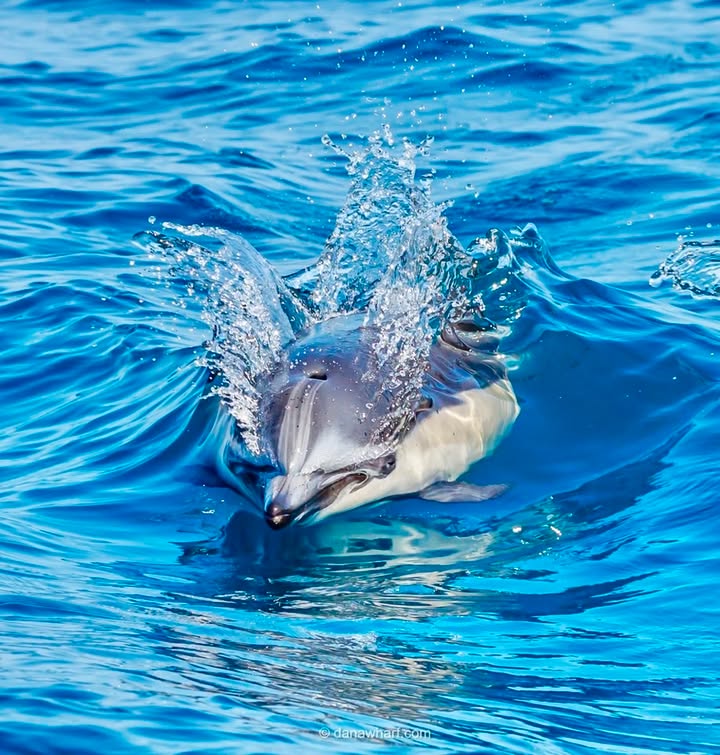
Ask anyone who works the docks here and they will tell you the same thing: October is one of the best-kept secrets in Dana Point. The summer crowds have thinned out, the kids are back in school, and the ocean does this thing in fall where it goes flat and glassy for days at a time. You get a calm ride, clear views all the way to Catalina, and some of the most active marine life of the whole year.
People assume the show winds down once summer ends. It does not. October sits right in the sweet spot between the tail end of blue whale season and the fall humpback push, and the dolphin megapods off our coast are as big as they get. If you are trying to time a trip and want fewer people on the rail and a real shot at a great day, this is the month to do it.
Here is what we actually see off Dana Point in October, and how to get the most out of a trip.
What Whales Can You See in Dana Point in October?
October is a transition month, and that is exactly what makes it interesting. You get a little bit of everything.
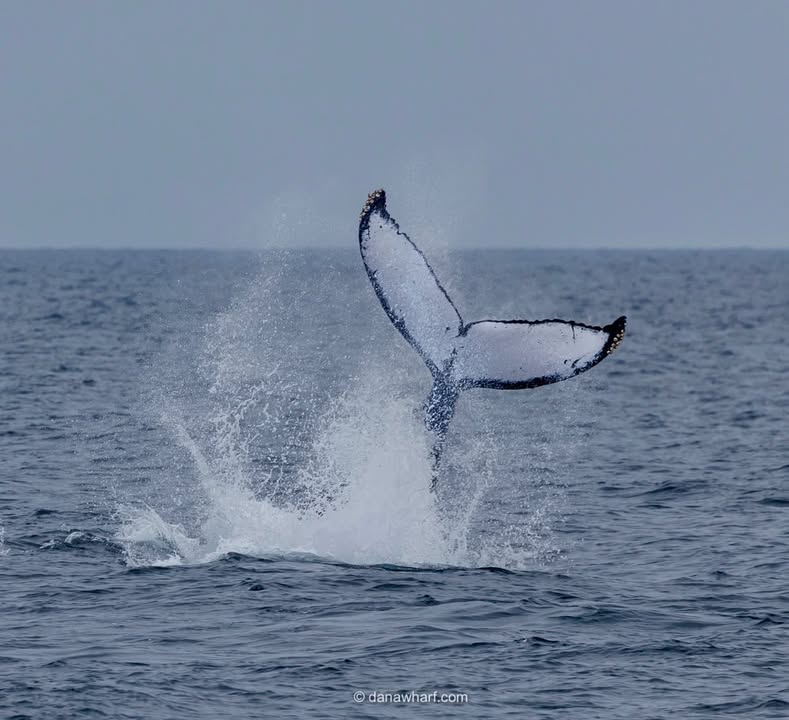
Humpbacks are the headliner. Fall is genuinely the best stretch of the year to see them off our coast, because they are still feeding hard on anchovy and krill before they head south, and a well-fed humpback is a showy humpback. According to NOAA Fisheries, humpbacks feed in California waters from spring right through into November, so October catches them at their most active. These are the acrobats of the whale world. When one starts breaching, tail-slapping, or throwing its fluke, the whole boat loses its mind. If you want help telling one apart from the other big whales out here, our guide on how to tell a gray whale from a humpback breaks it down.
Fin whales are the other big one in October. They are the second-largest animal on the planet, right behind the blue whale, and they hang around our waters year-round. Fall is a reliable time to find them, and there is nothing subtle about a fin whale surfacing next to the boat. You feel it before you see it.
You can also still catch the very tail end of blue whale season. Blue whales move through Southern California roughly from May into November, so a few of them sometimes linger into early October before they move on. We never promise a blue this late in the year, but it happens, and when it does it is the biggest animal that has ever lived cruising right off Dana Point. Minke whales round out the list as an occasional surprise. For a fuller rundown of the fall lineup, take a look at what whales you might spot this fall off Dana Point.
The Dolphin Megapods Are the October Headliner
If there is one thing we can almost always count on, it is dolphins. Dana Point is called the Dolphin and Whale Watching Capital of the World for a reason, and October is prime time for the big schools.
Common dolphins are the stars. They travel in enormous groups, and off our coast it is not unusual to find pods of a thousand or more. On the right day you run into a true megapod. NOAA notes that short-beaked common dolphins occasionally gather in mega-pods of thousands, up to 10,000 animals. Picture the ocean surface boiling with dolphins in every direction, calves tucked alongside their mothers, the whole herd racing to ride your bow. It is one of those things you have to see in person to believe. We wrote more about it in our piece on the magic of megapods.
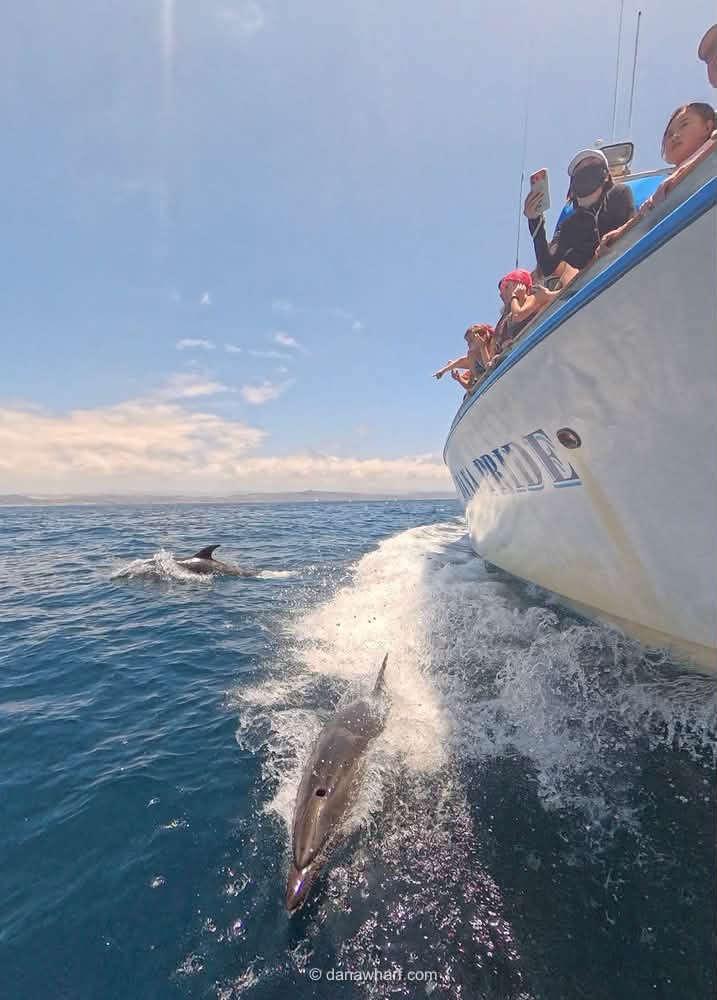
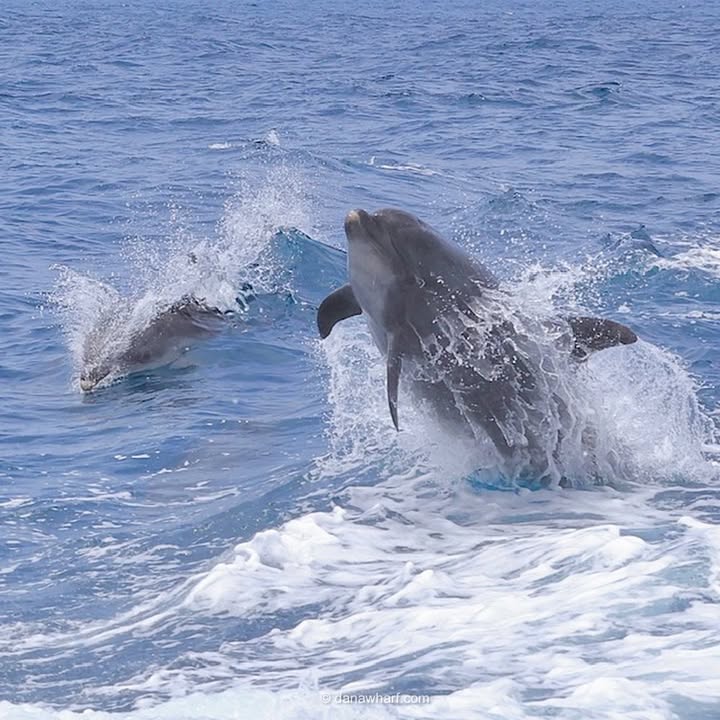
You are not just seeing common dolphins, either. Bottlenose dolphins patrol close to shore, Risso’s dolphins work the deeper water, and October is right when the Pacific white-sided dolphins start showing back up as the water begins to cool. They tend to stick around from fall through spring, so an October trip is often the first chance of the season to catch them. If you want to know who is who, our guide to the types of dolphins in Dana Point covers all of them.
Why October Might Be the Most Underrated Month on the Water
The wildlife is only half of it. The conditions in October are honestly some of the best all year.
By fall the summer marine layer has mostly burned off, so instead of gray mornings you often get bright, clear skies and long views across the channel. The wind tends to lay down, the swell drops, and the ocean can turn to glass. That matters for more than comfort. Calm water makes it far easier to spot a blow on the horizon or a dorsal fin cutting the surface, so you often see more animals on a flat day than a choppy one.
Then there are the crowds, or the lack of them. Summer is our busy season, and the boats fill up. Come October the pace slows, the boats are roomier, and you have more space at the rail to actually take it all in. Cooler, calmer, quieter, and still loaded with wildlife. That is a hard combination to beat.
What About Gray Whales? Are They Here Yet?
This is the question we get most in fall, so let us clear it up. The gray whales are not here yet in October, and that is normal.
Gray whales make one of the longest migrations of any mammal on earth, and the southbound leg down our coast does not really get going until later in the year. NOAA Fisheries tracks the southbound migration from November into mid-February, with the numbers passing Southern California peaking in the dead of winter. So October is the calm before the gray whale season, not the start of it. If gray whales are specifically what you are after, plan a trip for late December through March. If you just want a great day on the water with humpbacks, fin whales, and huge dolphin schools, October delivers right now. For the bigger picture on how the fall migration unfolds, see our post on the Southern California fall whale migration.
What Should You Bring on an October Whale Watch?
Fall on the water is a different animal than summer, and dressing for it makes or breaks the trip. The key word is layers.
Mornings and evenings can be crisp, and it is always cooler out on the open ocean than it feels standing in the parking lot. Bring a windbreaker or a light jacket even if the day looks warm, because the wind over the water has a bite to it in October. A hat, sunglasses, and sunscreen still earn their spot, since the fall sun off the water is stronger than people expect. Closed-toe shoes with a bit of grip help on a moving deck. Toss in a small pair of binoculars if you have them, and bring your camera, because the fall light out here is beautiful. Our full season-by-season guide to what to wear whale watching goes deeper if you want it.
When Is the Best Time to Book Your October Trip?
We run trips throughout the day in October, and honestly there is no bad time to go. That said, mornings often bring the calmest water and the softest light, which a lot of our regulars swear by. Afternoons warm up and can be a little livelier. We broke down the tradeoffs in our take on morning versus afternoon whale watching tours if you are trying to decide.
One more tip: October days are getting shorter, and the late-afternoon light this time of year is something special out on the water. A later trip can put you on the ocean right as everything turns golden.
Ready to see it for yourself? Check out our Dana Point whale watching tours and grab a spot on one of our boats. Our captains and naturalists are on the water every single day, and they know exactly where to look. If you are coming from further south, our sister operation runs trips out of Oceanside whale watching too. Either way, October is a fantastic month to get out there before the winter gray whale rush begins. We will see you on the water.