
Whale Watching in Dana Point in March: A Local’s Guide to the Northbound Migration and the Festival of Whales
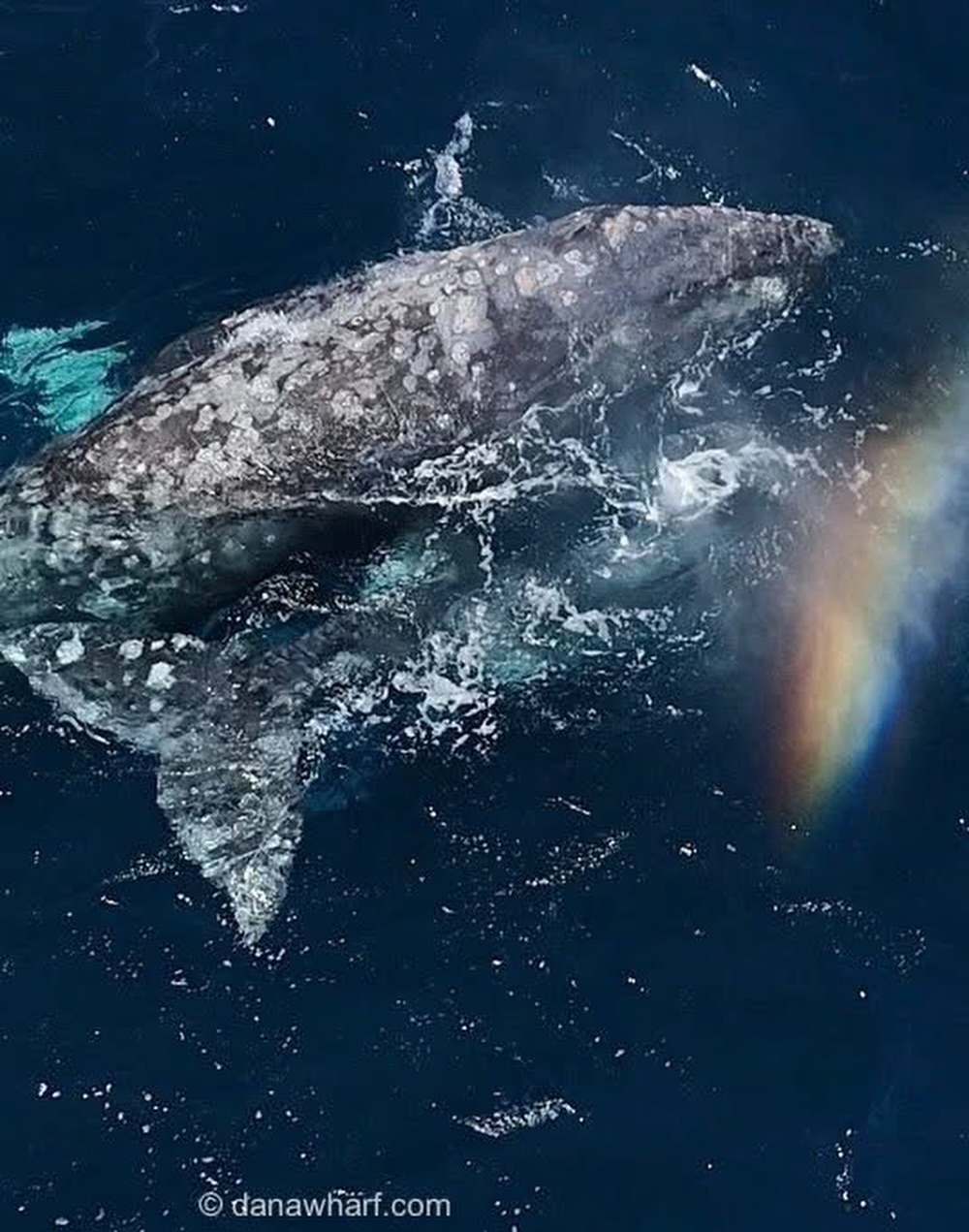
By March the gray whales have turned around. The animals passing Dana Point are no longer running south to Baja with somewhere to be. They are coming back up the coast from the calving lagoons, and they are in far less of a hurry about it.
That changes what a trip actually looks like from the rail. A northbound gray whale in March tends to travel closer to the beach, surface more often, and give you a longer look than a southbound whale did in January. It is the difference between watching traffic on the freeway and watching it on a side street.
March is also the month Dana Point throws a three day party for these whales. Here is what we see on the water this month, what the ocean is doing, and how to plan a trip around it.
What Makes March Different From January and February?
January is a southbound month. February is the changeover, when both directions overlap and you can find whales going opposite ways on the same trip. We covered that oddity in our February whale watching guide.
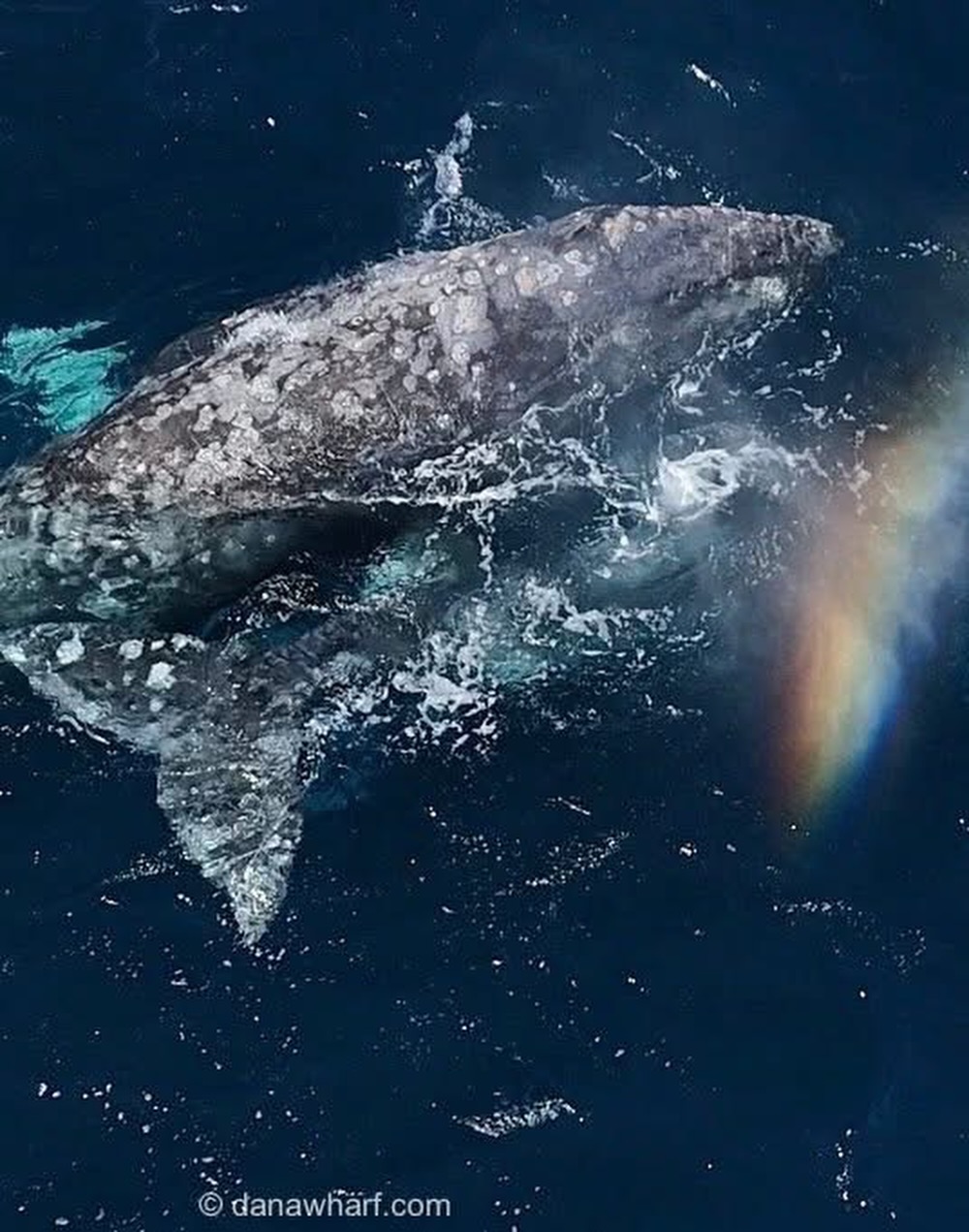
March is the month the northbound migration takes over completely. According to NOAA Fisheries, gray whales head back north from mid-February through May, and by early March the southbound stragglers have essentially cleared out. Everything you see is heading home.
The practical difference is distance from shore. Southbound whales are making time and often run a mile or two out. Northbound whales hug the coastline. Last March we watched a gray whale work along the Dana Point Headlands in twenty to thirty feet of water, close enough that people on the bluff were watching the same animal we were.
Why Do Northbound Gray Whales Come In So Close?
Two reasons, and both of them work in your favor.
The first is navigation. Gray whales follow the coastline north the way you would follow a handrail in the dark. They are shallow water animals to begin with, and the shoreline is the most reliable thing out there.
The second is safety. Mothers traveling with new calves stay in the shallows deliberately, because deep open water is where the trouble is. A calf in fifteen feet of water next to a sand beach is a much harder target than a calf in a thousand feet of water offshore.
Dana Point sits almost exactly halfway along the route, and the way the Headlands and the Catalina Channel are shaped funnels these animals right past us. That geography is the whole reason this place is the Dolphin and Whale Watching Capital of the World, and it is why a March gray whale here is usually a close gray whale.
These are substantial animals to have that near the beach. NOAA lists adult gray whales at 42 to 49 feet and around 90,000 pounds. They come north from three shallow lagoons on the Pacific side of Baja California, Laguna Ojo de Liebre (also called Scammon’s Lagoon), San Ignacio, and Magdalena Bay, where the calves are born from roughly early January through mid-February. NOAA puts the full round trip at about 10,000 miles, with some individuals covering considerably more. Every one of those miles gets logged past this coastline twice.
What Did We Actually See Last March?
Averages are not very useful when you are deciding which day to book. Here are real days off our boats last March.
- March 11: five gray whales on the move together, spouts on the horizon and flukes in the air.
- March 14: a quartet of four migrating gray whales traveling as a group just off the coast.
- March 15: four gray whales, plus both offshore and coastal bottlenose dolphin and common dolphin.
- March 16: five gray whales, a friendly fin whale feeding off South Laguna, common dolphin, a mola mola and a sea turtle.
- March 18: ten gray whales across the day, eight of them on the 4:30pm trip alone.
- March 29: a northbound gray whale right at the Headlands in twenty to thirty feet of water.
That is a strong March, and not every day hits those numbers. Anyone who tells you the ocean is predictable has not spent enough time on it. But those are honest ceilings, and they explain why March fills up the way it does.
Will You See a Gray Whale Calf in March?
Sometimes, and the odds climb steadily as the month goes on.
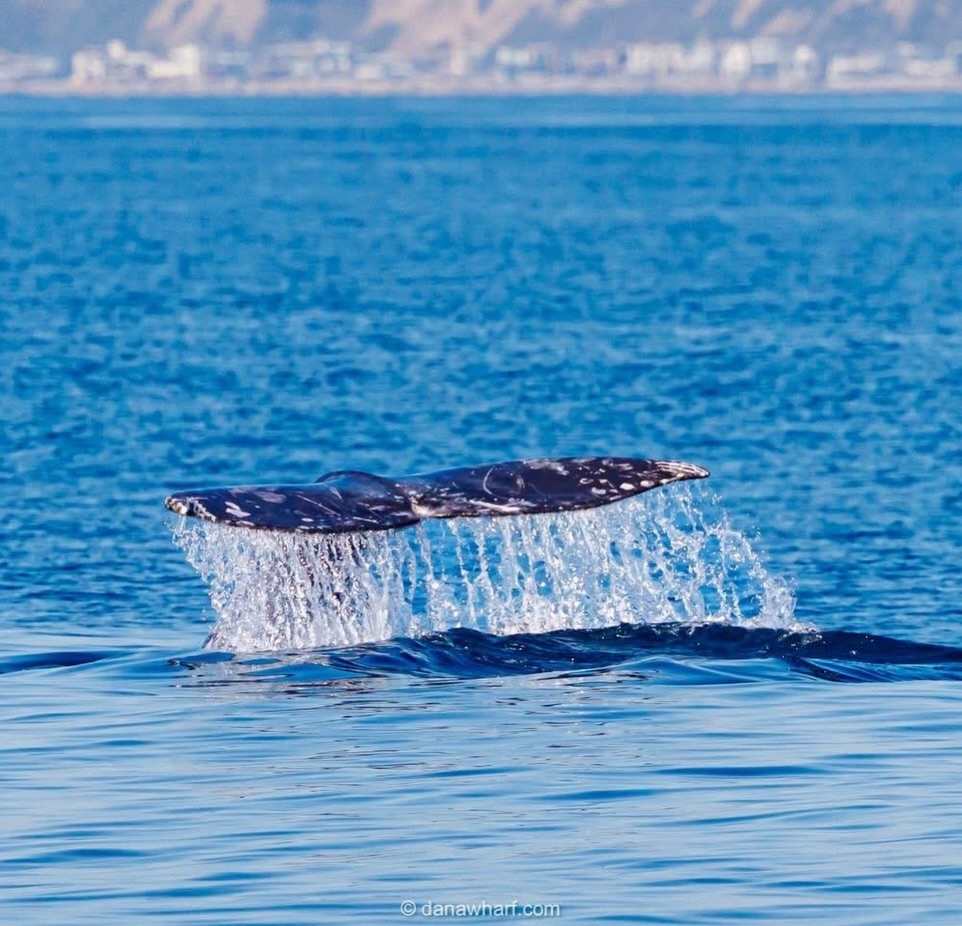
Here is the honest version. Mothers with newborns travel slower than everyone else and they leave the lagoons later. The single adults and juveniles come through first, which is what most of March is made of. Cow and calf pairs build through late March and really take over in April and May.
Last season our best calf encounters landed just past the end of March. In mid-April we had a gray whale mother and calf cruising in about fifteen feet of water off Three Arch Bay, and a few days before that we logged six northbound gray whale sightings in one day, all of them close to the beach.
So if a baby gray whale is the entire reason for your trip, book the back half of March or push into April, and read our guide to cow and calf season first. If you want the best overall odds of seeing gray whales at all, any week in March will do it.
How Is the Gray Whale Population Doing?
This is the question we field most often on the bow in spring, and the answer has some real texture to it.
The eastern North Pacific gray whale came off the Endangered Species list in 1994 after recovering from commercial whaling, and it stays protected under the Marine Mammal Protection Act. Then numbers fell hard during an Unusual Mortality Event that ran from 2019 through 2023, and calf production has stayed low since. NOAA’s 2025 calf estimate came in at 85, the lowest on record.
The abundance count moved the other way. In July 2026 NOAA Fisheries estimated the 2025/2026 population at between 15,930 and 20,530 whales, averaging around 17,750, up from an average near 12,890 the year before. NOAA notes that a jump that size probably exceeds what reproduction alone could produce, so it may reflect changes in survey conditions or whale behavior rather than a genuine surge. These are trend lines with wide error bars, not headcounts.
What we can tell you is what came past the boat, and last March there were plenty of them.
What Else Is Out There in March?
Gray whales are the headline act, but they are not alone.
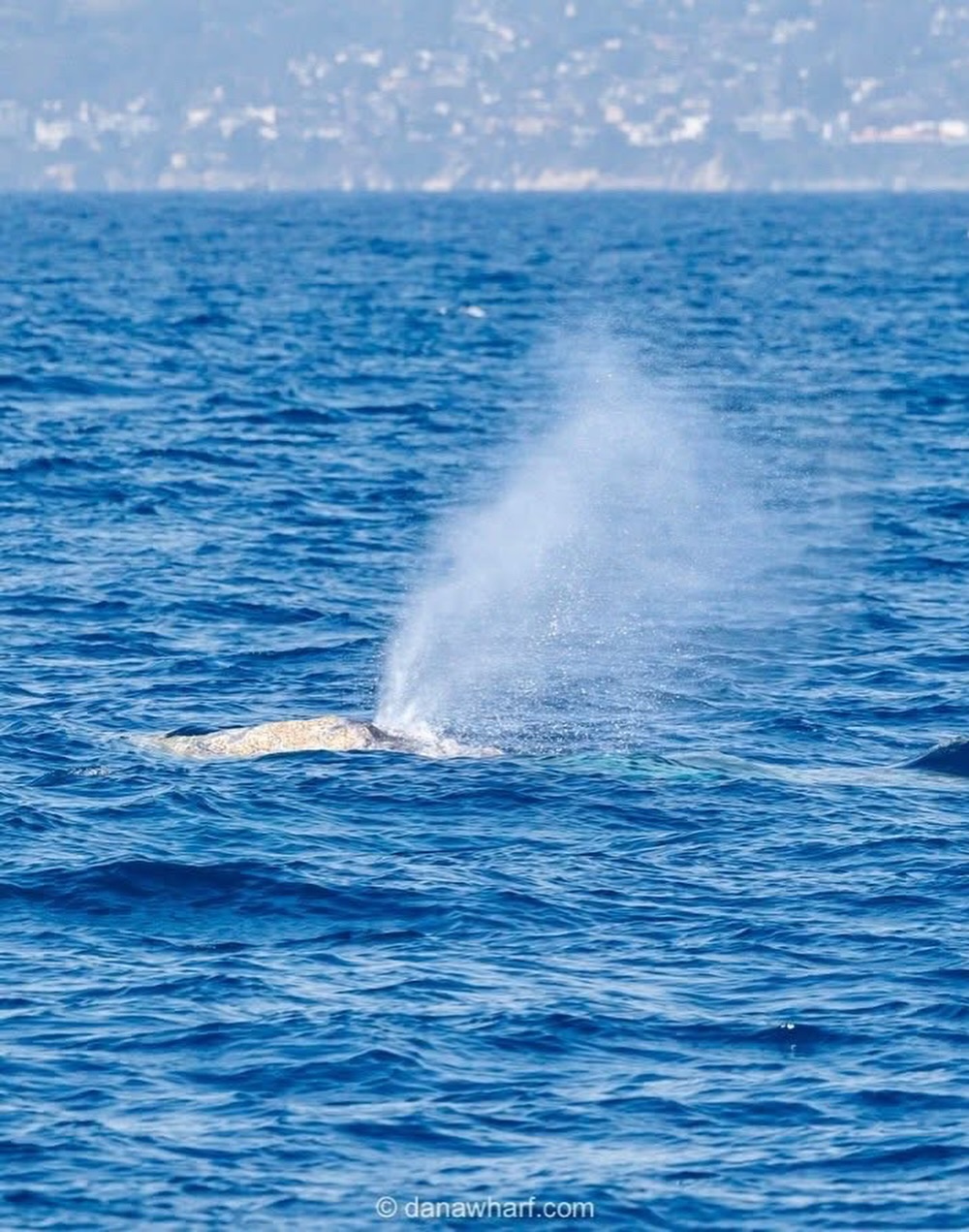
Fin whales. The second largest animal on the planet and a year round regular here. We had one feeding off South Laguna for most of a day last March. They are fast, they are enormous, and because they rarely fluke, plenty of people do not register what they just watched.
Humpbacks. They used to be strictly a summer animal off this coast. Over the last several seasons we have found them through winter and into spring, and a humpback will usually out-perform a gray whale at the surface.
Dolphin. Common dolphin are on essentially every trip, sometimes in the hundreds. NOAA describes them as abundant off California year round, and the megapods that run into the thousands can turn up in any month, March included. Bottlenose work closer in along the surf line. Our guide to dolphin megapods covers what to look for.
The odd ones. Mola mola sunfish, sea turtles and the occasional pelagic bird flock all turn up in March. They are not why anyone books, but they are why the naturalists keep binoculars up between whales.
What Is the Festival of Whales?
Dana Point has been throwing this festival for more than half a century, which makes it one of the oldest continuously running community events on this coast. It celebrates exactly what is happening offshore in March: the whales coming back north past the harbor.
The 56th Annual Dana Point Festival of Whales runs March 5 through 7, 2027. Expect a parade, the Welcoming of the Whales ceremony behind the Ocean Institute, educational exhibits, food, and a harbor full of people who came specifically to look at whales.
Two things worth knowing if you are planning around it. Festival weekend is the busiest stretch of our entire spring, so book trips well ahead. And the whales do not observe the calendar. The migration runs all month, so if crowds are not your thing, any other weekend in March gives you the same whales with a lot more elbow room.
What Should You Wear on a March Whale Watch?
This is what people get wrong most consistently. It will be pleasant in the parking lot and it will be meaningfully colder two miles offshore with the boat underway and the wind over the bow.
Layers, a windbreaker, and closed toe shoes. Bring a beanie, especially on the morning trips. Spring sun on the water is stronger than it looks, so sunglasses and sunscreen still apply. Our full breakdown is in what to wear whale watching.
March can also bring an afternoon breeze and some leftover winter swell. If you are prone to motion sickness, take something before you board rather than after you start feeling it, and read our captains’ notes on avoiding seasickness.
When Should You Book a March Trip?
The whole month works, but the back half tilts your odds toward calves and toward whales tucked in tight against the coast.
Mornings usually have the calmest water and the cleanest light, which matters if you are bringing a camera. Our late afternoon trips have a habit of delivering, though. Last March our 4:30pm boat found eight gray whales in a single outing. If you want to come home with something worth printing, we put together how to photograph whales with our captains.
Weekdays are quieter than weekends across the board, and Half Price Tuesdays make a March midweek trip the best value on the calendar. If you are bringing small kids, our Wyland Whale and Dolphin Adventure art lesson runs Saturday mornings at 9am before the 10am departure, and our parent’s guide to whale watching with kids handles the rest.
Every one of our whale watching tours carries our sighting guarantee. If the captain decides you did not get a satisfactory showing of whales or dolphins, you get a Whale Check, good for a free return trip, and it never expires. We are not going to pretend we control the ocean, so we would rather you come back.
If you want to see how March stacks up against the rest of the year, our month-by-month guide lays out all twelve.
They are heading home this month, and they are coming right past us to do it. Come watch them go.