
Dana Point vs Los Angeles for Whale Watching: An Honest Local Comparison
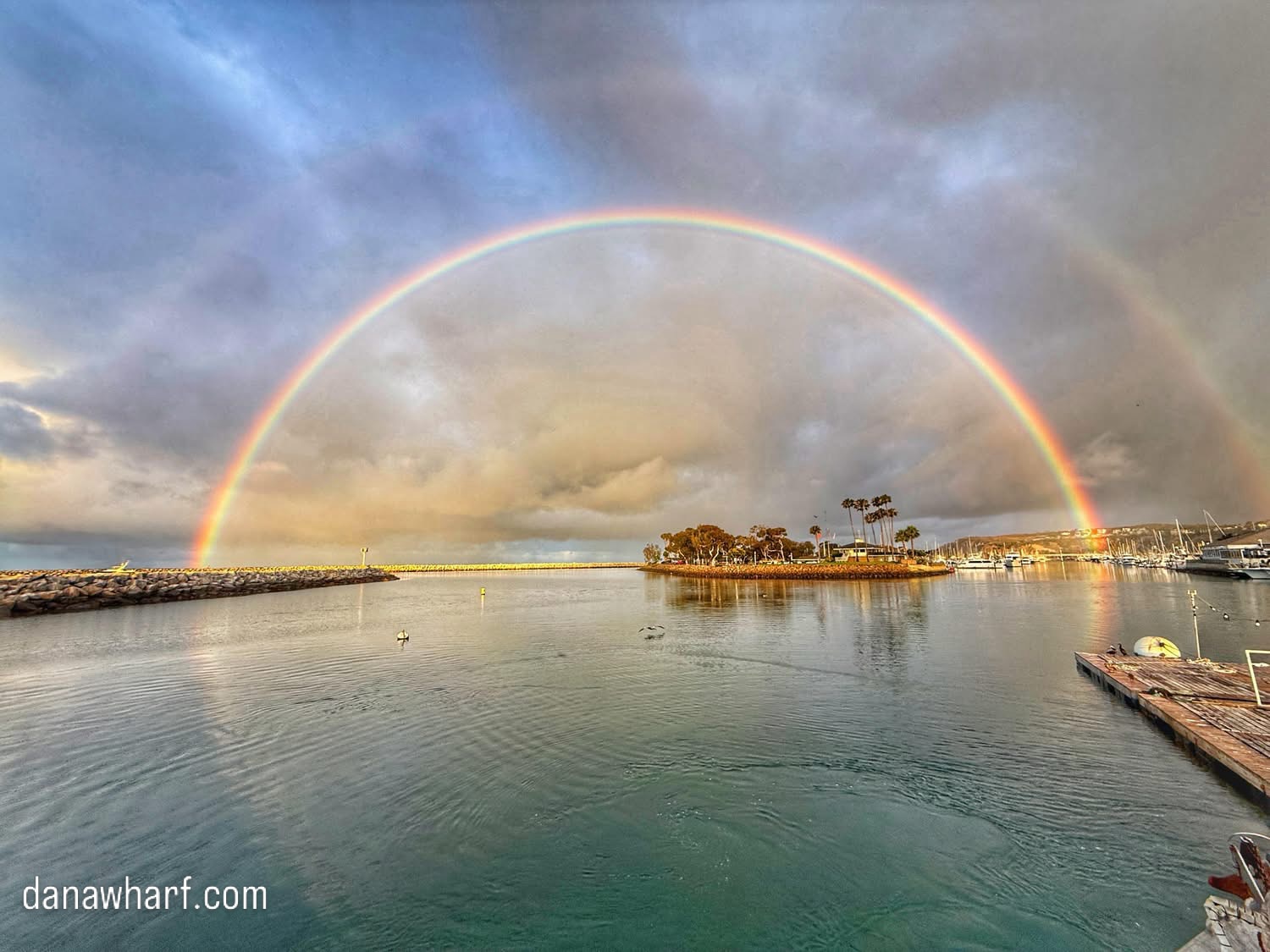
If you are visiting Southern California and trying to decide between Los Angeles and Dana Point for a whale watching trip, here is the honest take from people who run these boats for a living. Dana Point is our home harbor, so we know exactly why it works. We’ll lay out the comparison the way we would for a friend asking us at a barbecue. Geography, species, timing, and the trade-offs.
Short version: Dana Point is the better choice for most visitors most of the year. The longer version below explains why.
The Geography (This Is the Whole Comparison)
Whale watching success comes down to one variable above all: how fast you can get from the dock to where the whales actually are. Southern California whales feed and migrate along a specific corridor of underwater banks and submarine canyons that sit between about 6 and 25 miles offshore. The harbor that is closest to that water wins.
From Dana Point Harbor, the kelp line is 14 minutes from the dock. Productive whale water starts inside 30 minutes. Blue whale grounds in summer are about 35 minutes out on a fast boat.
From most Los Angeles area harbors, the run is significantly longer. The geography means a bigger chunk of every trip is spent transiting in or out, not watching whales. On a 2.5 hour trip, the difference adds up to a noticeable gap in actual on-water whale time.
This is not a small difference. If you are looking at two trips that both say “2.5 hours” on the booking page, and one of them gets you to whale water 20 minutes sooner, the Dana Point trip effectively gives you almost 40 extra minutes of whale time (20 each way). On a wildlife trip, time on station is everything.
What You Will See in Each Spot
Same species, different reliability. The whales that move through Southern California don’t recognize harbor boundaries; they follow temperature, krill, and bait fish. So you can technically see the same animals from a boat leaving any harbor in the Southern California Bight. The question is how often and how close.
Off Dana Point, our boats have a sighting rate above 95 percent across the year. The mix you’ll see:
- December through March: Gray whales on the southbound and northbound migration. We sit at the closest point on the SoCal coast to their migratory line.
- May through October: Blue whales and fin whales feeding on krill within 10 miles of the harbor.
- Year round: Common dolphins (often in megapods of 1,000 plus), bottlenose dolphins, Risso’s dolphins, sea lions, mola mola, and the occasional minke or humpback.
Trips out of the Los Angeles area can see the same species but the reliability and the distance to them isn’t the same. The shorter your transit, the more likely your captain can spend time on multiple sightings rather than running between them.
The Harbor Experience Itself
Whale watching is not just the 2.5 hours on the boat. It is the harbor you drive into, where you park, what you do for an hour before and an hour after.
Dana Point Harbor is small and walkable. Parking is straightforward. There are restaurants on either side of the docks, a sea lion colony hauled out on the south jetty, and historic ships you can wander past while you wait. The whole experience is contained: you can park, walk to the boat, take the trip, and grab lunch within a quarter mile of the same spot.
Most Los Angeles area harbors involve more freeway, more parking complexity, and a less walkable layout around the boats. None of that is fatal to a good trip, but it changes the day around the trip.
Drive Time From the Major Visitor Hubs
If you are staying in Anaheim, Newport, Laguna, or Irvine, Dana Point is the closer harbor by a clear margin. From most of Orange County, it is 30 to 50 minutes door to dock without traffic.
If you are staying downtown LA or in Santa Monica, both options have a real drive. Dana Point from West LA is roughly 80 minutes without traffic; a Los Angeles area harbor will be much closer. In that scenario the drive is the deciding factor for a one-day visitor.
Honest middle ground: visitors staying in the southern half of LA County (Long Beach, Torrance, Palos Verdes, San Pedro, downey, etc.) are 45 to 70 minutes to Dana Point depending on the 405. That is the cohort where the comparison is closest. Even there, the productivity gain on the water often justifies the extra drive.
For the head-to-head with the closest LA County harbor specifically, we already wrote up the Dana Point vs Long Beach comparison. Same conclusion, deeper detail.
Timing Matters More Than the Harbor
If we could give one piece of advice to anyone choosing a whale watching trip in Southern California, it would be this: pick the right month before you pick the harbor. Whale season concentrates around two windows: the gray whale migration in winter and early spring, and the blue whale and fin whale season in summer.
If you go in one of those windows, almost any well-run boat in the region will get you on whales. If you go in a slow month, the geographic advantage of Dana Point matters more because it gives the captain more options to find a productive pocket of water.
Our month-by-month season guide covers what to expect in each window. The July peak blue whale guide covers the strongest single month of the year.
The Crew Question
Anyone can sell a ticket. The captain on your boat is the variable that decides whether you actually see what you came for. Our captains have run these exact waters for decades and know which underwater banks the krill aggregate over in July, where the gray whales hug the coast on the northbound run in March, and how to read a bird raft from miles off.
Continuity matters. Half our captains started as deckhands when they were teenagers and have been on the same docks ever since. That depth of local knowledge is the thing that moves a sighting rate from “decent” to “almost certain.”
Why Dana Point Wins on Our Honest Read
If you summarize the comparison:
- Dana Point sits closer to the whale corridor than any major harbor north of San Diego.
- Sighting rate above 95 percent across the calendar.
- Walkable, simple harbor logistics.
- Captains with 30 to 40 years on these specific waters.
- Same animals you could see further north, with more time spent on them per trip.
If you are physically much closer to a Los Angeles harbor and the trip is the kind of thing where the drive will dominate your day, by all means take a closer trip. The whales are everywhere along this coast. But if the comparison is close, Dana Point is the better trip for almost any visitor, almost any month.
Plan the Trip
The live whale watching schedule is at our whale watching page. Daily trip recaps are on the fish count page. For other comparisons we have written up, see Dana Point vs Newport Beach and Dana Point vs San Diego.
Any other questions, our crew is on the phone seven days a week, and our FAQ covers the rest.