
Dana Point vs Long Beach Whale Watching: An Honest Local Comparison
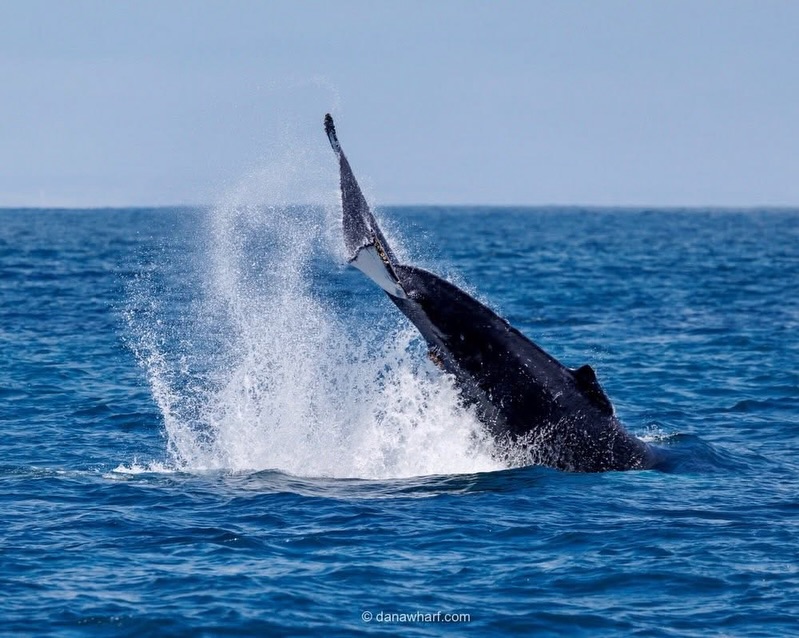
If you live anywhere in greater Los Angeles, you have two main port options for whale watching: head down toward the Long Beach harbors or drive a little farther south to Dana Point. Both will get you on the water. Both run year-round. But the experience is meaningfully different once the lines come off the dock, and a lot of guests who try both tell us they wish they had known the differences before they booked.
Here’s the straight version, from the captains who actually run these boats. We run our trips out of Dana Point, and after thousands of trips out of this harbor, the differences between the two ports come down to geography, water access, and species diversity. Here’s what changes between them.
Where Are the Whales Actually Hanging Out?
The single biggest factor in any whale watching trip is how far the whales are from the dock. Whales live where the food lives, and the food lives where deep cold water meets nutrient-rich upwelling. Off our coast, that happens at the continental drop-off, where the seafloor falls away from the shelf into the open Pacific.
From Dana Point Harbor, the drop-off is roughly two to five miles offshore depending on the day. The Long Beach harbors sit at the head of San Pedro Bay, which means you are running across a much wider, shallower shelf before you reach the same kind of water. That whole area is a working commercial harbor surrounded by oil platforms, breakwaters, and shipping lanes. The whales pass through the region, but they pass through farther out.
That geography is why our captains can find a fin whale within thirty minutes of leaving the dock during peak season. A Long Beach trip typically needs more transit time to reach the same kind of action. Dana Point earned its “Whale Capital of the World” trademark in 2019, and the city was named the first Whale Heritage Site in the Americas by the World Cetacean Alliance in 2021. The bathymetry off our headland puts us right next to one of the most productive migration corridors on the West Coast, and that recognition reflects it.
Which Coast Sees More Whales?
Both regions sit along the same migration highway. Gray whales come down the coast every winter on their way to and from the Baja lagoons. Blue whales and fin whales feed offshore in the summer. Humpbacks have been showing up in bigger numbers the last few years. Dolphins, common and bottlenose, are residents year-round.
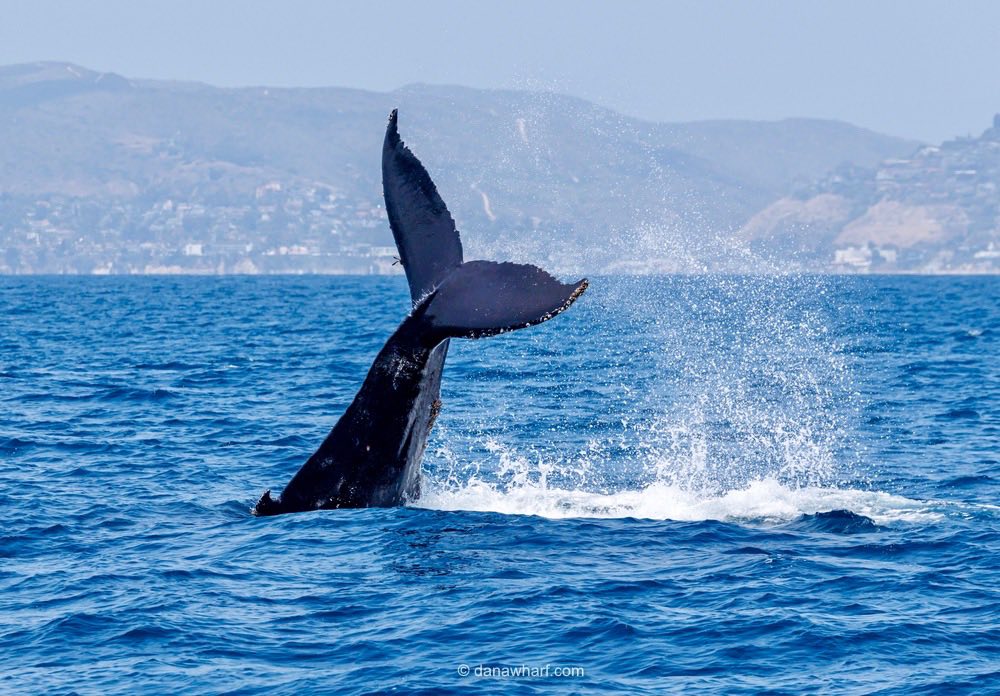
The difference is sighting frequency. Because Dana Point sits closer to the deep water, our boats spend more of the trip in whale habitat instead of running to it. On a recent May trip, the Dana Pride logged two fin whales, three humpback whales, two minke whales, and common dolphin all in one outing, about seven miles west of the headlands. That kind of multi-species day happens because we simply spend more time over good water.
If you want a feel for what shows up in any given month, our season-by-season marine life guide walks through it. And if you are trying to pick the right month for a specific species, the month-by-month Dana Point guide is the one we point guests to.
How Much of Your Trip Is Spent on Whales vs. Getting There?
This is the part people underestimate. Long Beach whale watching tours typically run about two and a half to three hours because they need extra time to reach open water and run back. The run through the breakwater and across the wider shelf eats a meaningful chunk of every trip before you are anywhere whales tend to be.
From Dana Point, we are usually past the harbor entrance and onto sightings inside the first fifteen to twenty minutes. That is not because our captains are faster. It is because the harbor opens directly onto the slope. The Dana Point breakwater sits on the edge of the drop-off, not at the head of a bay.
You are buying time with whales, not time on a boat. Our standard whale watching tours run about two to two and a half hours, and the bulk of that time is actually spent watching whales rather than transiting.
What Will You Actually See on Each Tour?
The fleets and amenities are broadly comparable between regions: modern catamarans with upper decks, indoor cabins, snack bars, and onboard naturalists. Where we differ is what comes alongside the boat.
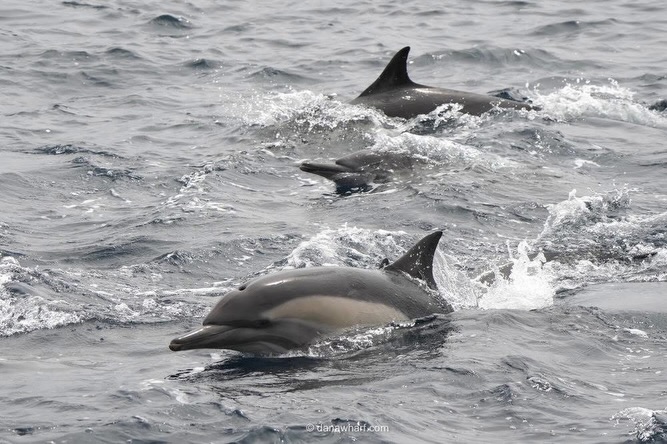
Out of Dana Point, the standard cast of characters is common dolphin (often in megapods of several hundred to several thousand), bottlenose dolphin, fin whales, blue whales in summer, humpbacks, gray whales in winter, minke whales, and the occasional sea turtle, mola mola, or shark. Killer whales pass through a few times a year. We have had sperm whales spotted off the headland.
The species list out of Long Beach is similar but the encounter rate skews more heavily toward dolphins and gray whales (in winter), with blue and fin whales requiring a longer run to find. Our megapod sightings happen frequently because the bait fish those dolphins follow concentrate right where our drop-off meets the headland current.
The species variety is what makes the Dana Point experience different. You are not just hoping to see one gray whale crossing the bay. You are watching a busy slice of the California Current with multiple species often in view at once.
Who Runs the Tours?
Dana Wharf has been running boats out of Dana Point since 1971. We are a fifty-five-year-old family operation that started as a sportfishing landing and added whale watching in the 1970s. Our captains have been finding whales off this headland for decades, and a lot of them grew up doing it. How we actually find whales is a mix of long experience, captain-to-captain radio coordination across the fleet, and current ocean temperature and wind data. It is not luck. It is a system.
The question is what you want the trip to feel like: a dedicated coastal trip out of a working harbor that has built its identity around the marine life, or anything else.
What About Price and Convenience?
Ticket pricing on the standard whale watching tour is roughly comparable between the two regions, in the $40 to $55 range for adults at peak season. Where the math gets interesting is the surrounding logistics.
Dana Point makes sense for almost any visitor in Southern California: from south OC, north San Diego, the Inland Empire, or anywhere along the 5 freeway. Dana Point Harbor has plenty of parking, the harbor village has restaurants and shops within walking distance, and you can build a full day around the trip without fighting downtown LA traffic.
For people coming specifically for whale watching as the main event, the drive south is always worth it. Dana Point gives you more whale time per dollar and per minute, more species variety, and a much shorter run to the action.
So Which Should You Pick?
If your primary goal is to see whales, especially blue whales in summer or peak gray whale activity in winter, drive south and go out of Dana Point. The drop-off is right outside the harbor, the migration corridor is right outside the drop-off, and you spend the bulk of your trip actually watching whales instead of running to them.
Pick up the phone and ask the office what they have been seeing this week before you book anything. You can book a Dana Wharf whale watching tour here. If you are looking at a private group, our private charter options are how the eight-hour Ultimate Whale Watch happens.
And if you are still deciding between Dana Point and other California options, the Dana Point vs. Monterey comparison is worth a look. It is the same kind of straight breakdown for the other end of the state.