Go in February or March
They have the most gray whale days in our log: 90% and 89% of the days we logged from 2014 to 2026. December and May are quieter.

Dana Point Whale Watching
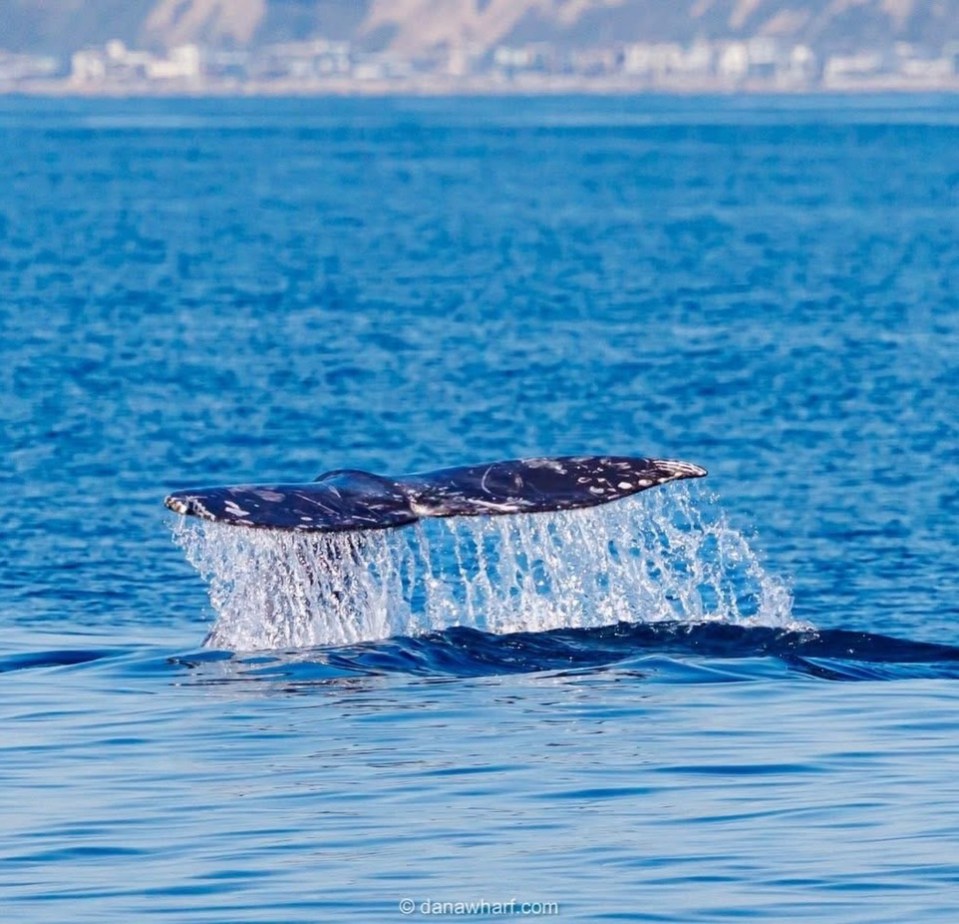
The migration
Gray whales pass Dana Point from about December to April. February and March have the most gray whale days in our log. A few show up as early as November or stay into May.
Most of the gray whales we see are on their way to Baja California, Mexico, where they spend the winter. Calves are born from early January to mid-February, some of them along the way.
The northbound migration starts in mid-February, so this is when we can see whales going both ways. Our naturalists call it the crossover.
The whales head back to their summer feeding grounds in the Bering and Chukchi seas. March is one of our two busiest gray whale months.
Mothers with new calves are the last to head north. April has more mom and calf days in our log than any other month.
Migration timing is from NOAA Fisheries: gray whale species page and gray whale calf counts.
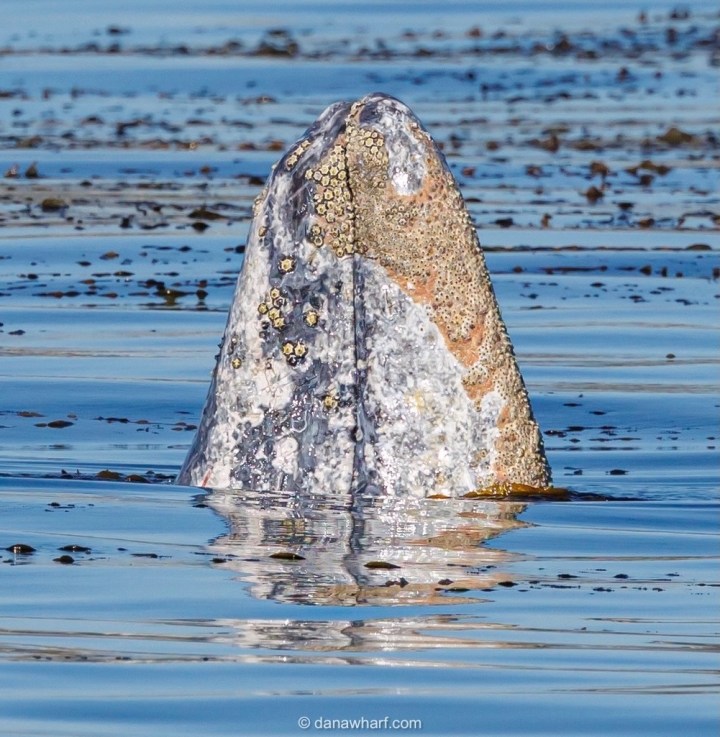
From our whale log
After each day on the water, our crew logs what we saw. One entry covers all of that day’s trips, so these numbers count days, not trips or whales.
| Month | 2014 to 2026 | Last five seasons2021-22 to 2025-26 |
|---|---|---|
| November | 6%of days (19 of 340) | 2%of days (3 of 137) |
| December | 37%of days (124 of 336) | 26%of days (37 of 142) |
| January | 78%of days (282 of 363) | 63%of days (84 of 134) |
| February | 90%of days (301 of 334) | 81%of days (95 of 118) |
| March | 89%of days (328 of 367) | 76%of days (106 of 140) |
| April | 70%of days (244 of 349) | 49%of days (70 of 143) |
| May | 22%of days (86 of 383) | 8%of days (12 of 154) |
A day counts when at least one of that day’s trips saw a gray whale. Days logged leave out days with no trips because of weather or holidays. From June through October, a gray whale was in the log on 3% or fewer of the days we logged.
The last five seasons had fewer gray whale days than the long-run figures.
To see what we’ve logged lately, our whale watching log lists the last 30 days.
Moms and calves
Our crew notes it in the log when a gray whale mom has her calf with her. From 2014 to 2026, April had the most mom and calf days: 88 of the 349 days we logged, or 25%. January was next, with 59 of 363 days, or 16%.
In January the pairs are heading south, and some calves are born on the way. In spring, mothers with new calves are the last gray whales to head north. NOAA counts them passing the West Coast from March to May.
Also in the log
From December through April, the log also shows these animals. Each number is the share of days logged from 2014 to 2026 with that animal.
Pods of common dolphins are in the log on most days, all year.
In the log all year, most often in summer: 46% of August days.
A winter visitor here: 30% of February days, and almost never in summer.
Most often in April, when 40% of the days we logged had one.
Most often in the fall: 40% of November days.
More common in summer: 29% of July days.
Plan your trip
They have the most gray whale days in our log: 90% and 89% of the days we logged from 2014 to 2026. December and May are quieter.
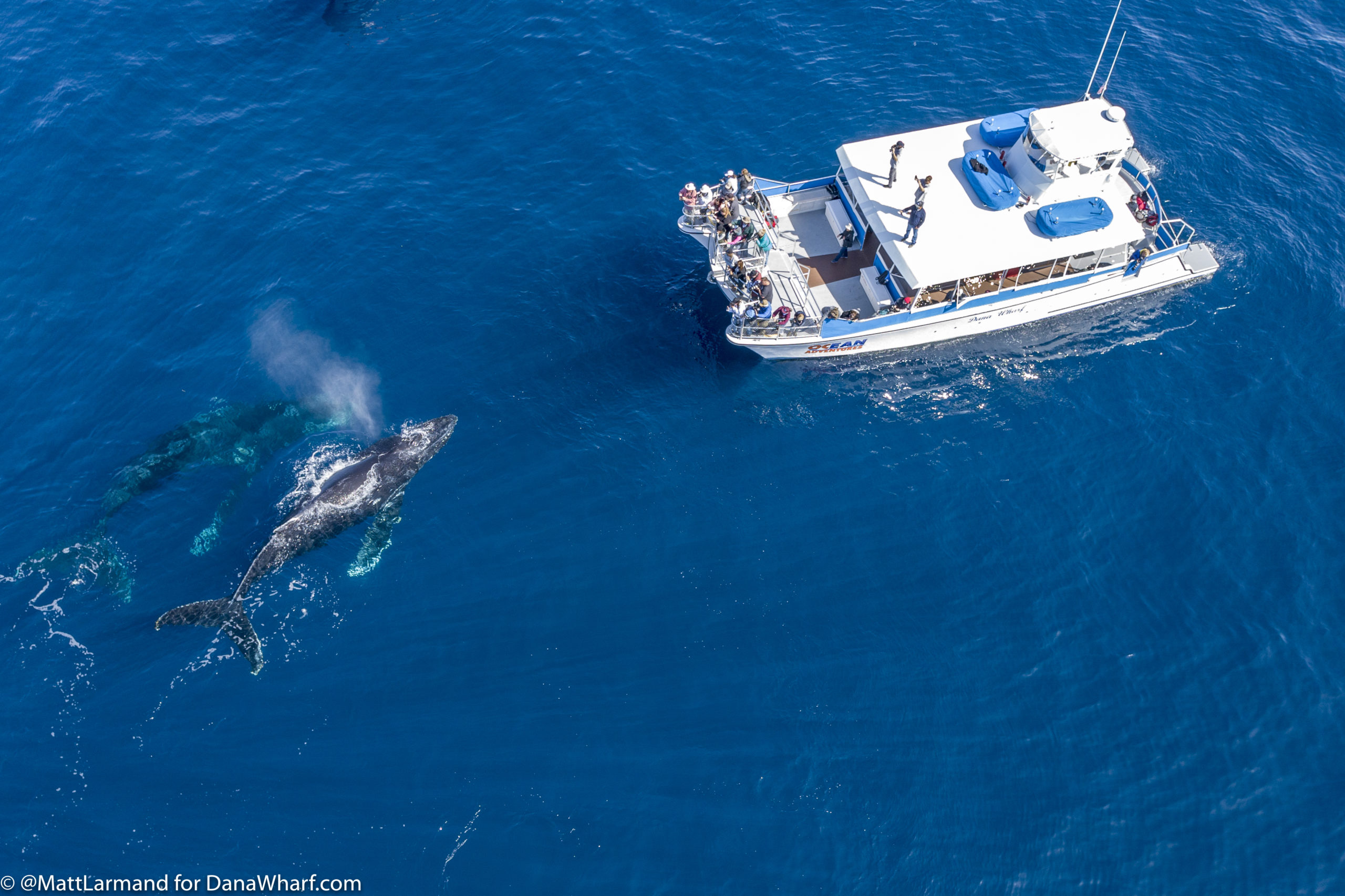
Our Whale & Dolphin Watching Tour is two hours, open to all ages and runs year-round from Dana Point Harbor. Departure times and open seats are on the booking calendar.
Half-Price Tuesdays take half off the adult fare on our two-hour whale watching trips, not including fees.
The 56th Dana Point Festival of Whales is March 5 to 7, 2027, in the middle of gray whale season. See our Festival of Whales page.
If the captain decides you didn’t see a whale or a good showing of dolphins on a two-hour trip, you get a Whale Check for a free return trip. Whale Checks never expire.
Questions
About December to April. In our log, February and March have the most days with a gray whale, and a few gray whales show up in November or stay into May.
February or March. From 2014 to 2026, 90% of the days we logged in February and 89% in March had a gray whale. In the last five seasons it was 81% and 76%.
Our whale watching log lists what we logged on each of the last 30 days. The first gray whale of the 2026-27 season went in our log on November 2, 2026.
Most spend the summer feeding in the northern Bering and Chukchi seas and the winter off Baja California, Mexico. Calves are born there or along the way. NOAA puts the round trip at about 10,000 miles, and some whales travel more than 14,000.
Adults grow to about 49 feet long and weigh about 90,000 pounds, according to NOAA.
NOAA’s latest count, published in July 2026, puts the eastern North Pacific gray whale population at about 17,750, up from about 12,890 the year before.
Sources: Dana Wharf whale log, our own daily records from 2014 to 2026 (snapshot November 11, 2026). NOAA Fisheries: gray whale, gray whale condition and calf production, July 2026 population estimate. Festival dates: festivalofwhales.com.