The Offshore Gold Rush: How to Target Mahi Mahi
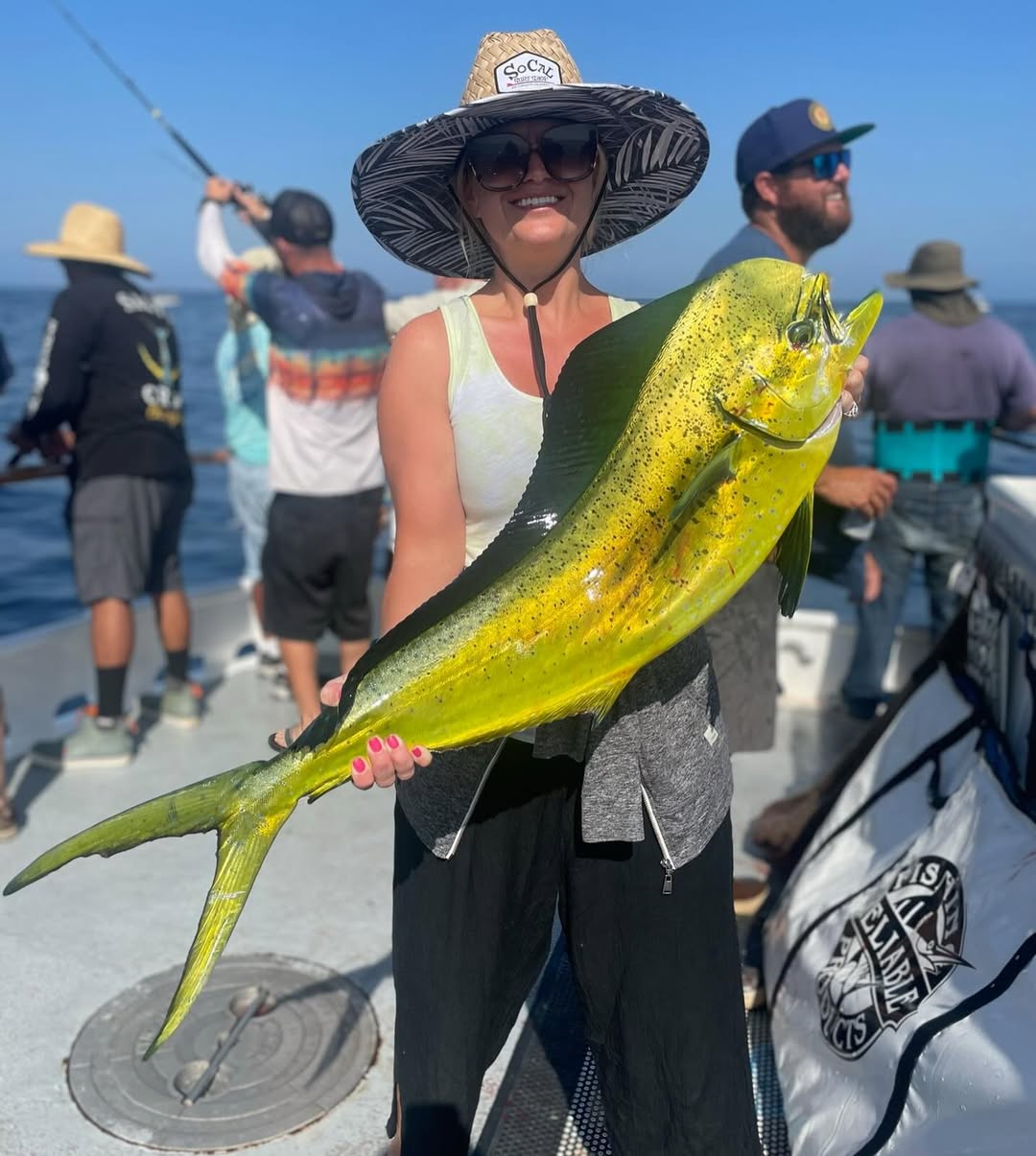
When the water temps rise off Southern California, the “Gold Rush” begins. Mahi Mahi (Dorado) move into our local waters, often coming within just a few miles of the harbor. Whether you are hopping on a ¾ day boat out of Dana Wharf Sportfishing or running your own skiff from Dana Point Harbor, the strategy here is different than anywhere else in the world.
In Dana Point, we don’t just look for fish—we hunt the kelp.
Here is your guide to finding and catching California Gold.
1. The Habitat: Hunting the “Paddies”
Unlike the Atlantic where you look for endless weedlines, in the Pacific, we hunt for Kelp Paddies. These are floating mats of kelp that have broken free from the coastal beds and drifted offshore.
-
The Beacon: A single patty the size of a coffee table acts as a biological magnet in the open ocean. It gathers small baitfish, which in turn can hold a school of Mahi patrolling the surrounding water as their “home base.”
-
The Strategy: Grab a pair of stabilized binoculars. Scan the horizon for anything orange/brown floating on the surface.
-
Terns are the Turn-on: If you see small white birds (Terns) dipping down towards the water, they are picking off bait being pushed up by predators. Drive there immediately.
2. The Setup: The “Dana Point Slide”
You aren’t usually trolling ballyhoo here. The primary method for the Dana Wharf fleet and private boaters is fly-lining live bait.
-
The Bait: Live Sardines or Anchovies are king.
-
The Tackle: A 7ft rod with a conventional or baitcasting reel (20-30lb test).
-
The Rig: A simple #2 or #4 hook tied directly to your line (fluorocarbon is best). No weights. You want the sardine to swim naturally away from the boat.
-
The Slide: When the captain spots a paddy, they will cut the engines and slide up to it. You cast your lively sardine toward the kelp. If Mahi are home, the water will boil instantly.
3. The Encounter: “Bailing” the School
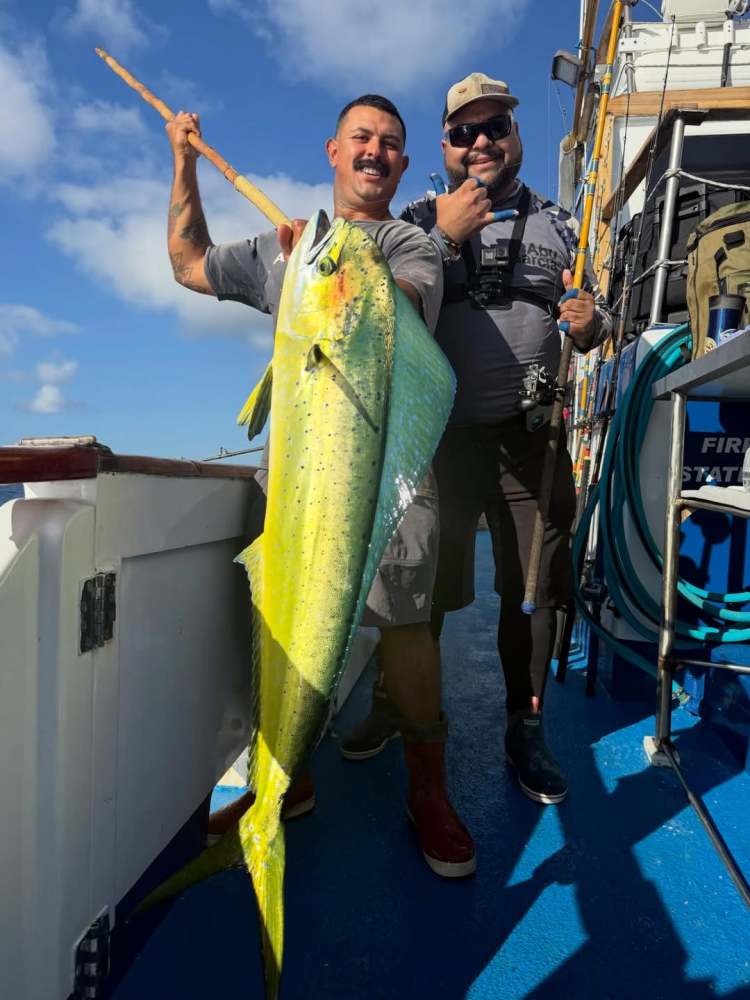
This is the secret to filling the cooler on a good stop. Mahi travel in packs. If you hook one, the excitement will attract the entire school to the boat.
The “Judas Fish” Technique:
-
Hook the first fish: Fight it to the boat, but do not gaff it yet.
-
Keep it wet: Leave that hooked fish swimming just off the corner of the stern. Its distress signals and erratic swimming will keep the rest of the school right next to the boat.
-
Cast on the follower: The rest of the school will follow that hooked fish. Have your buddies cast fresh baits or jigs right behind the hooked fish.
-
Rotate: Once a second fish is hooked, you can land the first one. Always keep one fish in the water to hold the school’s attention.
4. The Gear: Go Lighter
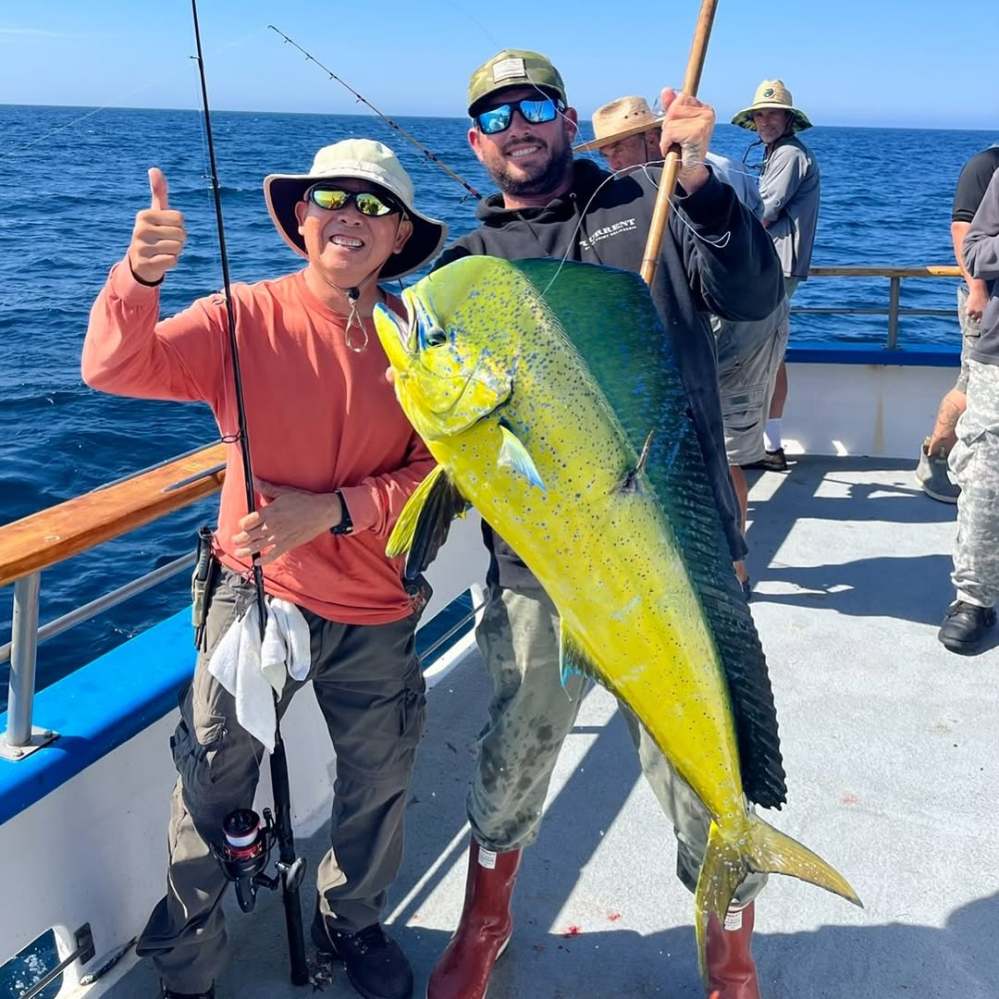
One of the best things about Dana Point summer fishing is that you don’t need heavy gear.
-
Spinning Rods: A 20lb spinning setup is incredibly fun for Mahi. It allows you to cast lighter baits further from the boat to spookery fish.
-
Jigs: If you run out of live bait, use surface irons (jigs) in blue/white or scrambled egg colors. Skip them across the surface to mimic a fleeing baitfish.
5. Pro Tip: Listen to the Crew
If you are fishing aboard one of the Dana Wharf sportboats (like the Sum Fun or Fury), watch the deckhands.
-
They will throw “chum” (handfuls of bait) to get the fish into a frenzy.
-
Cast your bait into the chum line, not just random open water.
-
Follow your bait: If your bait swims under the boat, reel in and recast. Tangles cost you fish during a hot bite.