
The “Hitchhiker” Rig: Targeting Lingcod
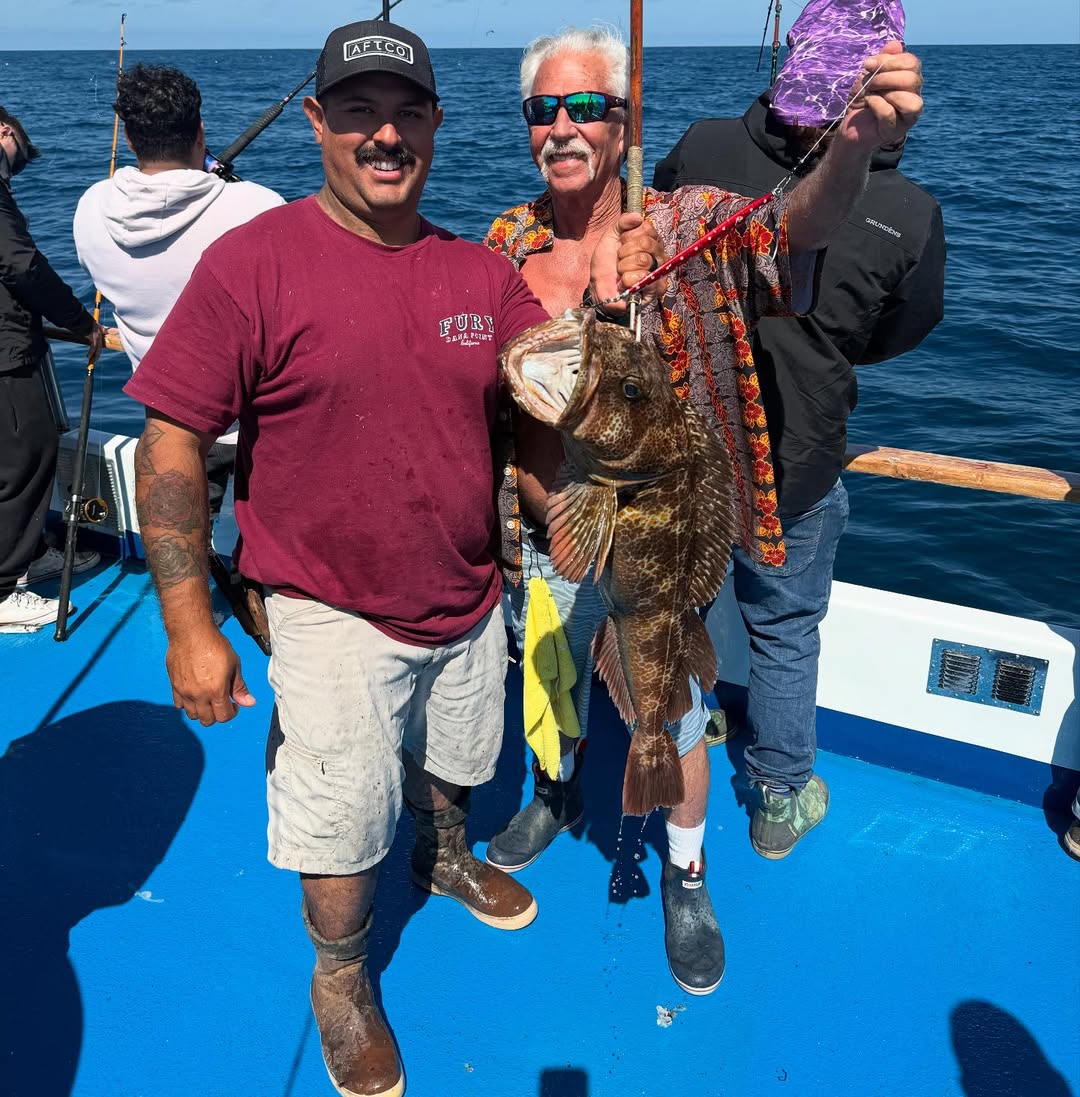
When the rockfish season opens, the sacks at Dana Wharf are usually filled with Vermillion Rockfish (Reds), Boccaccio, and Whitefish. These are great eating fish, but for the serious angler, there is one prize that stands above the rest: The Lingcod.
Often called “The Dragon” because of its prehistoric look and mouth full of razor-sharp teeth, the Lingcod is the apex predator of the rocky bottom.
The problem? Most anglers fish for them the same way they fish for smaller rockfish—and that is a mistake. If you want to trade quantity for quality and land a trophy Lingcod this season, you need to change your tactics.
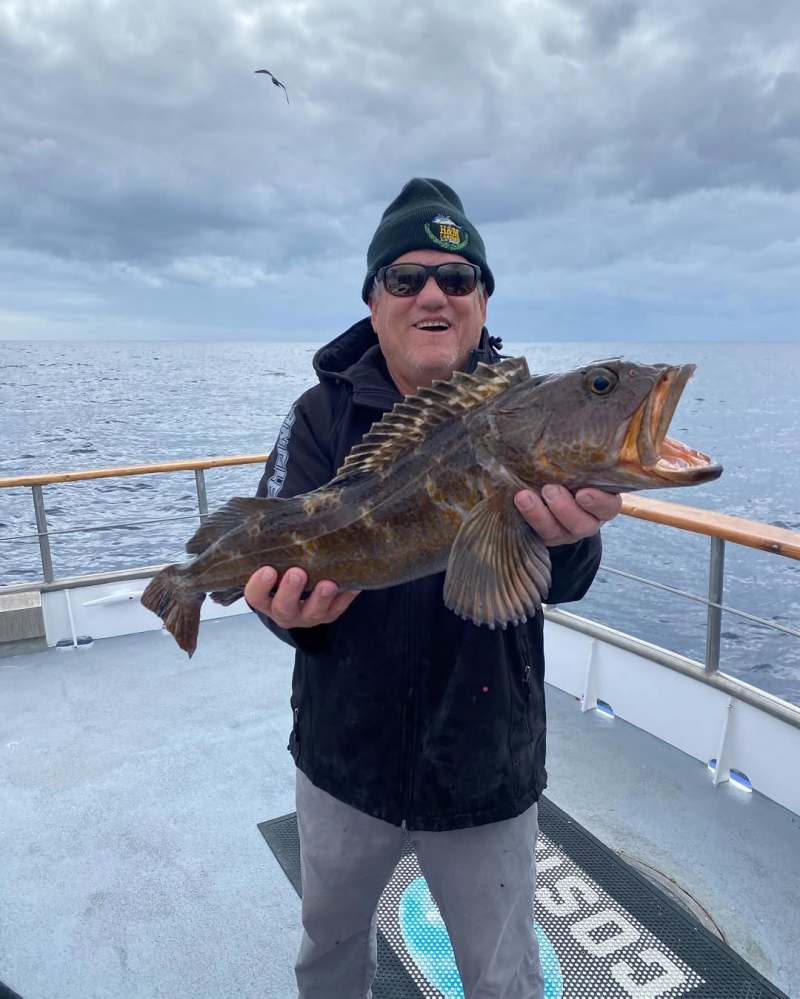
1. Predators, Not Scavengers Standard rockfish are opportunistic feeders. They will happily eat a strip of cut squid sitting still on the bottom. Lingcod are hunters. They want live, moving prey. They often ignore a dead piece of squid but will aggressively attack a live sardine, a mackerel, or—their absolute favorite snack—a Sand Dab.
2. The “Hitchhiker” Phenomenon Have you ever reeled up a small rockfish, only to have it feel suddenly heavy halfway up? Then, right at the surface, a massive green creature lets go and swims away? That was a Lingcod. It grabbed your small fish (the “hitchhiker”) and refused to let go. The Pro Tip: We can replicate this intentionally!
-
If you catch a legal-sized Sand Dab or a small Mackerel, don’t throw it back.
-
The Trap Rig: Ask a deckhand to help you rig it up. You hook the baitfish through the nose, and often place a second “trap hook” near the tail.
-
Drop that live bait back down to the bottom. A Lingcod cannot resist a struggling Sand Dab in its territory.
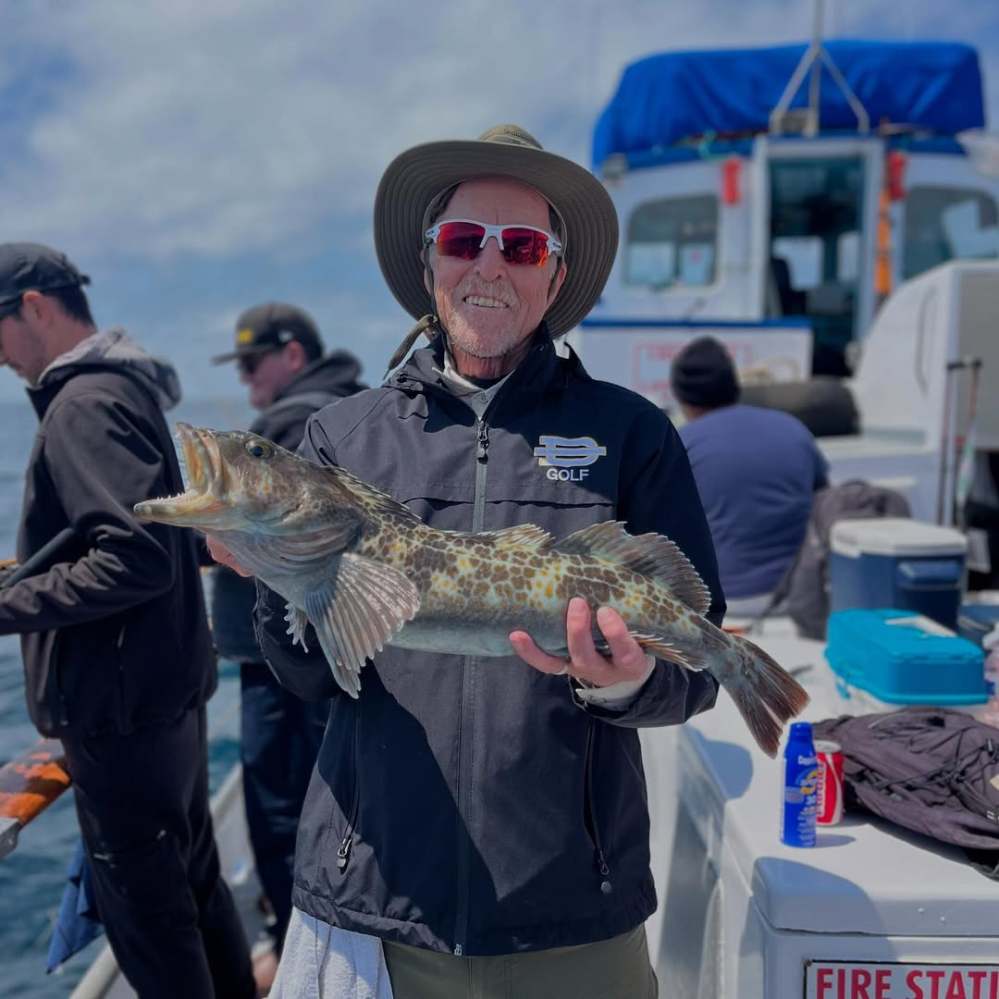
3. The “Slow Roll” (Don’t Pump!) This is the hardest habit to break. When a Bass or Yellowtail bites, you set the hook hard. When a Lingcod grabs a live bait, it often hasn’t actually swallowed the hook yet; it is just clamping down on the bait with its powerful jaws (like a pitbull).
-
If you jerk the rod: You will rip the bait right out of its mouth.
-
The Fix: When you feel the heavy weight, just start winding. Do not pump the rod up and down. Keep a steady, heavy tension. This encourages the Lingcod to hold on tighter or swallow the bait further, eventually engaging the hook.
4. Watch the Fingers A final word of warning: Once you land one, stay clear of the mouth. Lingcod have teeth that can cut through heavy line (and fingers). Let our experienced crew handle the fish, remove the hook, and get it safely into your sack.
Ready to hunt the Dragon? The rocky reefs off Dana Point are waiting.