
The “Blowhole Breakdown”: How to Identify a Whale from a Mile Away
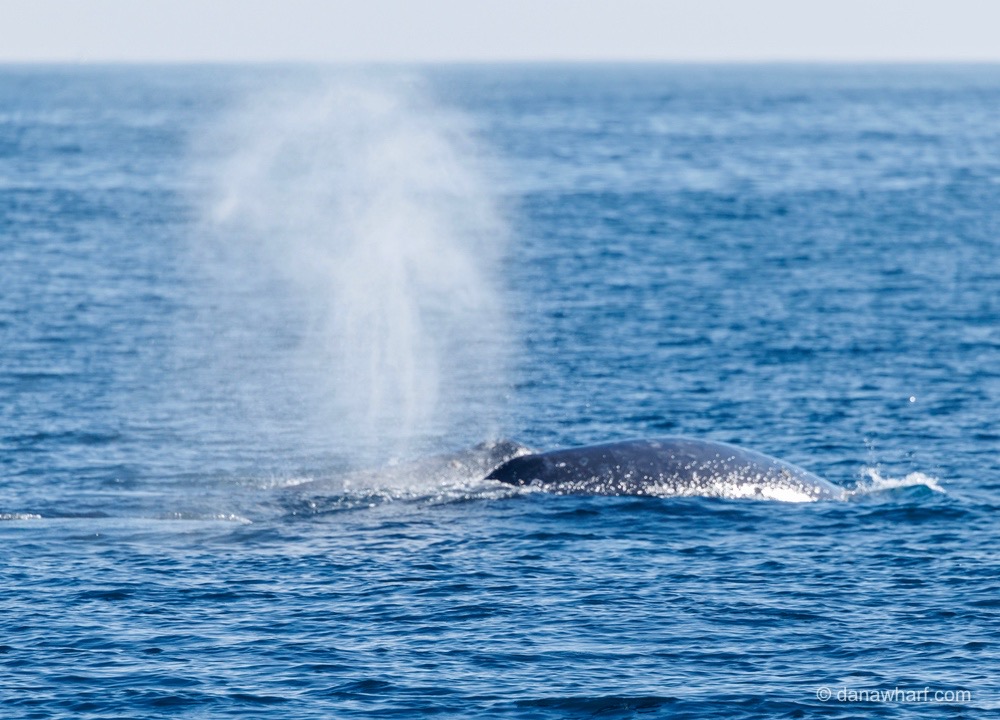
You are standing on the deck of a Dana Wharf vessel looking out at the Pacific. Suddenly, you see a puff of white water on the horizon. Before you can even focus your binoculars, the captain announces over the loudspeaker, “We have a Gray Whale at 2 o’clock!”
How do they do that?
It might seem like magic, but captains and marine naturalists have a secret weapon: they know how to read a whale’s breath. Here is how you can crack the code and identify a whale from a mile away on your next ocean safari.
1. The Myth of the “Spout”
First, we have to bust a common myth. Whales are not drinking ocean water and spitting it out like a fountain.
A “blow” or “spout” is actually just hot air. Whales have massive lungs, and the air inside them is very warm. When they surface and forcefully exhale, that hot air meets the cool ocean breeze and instantly condenses into a visible cloud of mist—just like seeing your breath on a cold winter morning. Because different whales have different head shapes and blowholes, those misty clouds form very distinct shapes.
2. The Blue Whale: The Towering Column
As the largest animal on earth, the Blue Whale naturally has the most impressive exhalation.
-
The Shape: They shoot a massive, single column of mist straight up into the air.
-
The Size: This towering pillar can reach up to 30 feet high and can be seen from miles away on a calm day. If you see a spout that looks like a geyser erupting straight up, you are likely looking at a Blue or Fin whale.
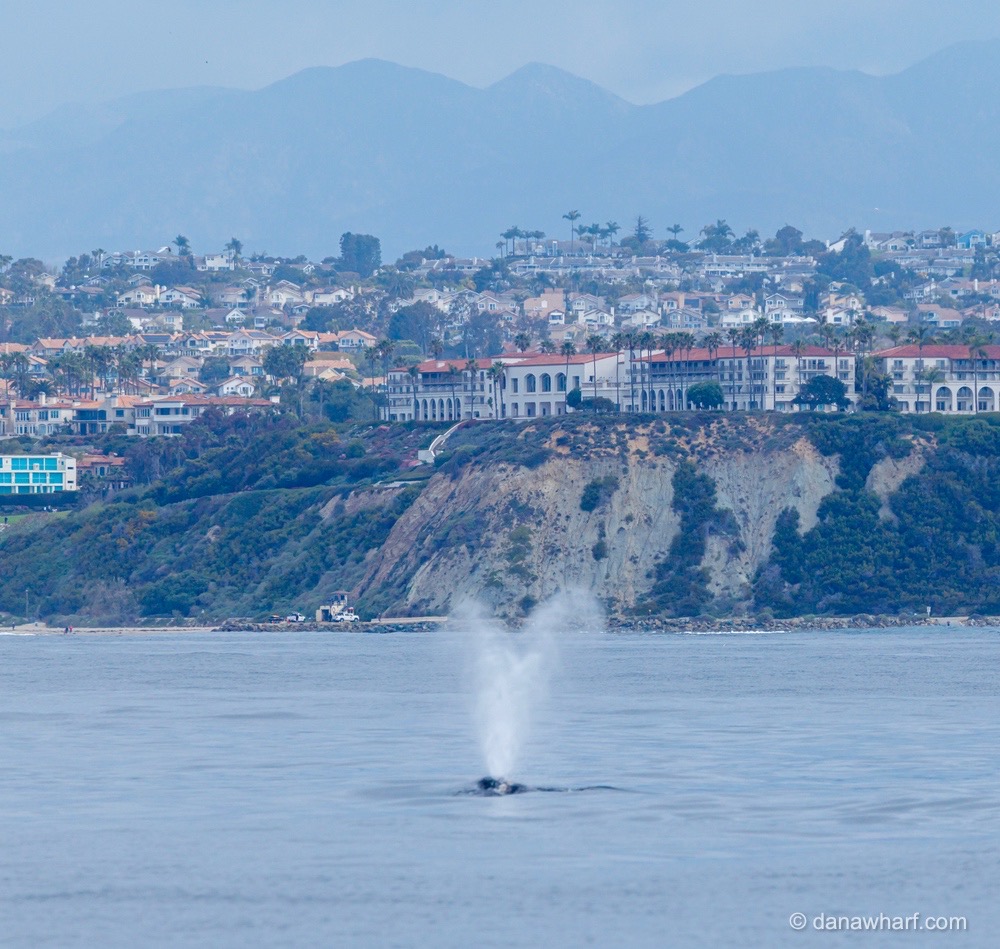
3. The Gray Whale: The Heart Shape
Gray Whales are the stars of our winter and spring migrations here in Dana Point. They are baleen whales, which means they actually have two blowholes side-by-side on top of their head (like human nostrils).
-
The Shape: Because the air is forced out of two distinct holes, a Gray Whale’s bushy blow creates a distinct “V” or “Heart” shape just above the surface of the water.
4. The Sperm Whale: The Angled Shooter
Sperm Whales are deep-water hunters that occasionally visit the deep submarine canyon right off the Dana Point coast. They are incredibly easy to identify if you know what to look for.
-
The Shape: A Sperm Whale’s blowhole is uniquely located right on the front-left tip of its massive, blocky head. Because of this placement, their spout shoots out forward and to the left at a sharp 45-degree angle. No other whale in our waters does this!
Test Your Skills on the Water
Now that you know the secret, you can turn your next trip into a game. Grab your binoculars, stand by the rail of the Dana Pride, and see if you can identify the species before the captain even picks up the microphone.