
The Light-Tackle Rockets: How to Target Bonito out of Dana Point
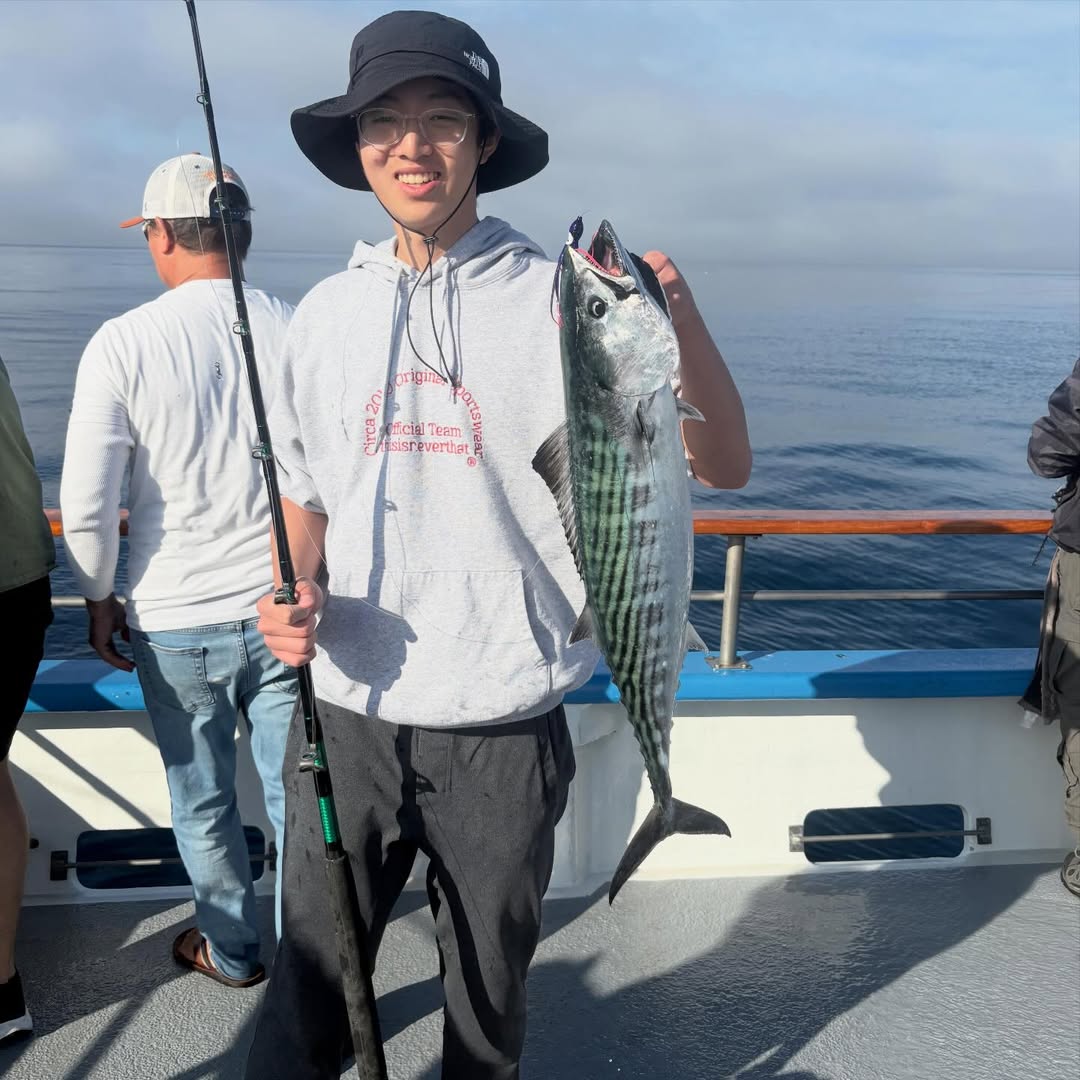
They vibrate like a jackhammer, run like a tuna, and fight harder than fish three times their size. The Pacific Bonito is the unsung hero of the Southern California coast.
Often called “little tuna,” Bonito are pelagic schoolers that invade the waters off Dana Point when the currents warm up. For anglers aboard the Dana Wharf fleet, a wide-open Bonito bite means chaos on the deck and bent rods everywhere.
If you want to test your drag and your reflexes, here is how to target the speedsters of the inshore.
1. The Signs: Birds and Boils
Unlike Sheephead or Bass which hang out on rocks, Bonito are constantly moving hunters. To find them, you have to look up, not down.
-
The Terns: Look for “dipping” birds. Terns hovering and diving are usually picking off anchovies that a school of Bonito has pushed to the surface.
-
The “Breezers”: On calm mornings off Dana Point, look for patches of water that look like they are shivering or rippling in the wind, even if it’s calm. That is a massive school of Bonito swimming just below the surface.
-
The Boil: When they are really feeding, the water will erupt in white splashes. This is when you want to cast immediately.
2. The Method: Speed Kills
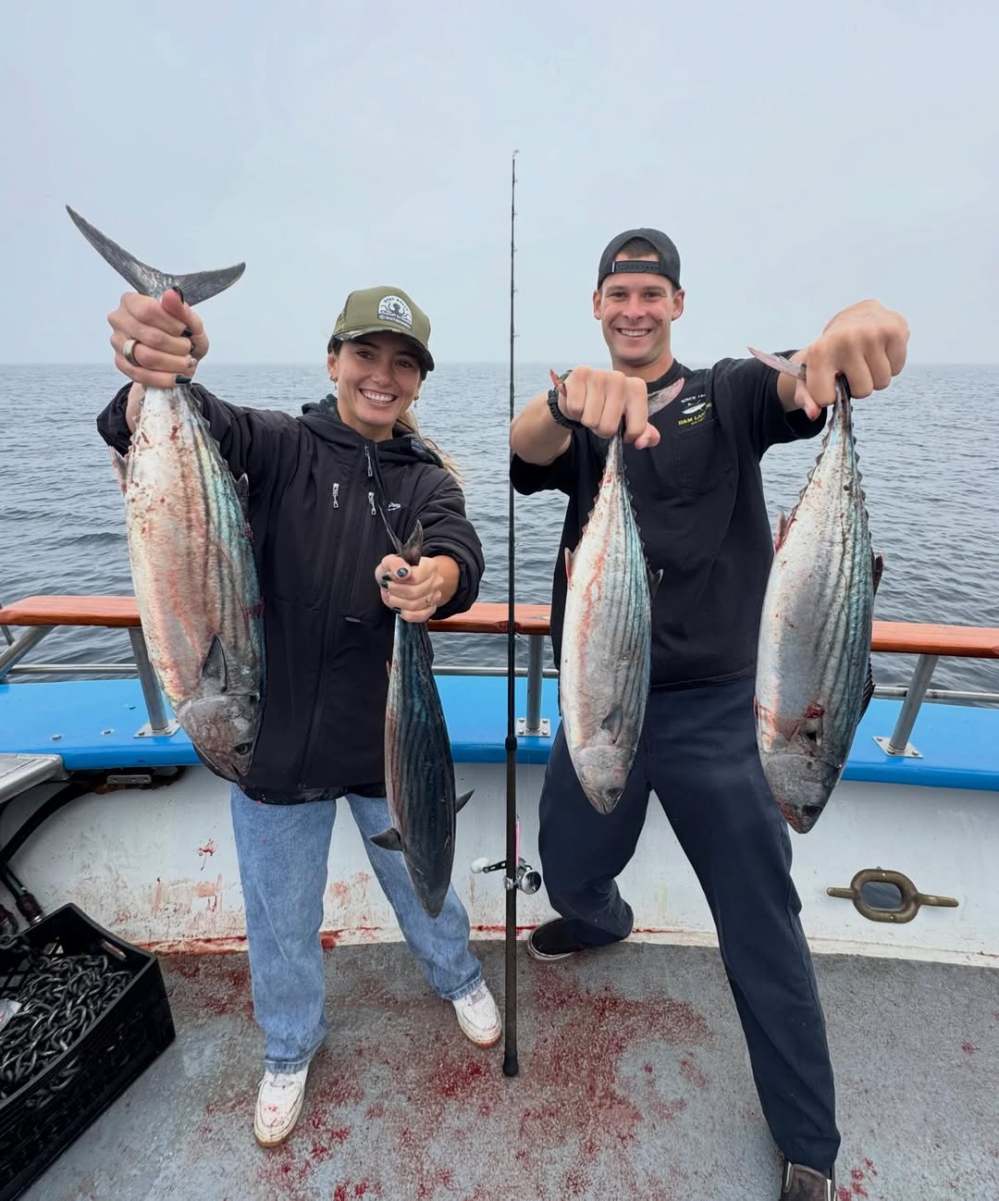
Bonito have excellent eyesight and are triggered by movement. If your bait or lure is sitting still, they will ignore it.
-
The Chrome Jig: This is the most fun way to catch them. Use a shiny metal jig (like a Colt Sniper, Kastmaster, or surface iron). Cast it as far as you can, let it sink for three seconds, and wind as fast as you can. Bonito love a fleeing target.
-
The Fly-Line: If you are fishing live bait (anchovies or sardines) on a Dana Wharf boat, use a light wire hook (Size #2 or #4). Pin the bait through the nose and cast it away from the boat.
-
The “Feather”: Trolling small black-and-purple or green-and-yellow feathers is how the captains usually locate the school. Once a troller goes off, the boat stops, and the casting begins.
3. The Fight: The “Death Circle”
Bonito are famous for their first run. They will rip drag off your reel instantly. But the trickiest part is the end of the fight.
-
The Spiral: When you get the fish close to the boat, it will turn on its side and start swimming in tight, rapid circles.
-
The Tangle Zone: This is where most tangles happen. You have to guide the fish to the gaff or the net. If you let them run under the boat, they will wrap your line around the prop or other anglers’ lines.
4. The Kitchen: Treat it Like Tuna
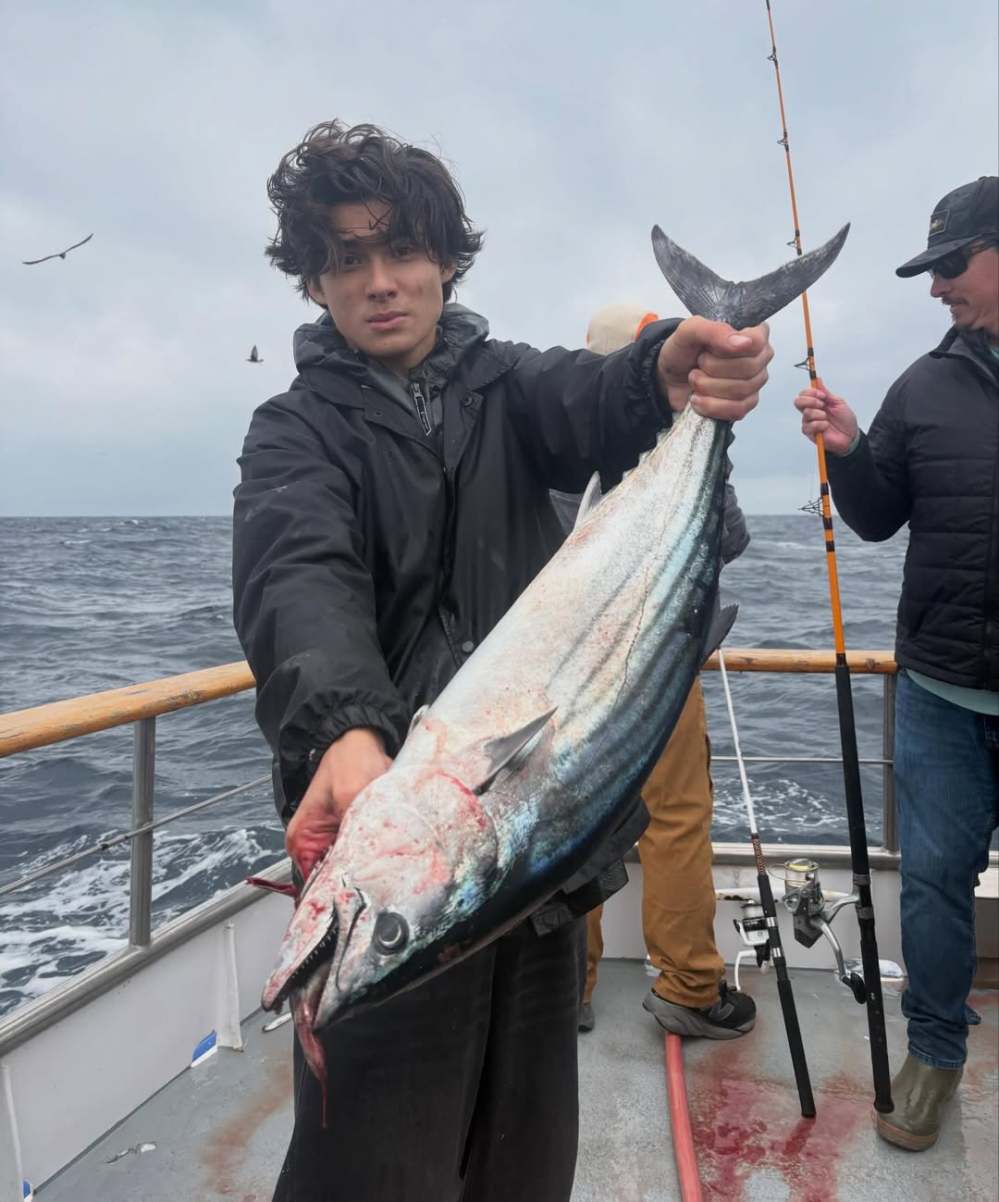
There is a myth that Bonito are “trash fish” or only good for lobster bait. This is false.
Bonito are in the Scombridae family (same as Mackerel and Tuna). They are delicious if you care for them correctly.
-
Bleed them immediately: This is non-negotiable. Bonito have a lot of blood. If you don’t bleed them, the meat tastes metallic. Cut the gills as soon as they land.
-
Ice them down: Do not leave them in a gunnysack in the sun. They turn mushy fast.
-
The Preparation: Fresh Bonito makes incredible Sashimi or Poke. It is also excellent grilled with a soy-ginger glaze.
5. Pro Tip: The “Dana Wharf” Shuffle
When the Bonito are biting, the deck of the Sum Fun or Fury can get chaotic.
-
Follow your fish: If your fish runs from the bow to the stern, you have to follow it.
-
Over and Under: If you cross lines with another angler, communicate. Usually, the person with the fish goes under the person without a fish.
-
Watch the teeth: Bonito have a row of small, sharp teeth. Do not “lip” them like a bass. Use pliers to unhook them.