
How to Catch Bluefin Tuna in Southern California: A Dana Point Playbook
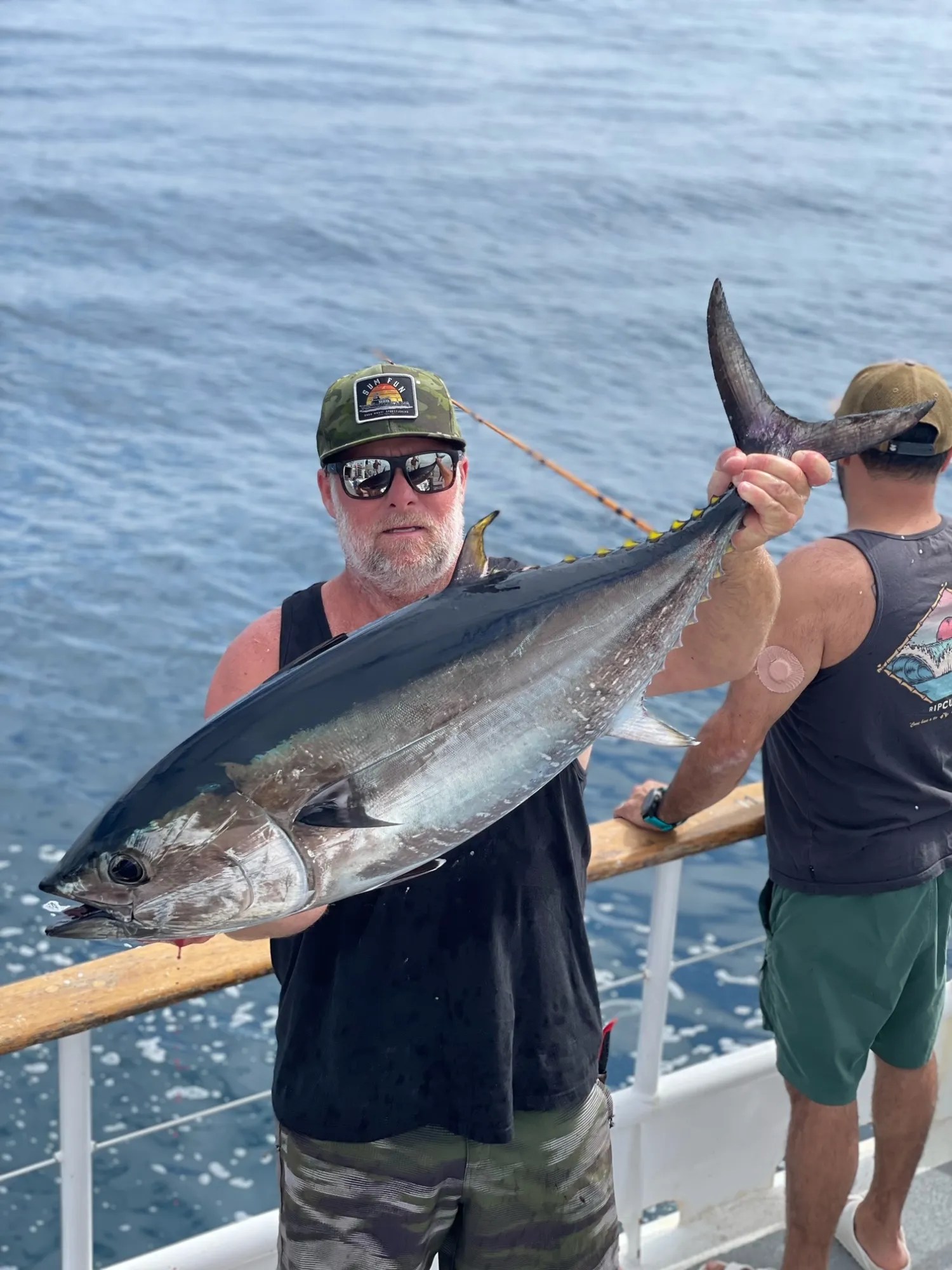
Ask anyone who runs the offshore boats out of Dana Point what they look forward to all year, and you will hear the same answer: bluefin. Pacific bluefin tuna are the hardest-pulling, most stubborn, most addicting fish that swim off our coast. They show up in late spring, stack up through summer, and turn ordinary anglers into people who suddenly cannot stop checking the water temperature reports.
They are also tough to catch. Bluefin are smart, they are boat-shy, and they will swim right under a hundred baits without eating a single one if the presentation is wrong. We have watched it happen plenty of times. The good news is that the fish off Southern California respond to a fairly small set of proven techniques, and once you understand them, your odds go way up. Here is how we do it.
When is the best time to catch bluefin tuna in Southern California?
The Pacific bluefin run off our coast generally stretches from around March into November, but the heart of the season is summer. June through August is when it really turns on. The fish push closer to shore as the bait schools thicken, the water warms into the mid-to-upper 60s, and tuna that spent the early season way out on the banks come into range of our half-day and full-day boats.
Early in the year, in May, the bite is usually a longer-range game for overnight and private trips. By June and July the grade of fish near the harbor improves and the numbers get more consistent. If you want the full month-by-month rundown of when each species fires off, we keep it in our guide to tuna season in Southern California.
Where do you find bluefin tuna off Dana Point?
Finding bluefin is half the battle, and it is the part most people skip. These fish move, so you have to read the ocean. We look for three things: temperature breaks, bait, and signs of life on the surface.
A temperature break is a line where cooler water meets warmer water, often holding bait along the edge. Bluefin patrol those seams. On the surface, you are scanning for “foamers” (fish crashing bait in a froth), “breezers” (a dark patch of tuna pushing just under the surface), jumpers, and most of all, birds. Working birds over open water almost always mean something is feeding underneath. Out wider, spots like the 43 Fathom area, roughly 60 miles off Dana Point, have a long history of holding bluefin when the conditions line up.
The other half of finding them happens on the sonar. Bluefin show up as “meter marks,” dense returns at a specific depth. Once you know how deep they are sitting, you know which technique to reach for. This is where having a captain who has done it a thousand times pays off, and it is a big reason the Dana Wharf sportfishing fleet puts people on fish.
What gear do you need for bluefin tuna?
Bluefin tackle is heavier than what most anglers use for yellowtail or bass, because these fish get big. The schoolies run 20 to 60 pounds, but the larger models push well past 100, and every season produces “cows” over 200 pounds. Your gear has to survive a long, deep, brutal fight.
A practical setup looks like a 7 to 8 foot rod rated for 40 to 100 pound line, a strong two-speed reel with a smooth drag, and spectra braid backing topped with a fluorocarbon leader. Fluorocarbon matters more than almost anything else, because bluefin have excellent eyesight and a heavy, visible leader will get you ignored. When the fish are finicky, going lighter on the leader is often the difference between a bent rod and a long, quiet ride home. The trade-off is that lighter line means longer fights and more lost fish, so it is a constant judgment call.
If you are still deciding which tuna you are even chasing, our bluefin vs. yellowfin guide breaks down how the two fish differ and why they call for slightly different approaches.
What are the best techniques for catching bluefin tuna?
There is no single magic method. The right technique depends on how the fish are behaving that day, and good crews switch between them constantly. These are the four that produce off Dana Point.
Fly-lining live bait. When bluefin are up near the surface and willing, a lively sardine pinned on a small hook and allowed to swim freely with little or no weight is hard to beat. The key is a healthy, frisky bait that looks like every other fish in the water. How you hook the sardine genuinely matters, and we wrote a whole piece on it: the bait matrix covers how to pin one so it actually gets bit.
Flat-fall and knife jigs. When the fish are deep and showing as meter marks on the sonar but will not come up for bait, you go down to them. A flat-fall jig dropped to the marked depth and worked with a slow lift-and-flutter motion mimics a dying baitfish and triggers reaction strikes. The mistake we see most often is over-working the jig. With bluefin, slow and subtle beats fast and aggressive almost every time.
The sinker rig. A close cousin to fly-lining, this is a live bait fished with a weight to get it down to a specific depth when the fish are holding 30 to 100 feet down rather than on top. It lets you put a natural bait right in the strike zone instead of hoping the tuna come up.
Kite fishing. This is the specialty trick for boat-shy fish that refuse everything else. A kite suspends a bait at the surface, splashing and struggling, with no line visible in the water beneath it. For pressured bluefin that have learned to avoid anything connected to a boat, a bait dancing under a kite can be the only thing that draws a bite. It takes practice and the right setup, but it has accounted for some of the biggest fish caught off our coast in recent years.
Why are bluefin tuna so hard to catch?
If you have ever sat over a school of bluefin lit up on the sonar and not gotten a single bite, you are not alone. It is the most common bluefin experience there is. These fish are genuinely intelligent and heavily pressured, so they get cautious. They notice a leader that is too heavy. They shy away from engine noise and a boat sitting on top of them. They will eat one bait pattern in the morning and refuse it by afternoon.
Beating them comes down to stealth and patience: lighter fluorocarbon, the freshest bait, a quiet approach, and a willingness to change tactics the moment what you are doing stops working. That last part is where an experienced crew earns its keep, because the difference between a slow day and a great one is often one small adjustment made at the right time.
What is the bag limit for bluefin tuna in California?
Pacific bluefin tuna are a managed species, and the recreational rules are set by California Department of Fish and Wildlife in line with federal management. As a general framework, recreational anglers in California waters are allowed two bluefin tuna per day, and that limit is separate from the broader daily finfish bag limit. There are also specific rules about filleting fish at sea south of Point Conception.
Regulations can change from season to season, so always confirm the current limits before you go. The simplest answer: when you fish with us, our crew knows the current rules cold and will keep your trip squarely within them. You can check the latest catches on our fish count to see what the boats have been bringing in.
Ready to hook a Dana Point bluefin?
Bluefin tuna fishing rewards preparation, the right gear, and time on the water with people who know these fish. You can spend years learning their patterns, or you can climb aboard with a crew that has already put in those years. Our overnight and longer-range trips are built around chasing the bigger grade of fish on the outer banks, while full-day boats stay on the closer schools through the summer.
If you want to go deeper on the fish itself, where they come from and what makes them so special, our Pacific bluefin ultimate guide is the place to start. And when you are ready to feel that first screaming run for yourself, book a charter or open-party trip and come find out why bluefin own the summer down here at the wharf.