
What to Wear Whale Watching (So You’re Not Miserable on the Boat)
Introduction
I’ve seen every type of person climb aboard one of our boats at Dana Wharf — first-timers in flip-flops, locals who’ve been out here a hundred times, families with kids who are bouncing off the walls with excitement. And every single trip, without fail, someone ends up regretting what they wore.
It’s not their fault. The ocean has its own dress code, and nobody hands you a manual. So here’s what I’ve learned after years of watching whale watching trips: what you wear can make or break your experience out there.
It’s Always Colder Than You Think
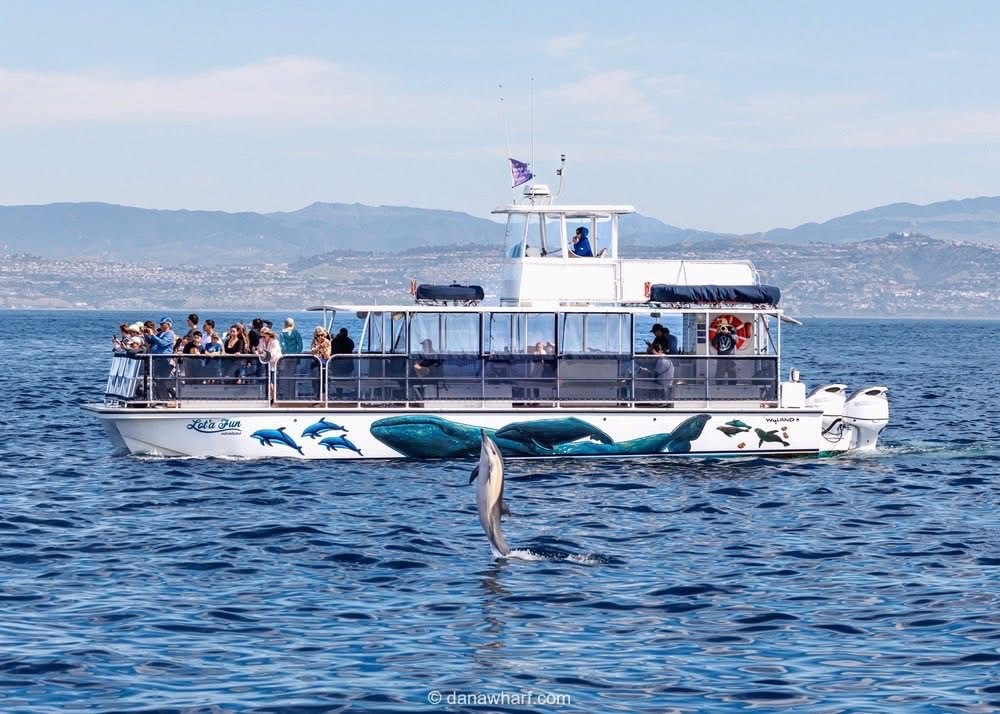
This is the number one thing people get wrong. You’re standing in the Dana Point parking lot, the sun is shining, it’s 72 degrees — and you’re thinking, “I’ll be fine in a t-shirt.” Then the boat gets a couple of miles out and the wind picks up and suddenly it’s a very different story.
The ocean temperature and the wind chill on the water can make it feel 15-20 degrees colder than it is on shore. That’s not an exaggeration. We’re out there year-round and it never stops surprising people how quickly they get cold once we leave the harbor.
Layers. Always layers. Even if you end up peeling some off by noon, you’ll thank yourself.
The Actual What-to-Wear Breakdown
Base layer: Something that moves with you and keeps moisture off your skin. A light long-sleeve shirt works well. Skip cotton — it absorbs moisture and stays cold against your skin once the ocean air hits it.
Mid layer: A fleece or light jacket. This is the one most people skip and most people regret. Zip-up fleeces are great because you can adjust as the day warms up.
Outer layer: A windbreaker or light waterproof shell. Not a full rain suit unless you’re expecting actual rain — just something to block the wind and any spray from the bow. If we hit some choppy water, and sometimes we do, you’ll be really glad you have it.
Pants: Jeans are actually decent here — they’re wind-resistant and not as cold as leggings or shorts. Joggers work fine too. Avoid anything too thin.
Shoes: Closed-toe only. Sneakers or boat shoes are ideal. I know everyone loves their flip flops in SoCal but please, not on the boat. The decks get wet and slippery and we want you staying safe and upright, not sliding around while you’re trying to get a photo of a humpback.
Hat: This is underrated. A baseball cap or beanie (or both, layered) does a lot of work. It blocks wind from your face and keeps your head warm, which is one of the quickest ways to stop feeling cold overall.
Sunglasses: Essential. The glare off the water is no joke and you’ll be scanning the horizon for a long time. Polarized lenses help a lot for spotting fins and blows before anyone else does.
Sunscreen: Apply before you leave. Wind and cloud cover don’t protect you from UV — the reflection off the water makes it worse. We see sunburned people every summer who swore they didn’t need it.
What NOT to Bring
Heavy purses, big tote bags, or anything with a lot of loose stuff. You want your hands free when the whales show up. A small bag or a fanny pack is way more practical. Also skip the bulky camera bag unless you’re a serious photographer — your phone camera is probably better than you think.
What About Seasickness?
Wearing the right clothes won’t prevent seasickness, but being uncomfortable in your clothes makes it worse. If you tend to get motion sickness, wear something loose and comfortable, avoid tight waistbands, and bring a layer you can take on and off easily. Looking at the horizon instead of your phone is the biggest help.
For more on how to prepare for your trip, check out our Whale Watching FAQ where we cover everything from what to expect onboard to what kind of whales you might see.
One More Thing: Check the Season
What you wear does shift a little depending on the time of year. January through March is whale watching peak season in Dana Point and it’s also our coldest window. Layer up hard. Summer months are warmer but the wind is still there, especially on longer trips. Our 8-Hour Ultimate Whale Watch goes further offshore where conditions change more dramatically, so if you’re booking one of those, pack accordingly.
Bottom Line
Dress like you’re going camping, not to the beach. Layers, closed-toe shoes, a windbreaker, and a hat. Everything else is a bonus. The whales don’t care what you’re wearing but trust me — you will.
Ready to book? Check out our Whale Watching tours at Dana Wharf and get out there.