
Seal vs Sea Lion: How to Tell the Difference (And Which Ones We See in Dana Point)
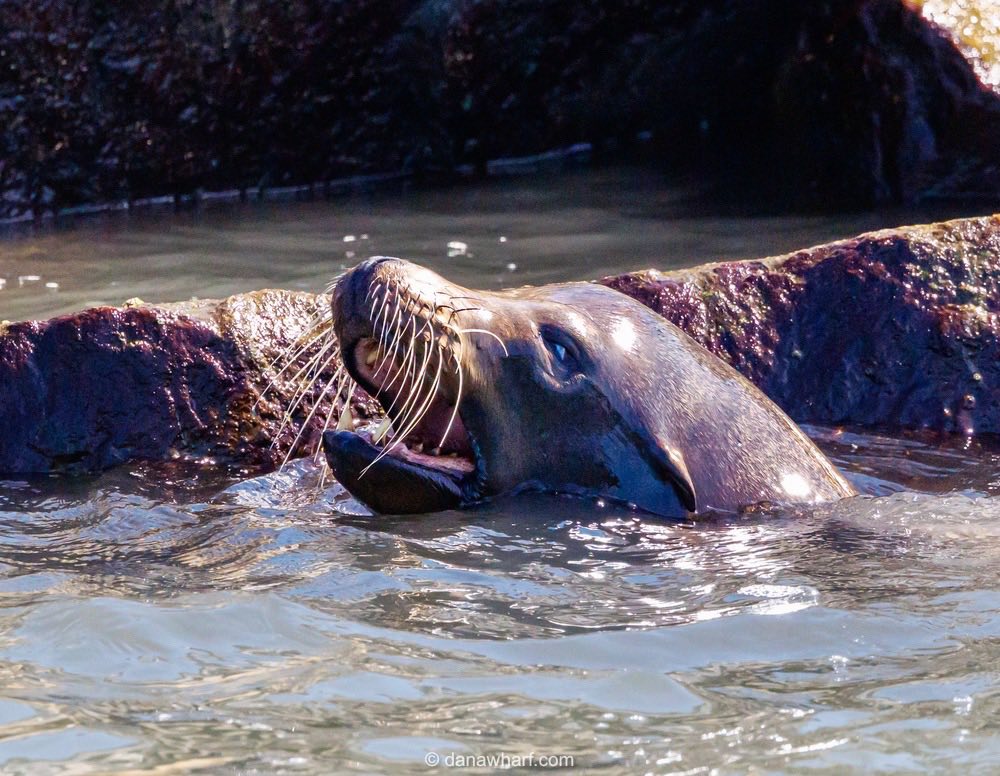
If you’ve been out on a Dana Wharf whale watching trip, you’ve almost certainly seen California sea lions. They’re the loud, barking, scene-stealing animals piled on our harbor jetty, sprawled across navigational buoys, and sometimes popping up right alongside the boat to see what we’re doing.
But every once in a while, a guest will point at one and ask, “Is that a seal or a sea lion?”
It’s a great question. Seals and sea lions look similar at first glance. They’re both marine mammals, they’re both found along the California coast, and they both spend time on rocks and beaches. But once you know what to look for, telling them apart is surprisingly easy.
Are Seals and Sea Lions the Same Thing?
Not even close. Seals and sea lions both belong to a group of marine mammals called pinnipeds, which means “fin-footed” in Latin. Walruses are also in this group. But seals and sea lions are in completely different families.
Sea lions (along with fur seals) belong to the family Otariidae. These are the “eared seals” because they have small external ear flaps that stick out from their heads. True seals belong to the family Phocidae and are sometimes called “earless seals” because they only have tiny ear holes with no visible flap.
That ear difference is actually one of the quickest ways to tell them apart, even from a distance.
How to Tell a Seal from a Sea Lion
Here are the key differences we point out to guests on our tours:
Ears. Sea lions have visible external ear flaps. Seals have small holes on the sides of their heads with no flap at all. If you can see little pointed ears, you’re looking at a sea lion.
Flippers. Sea lions have long, powerful front flippers that they use to propel themselves through the water and “walk” on land. They can rotate their rear flippers underneath their body to move around on rocks, docks, and beaches. Seals have shorter front flippers and cannot rotate their rear flippers forward. On land, they scoot along on their bellies in a caterpillar-like motion called “galumphing.”
Noise. Sea lions are loud. California sea lions bark like dogs, and when a group of them is hauled out on the jetty, you can hear them from across the harbor. Seals are much quieter. They communicate with soft grunts, growls, and hisses.
Social behavior. Sea lions are extremely social. They pile on top of each other, haul out in huge groups, and seem to enjoy the chaos. Seals are more solitary. They’ll rest near each other on a beach but typically keep some personal space and rarely touch.
Swimming style. Sea lions use their large front flippers like oars to power through the water and steer with their rear flippers. Seals do the opposite. They use their rear flippers in a side-to-side motion (like a fish tail) for propulsion and their small front flippers for steering.
Size. This one varies by species, but in general, sea lions are larger and more muscular than the seals you’ll encounter in Southern California. A male California sea lion can reach 7 to 8 feet long and weigh 600 to 850 pounds. Pacific harbor seals, the most common true seal species in our area, max out around 5 to 6 feet and 300 pounds.
Which Species Do We See Off Dana Point?
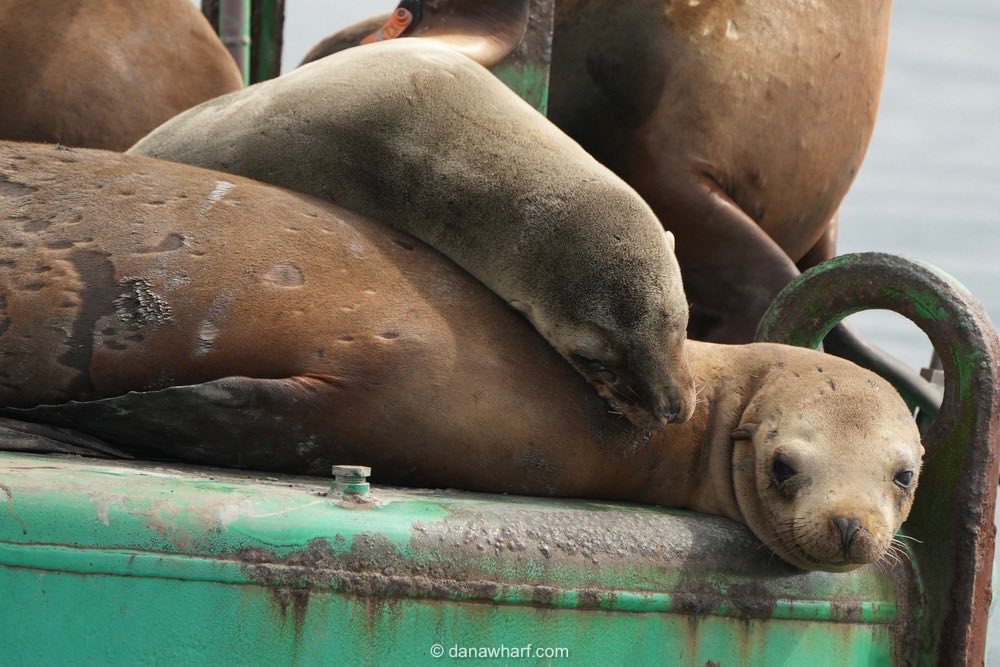
Here at Dana Wharf, the species we encounter most often is the California sea lion (Zalophus californianus). These are the animals barking on our jetty, resting on the red and green navigational buoys at the harbor mouth, and sometimes foraging right alongside pods of dolphins during our whale watching trips.
California sea lions are native to the entire West Coast, from southeast Alaska down to central Mexico. Their primary breeding grounds are the Channel Islands, which sit about 60 miles offshore from Dana Point. San Miguel Island alone is home to one of the largest sea lion rookeries in the world, with a breeding population of roughly 80,000 animals. The total U.S. population is estimated at around 238,000 to 241,000, and the species is listed as Least Concern by the IUCN.
We also occasionally see Pacific harbor seals (Phoca vitulina) in the area, though they’re less common inside the harbor itself. Harbor seals prefer quieter, more isolated haul-out spots. You’re more likely to spot one resting on a rocky outcropping along the coast than competing for space on a busy buoy with a group of rowdy sea lions.
On our longer pelagic trips, we’ve even encountered Guadalupe fur seals floating offshore with their flippers sticking out of the water. These are technically in the same family as sea lions (Otariidae) and are a threatened species. Spotting them is a rare and special treat.
What Do Sea Lions Eat?
California sea lions are opportunistic feeders. They eat whatever is abundant and available in the coastal waters off Dana Point. Their diet includes squid, anchovies, mackerel, sardines, rockfish, and octopus.
If you’ve ever been on one of our sportfishing trips, you may have noticed sea lions keeping a close eye on the action. They’re smart enough to know that where there are fishing boats, there’s often easy food. They’ll patrol around the boat and sometimes try to grab a fish right off the line. Our captains are used to it.
Sea lions are fast swimmers, too. They can reach speeds of 25 to 30 miles per hour in the water, using those powerful front flippers to chase down prey. On our whale watching trips, we sometimes see them porpoising through the surface alongside the boat at speed.
Are Sea Lions Dangerous?
Sea lions are wild animals and should always be treated with respect and distance. Under the Marine Mammal Protection Act, it’s illegal to approach, touch, feed, or harass any marine mammal, including sea lions. The law requires staying at least 50 yards away.
That said, California sea lions are generally not aggressive toward people in the water or on boats. They’re curious and playful by nature. The most common issue is when people get too close to a resting sea lion on a beach or dock. A startled or cornered sea lion can bite, and their bites can cause serious infections.
From the deck of one of our boats, though, there’s nothing to worry about. Our captains always maintain a safe and respectful distance, and the sea lions seem perfectly comfortable with the Dana Pride and our other vessels cruising past their favorite haul-out spots.
Seal vs Sea Lion vs Walrus: What About Walruses?
While we’re sorting out the pinniped family tree, walruses deserve a quick mention. Walruses are the third branch of the pinniped group, in their own family called Odobenidae. They’re easy to tell apart from seals and sea lions thanks to their massive tusks, their enormous size (males can weigh over 3,000 pounds), and the fact that they live exclusively in the Arctic and sub-Arctic. You won’t see a walrus off Dana Point, but it’s a question that comes up surprisingly often on our tours.
When and Where to See Sea Lions at Dana Point Harbor
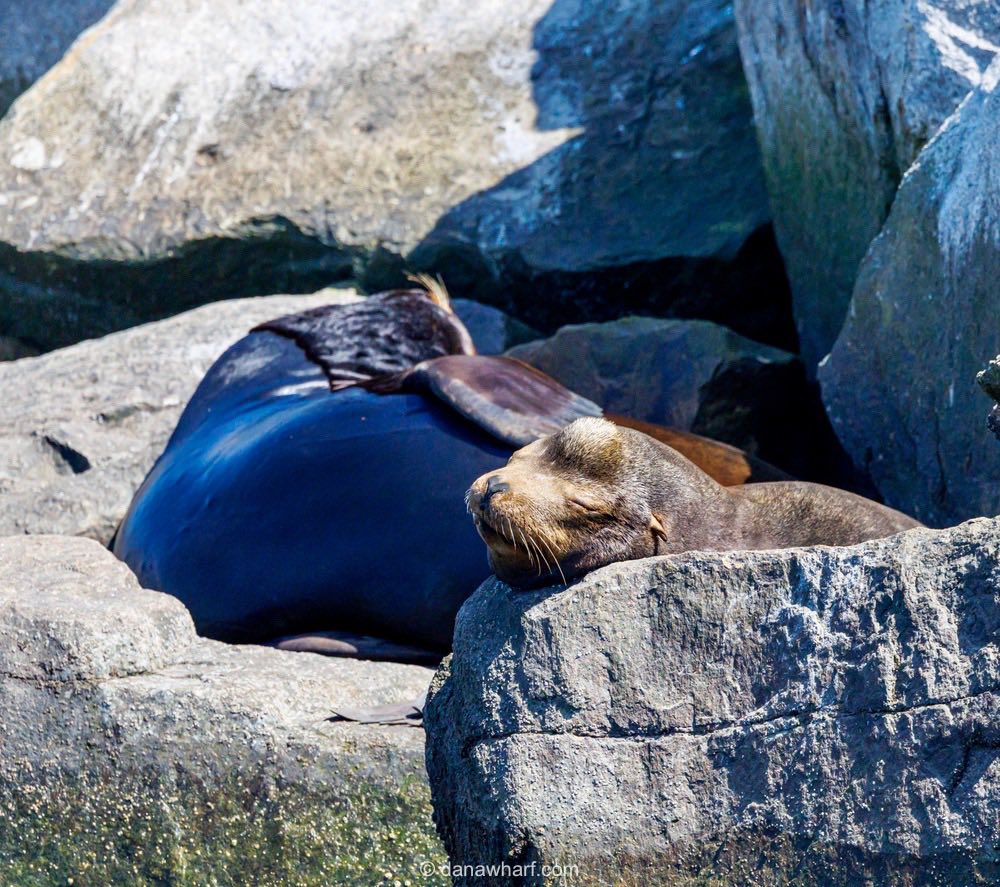
You don’t even need to get on a boat to see California sea lions in Dana Point. Walk down to the harbor and look at the jetty rocks near the harbor mouth. On any given day, you’ll likely see a group of sea lions hauled out, barking at each other, jostling for the best spot, and occasionally flopping into the water with a splash.
On our whale watching trips, sea lions are one of the most reliable sightings we have. Our naturalists point them out on nearly every trip, whether they’re lounging on the buoys, swimming alongside the boat, or foraging with dolphins and seabirds. They’re part of the daily fabric of life in Dana Point Harbor, and our captains and crew know their favorite spots by heart.
The best time of year? Sea lions are around year-round in Dana Point, but you’ll often see more of them in fall and winter when males migrate north from the Channel Islands breeding grounds. The harbor tends to be busiest with sea lions from about September through March.
See Them for Yourself
Whether you’re coming out for a whale watching tour during gray whale season, a sportfishing trip in the summer, or just walking the harbor on a sunny afternoon, California sea lions are part of what makes Dana Point special. They’re loud, they’re chaotic, and they’re impossible to ignore.
Next time you’re on one of our boats and you hear that unmistakable bark echoing off the jetty, you’ll know exactly what you’re looking at.