
What Marine Life Will You See Off Dana Point? A Season-by-Season Guide

People call us all the time with the same question: “What will we see if we come out this weekend?”
The honest answer is that we never know exactly what’s going to show up. The ocean doesn’t take reservations. But after 55 years of running boats out of Dana Point Harbor, we know the patterns. We know which species migrate through and when. We know which animals live here year-round. And we know that there’s never a bad time to get out on the water, because something is always happening off this coast.
Dana Point was designated the “Dolphin and Whale Watching Capital of the World” for a reason. The waters off our harbor sit at the edge of a deep underwater canyon where cold, nutrient-rich water wells up from the bottom, creating a feeding zone that attracts marine life from across the Pacific. It’s why the whales stop here. It’s why the dolphins never leave. And it’s why we’ve been doing this since 1971.
Here’s what you can expect to see, season by season.
Winter (December Through March): Gray Whale Migration
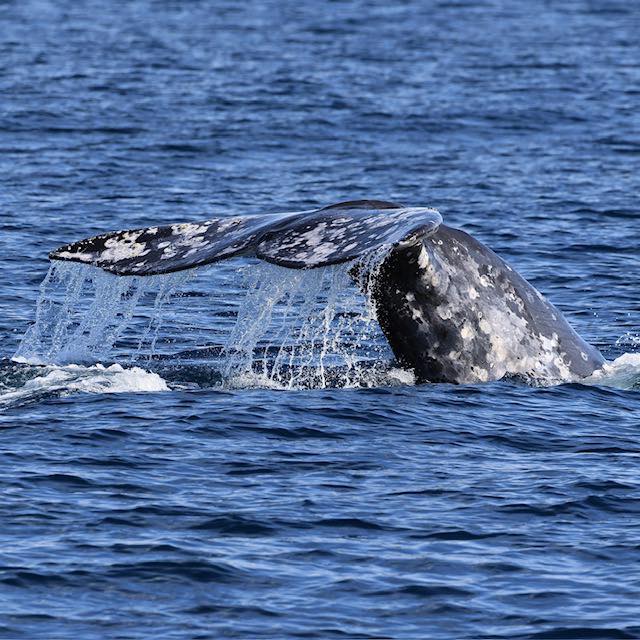
Winter is our busiest whale watching season, and the gray whale migration is the reason. Every year, roughly 20,000 gray whales travel from their summer feeding grounds near Alaska to their breeding lagoons in Baja California, passing right through the waters off Dana Point. The southbound migration peaks in January, and the northbound return peaks in March.
What you’ll see:
Gray whales are the star of winter trips. They travel close to shore (often within 1 to 3 miles), and they surface regularly to blow, giving our captains and guests clear, repeated looks. On peak days, we’ve counted a dozen or more gray whales on a single trip. Our blog on gray whale vs humpback whale identification can help you tell the species apart.
Fin whales are frequently spotted in winter, sometimes feeding just a few miles offshore. These are the second-largest animals on Earth, and our naturalists reported them on nearly every trip during the 2026 Festival of Whales in March.
Common dolphins are out in force year-round, and winter is no exception. Megapods of 500 to 2,000+ long-beaked common dolphins feeding on anchovies and squid are a regular feature. Learn the difference between dolphins and porpoises to know exactly what you’re watching.
California sea lions are piled on the harbor jetty and navigational buoys. You’ll hear them before you see them. Here’s how to tell them apart from seals.
Pacific white-sided dolphins show up more frequently in cooler months, often putting on acrobatic displays off the bow.
Best winter trip: Our standard 2-hour whale watching tour covers the prime gray whale migration corridor. Every trip during gray whale season has excellent odds of sightings.
Spring (April Through May): The Transition
Spring is when the ocean shifts gears. The last northbound gray whales are finishing their migration, the first humpbacks and blue whales of the year start arriving, and the water begins to warm.
What you’ll see:
Late gray whales still pass through in April, including mothers with calves traveling closer to shore for protection. These cow-calf pairs move slowly and are among the most memorable sightings of the year.
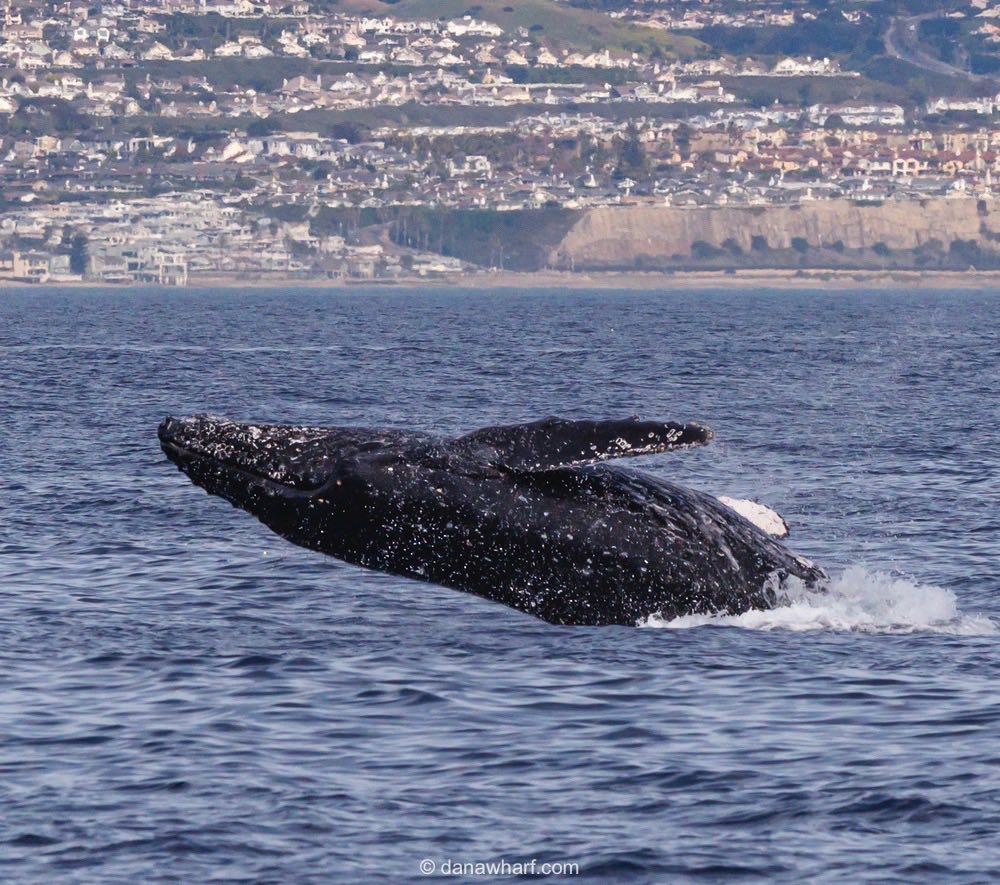
Humpback whales start appearing in April and May. They’re often feeding on krill and small fish near the surface, and they’re the most acrobatic of the large whales. Breaches, pectoral slaps, and tail lobs are all on the table.
Fin whales continue feeding in the area. Common dolphins remain abundant. Mola mola (ocean sunfish) begin showing up in warmer surface water, drifting near the surface and sometimes surprising guests who mistake them for a shark fin.
Guadalupe fur seals, a threatened species, are occasionally spotted on our longer pelagic birding trips far offshore.
Best spring trip: The 2-hour whale watch is excellent, and our 8-hour Ultimate Whale Watch gives you the range to find both the late gray whales and the early arrivals.
Summer (June Through August): Blue Whale Season
Summer brings the biggest animals on Earth to our doorstep. Blue whales, the largest creatures to have ever lived, feed on dense krill aggregations in the deep water off Dana Point from roughly June through September. Seeing a blue whale in person is something most people never forget.
What you’ll see:
Blue whales are the headline act. At up to 100 feet long and 200 tons, they dwarf everything else in the ocean. They feed by lunging through schools of krill, and when they surface, the blow can reach 30 feet high. Our definitive guide to blue whales covers the staggering details.
Humpback whales are active throughout summer, and they’re often closer to shore than the blue whales.
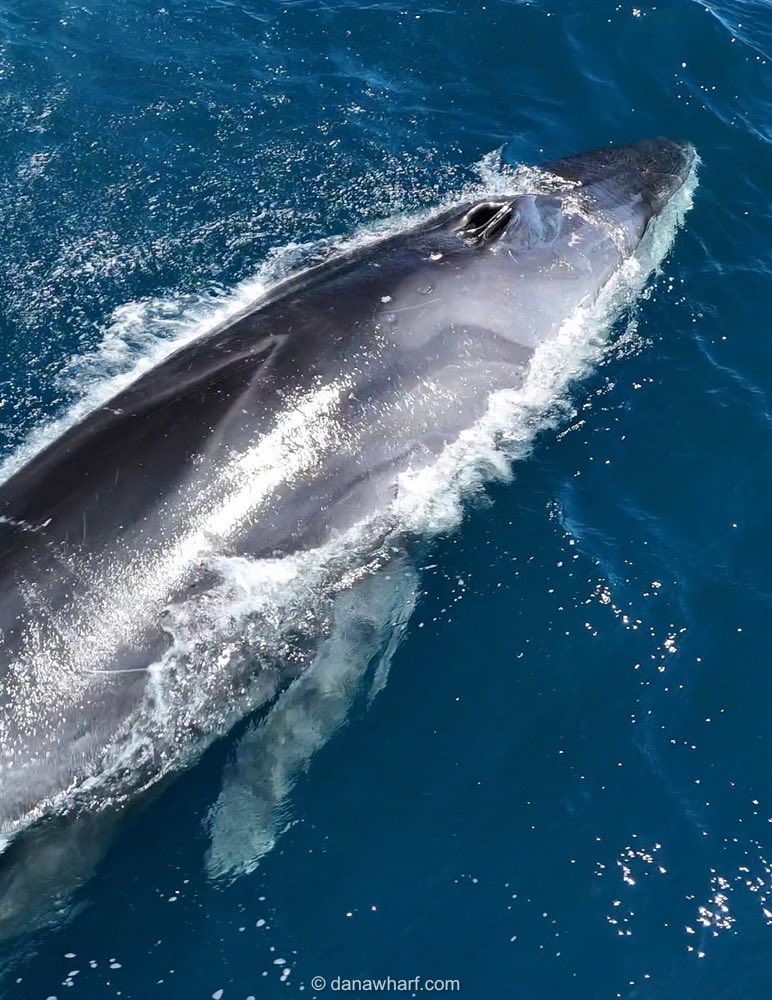
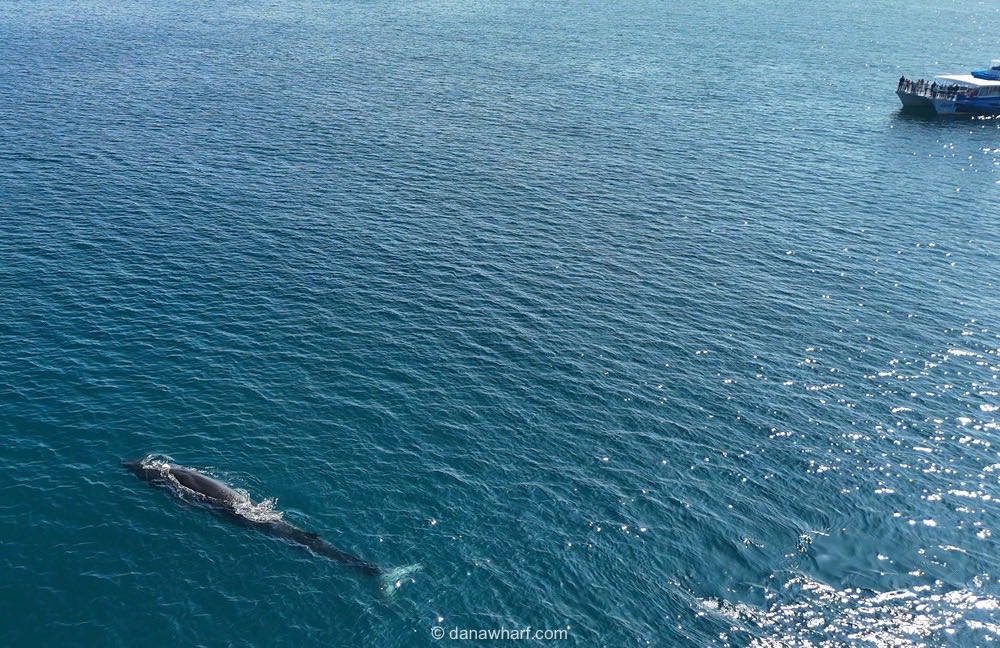
Fin whales continue to be a reliable sighting. Minke whales, the smallest of the baleen whales we see, occasionally make appearances.
Common dolphins are everywhere. Summer megapods can be enormous, stretching for miles. Bottlenose dolphins patrol the coast. Risso’s dolphins, with their scarred, ghostly-white bodies, are spotted from time to time.
Mako sharks follow the warm water and baitfish closer to shore. Our sportfishing fleet encounters them, and they’re occasionally spotted from whale watching boats. Our shark lifespan guide covers the species found in our waters.
Juvenile great white sharks move into nearshore waters during summer. Mola mola are at their most abundant. Jellyfish drift through the area, attracting the leatherback sea turtles that occasionally pass through.
Best summer trip: The standard 2-hour whale watch reaches blue whale territory. For the most comprehensive experience, the 8-hour Ultimate Whale Watch covers more ground and often finds multiple species in a single day.
Fall (September Through November): The Feeding Frenzy
Fall is the sleeper season. Many visitors don’t realize that whale watching in Dana Point is excellent from September through November, but our captains know this is when the ocean is at its most productive.
What you’ll see:
Blue whales linger through September and sometimes into October before heading to their tropical breeding grounds.
Humpback whales remain active, and fall is when some of the most dramatic feeding behavior occurs. When anchovies and sardines ball up near the surface, humpbacks can be seen lunge-feeding just hundreds of yards from the boat.
Fin whales are still around. Orcas (killer whales), while never guaranteed, make their most memorable appearances in fall when prey concentrations are high. An orca sighting is rare enough that it stops the boat and makes the local news. Our orca guide covers everything about these apex predators.
Common dolphins remain in huge numbers. California sea lions increase in the harbor as males migrate back from their Channel Islands breeding grounds.
Mola mola sightings peak. Stingrays are at their most abundant nearshore (remember the shuffle if you’re at the beach before your trip).
Best fall trip: The 2-hour whale watch is excellent, and you’ll often share the boat with fewer visitors than in peak summer. Private charters in fall are a fantastic option for groups wanting the ocean nearly to themselves.
Year-Round: What You’ll Always See
No matter what month you visit, certain species are essentially guaranteed:
Common dolphins. Our naturalists report common dolphins on nearly every single trip, all year long. Pods range from a few dozen to several thousand.
Bottlenose dolphins. Coastal bottlenose dolphins cruise past the harbor mouth regularly. They’re less numerous than common dolphins but always a welcome sighting.
California sea lions. On the jetty. On the buoys. In the water alongside the boat. Year-round residents and impossible to miss.
Seabirds. Brown pelicans, cormorants, terns, gulls, and murres are always present. Our pelagic birding trips go further offshore for alcids, shearwaters, and rare species.
And remember: Dana Wharf guarantees sightings. If you don’t see a good showing of whales or dolphins, you receive a “whale check” to come back on another trip. The checks never expire.
Plan Your Trip
The question isn’t whether there’s anything to see off Dana Point. There’s always something. The question is what you’re most hoping to see, and we can help you pick the right time.
Want gray whales? Come in January through March. Blue whales? June through September. The biggest variety of species in a single trip? Late spring and fall are hard to beat. Just want to see dolphins, sea lions, and whatever the ocean serves up? Any day of the year works.
We run whale watching trips daily, year-round, departing from Dana Point Harbor. We also offer sportfishing, private charters, and pelagic birding for guests who want something different.
Fifty-five years on the water, and the ocean still surprises us. It’ll surprise you too.