How to Catch Halibut in California: A Beginner’s No-Fluff Guide
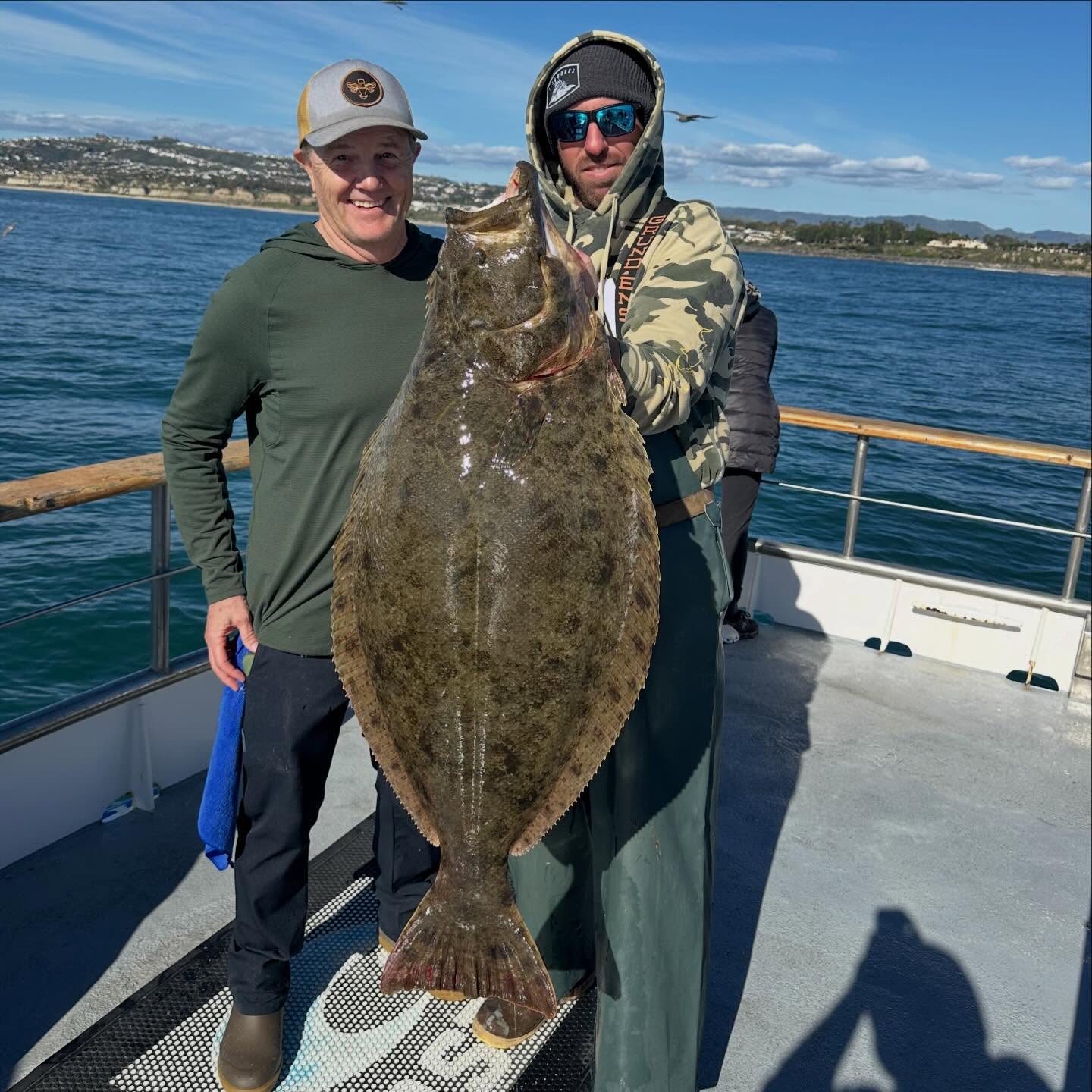
Halibut are one of the most satisfying fish you can target in Southern California. They fight hard, they’re genuinely challenging to catch, and they taste incredible. They’re also one of the most misunderstood fish by beginners, which leads to a lot of days staring at a still rod tip and going home empty-handed.
I’ve watched thousands of anglers go after halibut on our Dana Wharf fishing trips and our annual Halibut Derby. Here’s what actually works.
Know Your Target: California Halibut vs Pacific Halibut
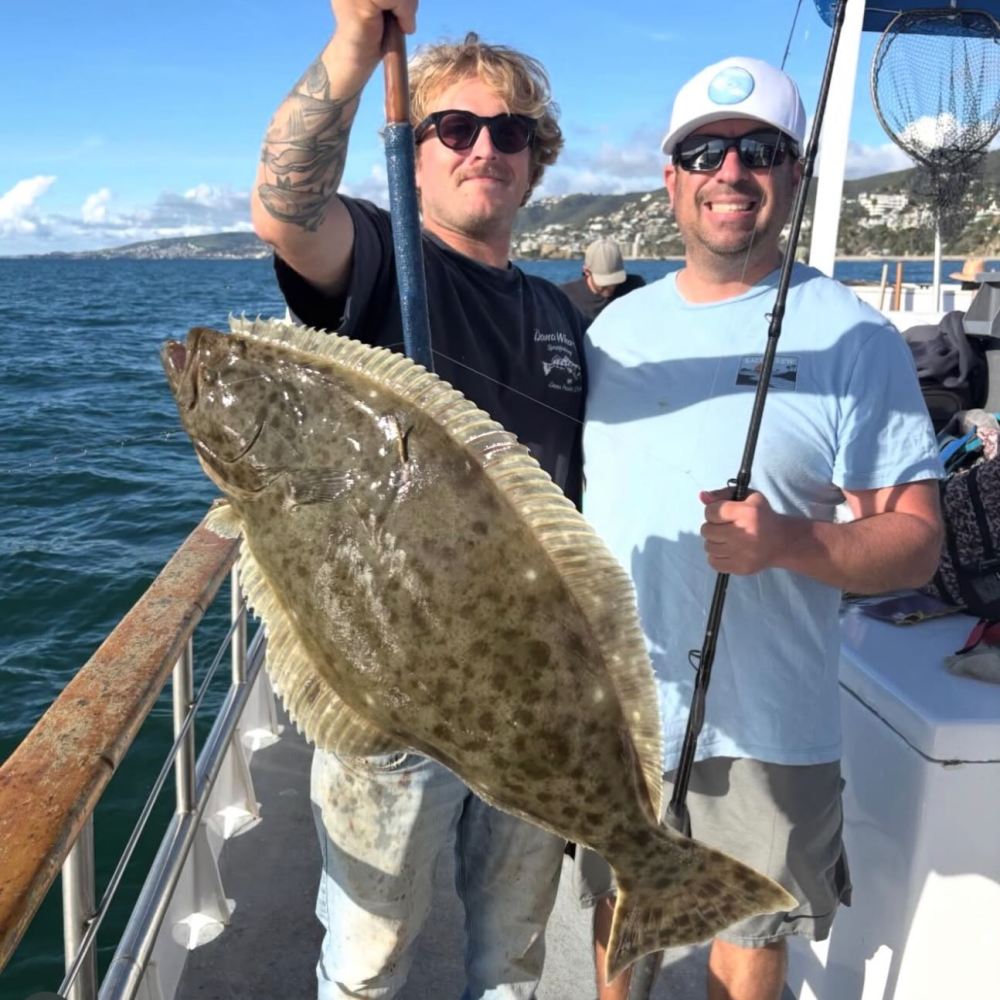
First, a clarification: California halibut (Paralichthys californicus) are different from Pacific halibut (Hippoglossus stenolepis). California halibut are what you’re targeting in Southern California — they can reach up to 72 pounds at their absolute largest, though most catches are in the 5–20 pound range. Pacific halibut, found further north off Alaska, grow significantly larger — the IGFA record stands at 459 pounds.
California halibut are flatfish that live on the sandy bottom. They’re ambush predators — they bury themselves in sand and wait for prey to swim by, then explode upward to catch it. That hunting behavior shapes every effective tactic for catching them.
Where to Find Them
Sandy bottom. That’s the short answer. California halibut live in sandy areas, generally in 10-100 feet of water, though they can be found shallower and deeper depending on season and conditions.
Look for structure edges — places where sandy bottom meets rock or kelp, where current creates a break. Halibut stage on the downcurrent side of structure to ambush prey being swept past. River mouths, harbors, and bay entrances can be productive because they funnel baitfish through predictable areas.
Our Fish Count page is updated regularly and shows current halibut activity in the Dana Point area — worth checking before you plan your trip.
The Best Time of Year
Spring through early summer (April through July) is peak season in Southern California. Water temperatures warm up, bait moves into shallower areas, and halibut follow. The Dana Wharf Halibut Derby runs January through March specifically to target halibut in their winter staging areas — it’s a different game than summer fishing but can be surprisingly productive for big fish.
Bait vs. Lures
Live bait wins. If you can get live anchovies, queenfish, or small mackerel, you have a significant advantage. Hook the bait through the nose or back, let it swim near the bottom, and wait. Halibut are visual predators — a live, struggling baitfish triggers their instinct.
If live bait isn’t available: fresh dead anchovy or squid on the bottom is your next best option. Keep it moving slightly — lift and drop the rod tip to animate the bait.
Lures: Swimbaits and soft plastic lures in anchovy or smelt colors can be very effective, especially if you’re covering water to find fish. A 4-5 inch swimbait on a 1/4 to 1 oz jig head, bounced along the bottom, is a classic setup. Yo-Yo iron jigs also work when halibut are actively feeding.
The Setup
Medium to medium-heavy rod, 15-20 lb monofilament or 20-30 lb braided line with a fluorocarbon leader. Fluorocarbon is less visible underwater and makes a difference when halibut are being picky in clear water.
For live bait, use a Carolina rig or a live bait hook on a light enough weight to keep the bait near the bottom without pinning it to the sand.
The Most Common Mistake Beginners Make
Not giving it enough time. Halibut are not always in an aggressive feeding mode. Some days you’re covering ground and working for every bite. Patience combined with methodically working through known halibut areas is more effective than moving around constantly or giving up after an hour.
Also: when you feel a halibut bite, wait. They often mouth the bait before committing. Jerking too early pulls the bait away. Let the fish take it, feel the weight, and then set the hook firmly.
Do You Need a License?
Yes — a California fishing license is required for anyone 16 and older fishing in state waters. Our blog has a complete California Fishing License Guide that covers everything you need to know.
If you’re booking one of our sportfishing trips, we’ll handle the logistics and get you set up. Our crew has fished these waters for years and knows exactly where to put you. Check our full Fishing Guide for even more on what to target throughout the year.