
How Many Hearts Does an Octopus Have? (And Other Facts That Don’t Seem Real)
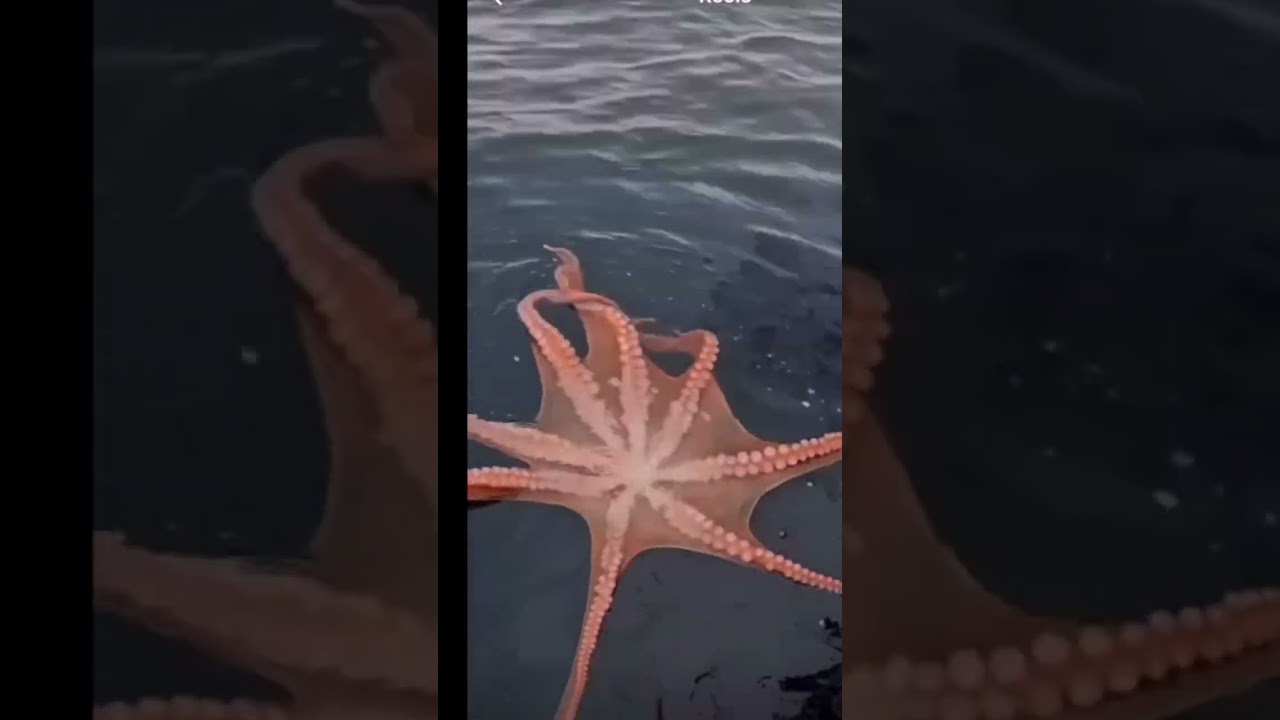
Three. An octopus has three hearts.
If that sounds excessive, wait until you hear the rest. Octopuses also have nine brains, blue blood, zero bones, and arms that can taste food. They can change color in a fraction of a second, squeeze through any gap their beak fits through, and solve puzzles that stump some mammals. They are, by almost every measure, one of the strangest and most impressive animals in the ocean.
Here at Dana Wharf, the California two-spot octopus lives in the rocky reefs and kelp beds just off the Dana Point coast. You probably won’t spot one from the deck of the Dana Pride (they’re masters of hiding), but knowing they’re down there, doing all the things we’re about to describe, makes the ocean feel that much more extraordinary.
Three Hearts: Why One Isn’t Enough
An octopus has three hearts because its copper-based blood needs extra help getting around the body.
Two of the hearts are called branchial hearts. Their only job is to pump blood to the gills, where it picks up oxygen from the water. The third heart, the systemic heart, takes that freshly oxygenated blood and circulates it to the organs and muscles throughout the body.
Here’s the strange part: the systemic heart actually stops beating when the octopus swims. This is why octopuses prefer crawling along the ocean floor rather than swimming through open water. Swimming exhausts them because their organs temporarily lose that steady supply of oxygenated blood. Crawling lets all three hearts do their job.
Blue Blood: Copper Instead of Iron
Octopus blood is blue. Not metaphorically. Literally blue.
Human blood is red because it uses hemoglobin, an iron-based protein, to carry oxygen. Octopus blood uses hemocyanin, a copper-based protein, instead. When hemocyanin binds with oxygen, it turns the blood blue. When the blood is deoxygenated, it turns clear.
The copper-based system is less efficient at carrying oxygen than our iron-based system, which is part of why octopuses need three hearts to compensate. But hemocyanin has a major advantage: it works better in cold, low-oxygen environments. For an animal that often lives in deep or cool water, this trade-off makes perfect sense.
Nine Brains: One Central, Eight in the Arms
This is the fact that blows people away. An octopus has nine brains.
One central brain sits between the eyes and is shaped like a doughnut, wrapping around the esophagus (which means food has to pass through the brain every time the octopus eats). This central brain handles higher-level processing, vision, and overall coordination.
But each of the eight arms also has its own cluster of nerve cells, essentially a mini-brain, at its base. These arm brains control the movement and sensory processing for that individual arm. About two-thirds of an octopus’s total neurons are located in the arms, not in the central brain.
This means an octopus’s arms can act semi-independently. One arm can be prying open a clam while another explores a crevice and a third holds onto a rock. The central brain sends general instructions (“go find food in that direction”), but the arms figure out the details on their own. Each arm can taste, touch, and respond to stimuli without waiting for instructions from headquarters.
Severed octopus arms can even continue to respond to stimuli after being completely detached from the body. In experiments, amputated arms have been observed curling up and reacting to being pinched, sometimes for hours after separation.
Eight Arms (Not Tentacles)
This is a common mix-up: octopuses have eight arms, not tentacles.
The difference matters. Arms have suckers running their entire length. Tentacles are longer, thinner appendages with suckers only at the club-shaped tips. Squid have both arms and tentacles (eight arms plus two tentacles, for a total of ten limbs). Octopuses have only arms, all eight of them lined with roughly 2,000 suckers that can grip, taste, and smell simultaneously.
If an arm is lost to a predator or injury, it grows back. In most species, a fully functional replacement arm regenerates in about four months.
Zero Bones
An octopus has no bones, no shell, and no external skeleton. The only hard structure in the entire animal is its beak, a parrot-like structure made of chitin that the octopus uses to bite into prey. Because the beak is the only rigid part of its body, an octopus can squeeze through any opening large enough for the beak to fit through. A 50-pound octopus can compress itself through a gap the size of a quarter.
This is famously why octopuses are such effective escape artists in aquariums. Staff at facilities around the world have documented octopuses opening their tank lids, squeezing through drainage pipes, and even making their way into neighboring tanks to eat fish before returning to their own enclosure.
Octopus Eyes: Remarkably Advanced
Octopus eyes are shockingly similar to human eyes. They have a lens, a retina, and an iris, all developed through convergent evolution (meaning octopuses and humans evolved these structures independently, not from a common ancestor).
Octopuses have excellent vision and can recognize individual humans. Scientists at the Seattle Aquarium documented octopuses that remembered specific staff members and reacted differently to people who fed them versus people who irritated them, including squirting water at the person they didn’t like.
Scientists initially believed octopuses were color-blind because they have only one type of color receptor (humans have three). But more recent research suggests that the unusual dumbbell shape of their pupils may act like a prism, allowing them to distinguish colors by focusing different wavelengths of light, though the science isn’t fully settled.
How Smart Are Octopuses?
Extremely smart. Octopuses have the largest brain-to-body ratio of any invertebrate, and their cognitive abilities rival some vertebrates.
Documented octopus intelligence includes navigating complex mazes, solving multi-step puzzles, opening screw-top jars from the inside, using coconut shells and other objects as tools and shelters, playing with objects (tossing bottles, bouncing toys in water currents), recognizing individual humans and responding differently to each, and learning by observation (watching other octopuses solve problems and then replicating the solution).
The 2020 documentary “My Octopus Teacher” brought widespread attention to octopus intelligence by documenting the relationship between a diver and a wild common octopus in South Africa. The film showed behaviors that many biologists had already observed in the field: curiosity, problem-solving, apparent trust, and complex decision-making.
How Long Do Octopuses Live?
Not long. Tragically, most octopus species live only one to two years. Even the giant Pacific octopus, the largest species (reaching up to 16 feet across), typically lives only three to five years.
The short lifespan is partly tied to reproduction. After mating, male octopuses stop eating and die within months. Females lay their eggs (up to 100,000 or more in some species) and then guard them obsessively, sometimes for months, without eating. Once the eggs hatch, the female dies. This is called semelparity: a single reproductive event followed by death.
It’s one of the most bittersweet facts in marine biology. An animal this intelligent, this adaptable, this remarkable, and it lives for barely a year or two. If octopuses lived longer and passed knowledge to their offspring, some scientists have speculated they might develop even more sophisticated behaviors.
Camouflage: Better Than Any Technology
Octopuses can change their color, pattern, and even skin texture in a fraction of a second. They do this using chromatophores, tiny pigment-filled sacs in their skin that expand or contract to reveal different colors. Some species also have reflective cells called iridophores and light-scattering cells called leucophores that add additional visual effects.
The result is camouflage that puts military technology to shame. An octopus can match a complex coral background, mimic the texture of a rock, or flash warning patterns at a predator, all in the time it takes you to blink.
Octopuses Off Dana Point
The species most commonly found in Southern California waters is the California two-spot octopus (Octopus bimaculoides), named for the two blue eyespots (false eyes) on either side of its head. It’s a smaller species, with an arm span of about two feet, and it lives in the rocky reefs, tide pools, and kelp beds along the Dana Point coast.
Two-spot octopuses are nocturnal hunters, emerging at night to feed on small crabs, clams, snails, and shrimp. During the day, they hide in crevices and holes, often sealing the entrance with rocks and shell fragments. If you’ve ever been tidepooling along the Orange County coast and noticed a small pile of empty crab shells arranged outside a rocky hole, you may have found an octopus’s front door.
The California two-spot octopus is also one of the most studied octopus species in the world, used extensively in neuroscience and behavior research at universities across Southern California.
On our whale watching tours and sportfishing trips, octopuses occasionally make surprise appearances. Our fishing guests sometimes pull up an octopus that’s grabbed onto bait or tackle, and divers in the area encounter them regularly in the kelp forests off Dana Point. They’re one of the ocean’s quietest residents, but once you know they’re there, you’ll never look at the rocky bottom the same way again.