
How Long Do Sharks Live? A Species-by-Species Breakdown
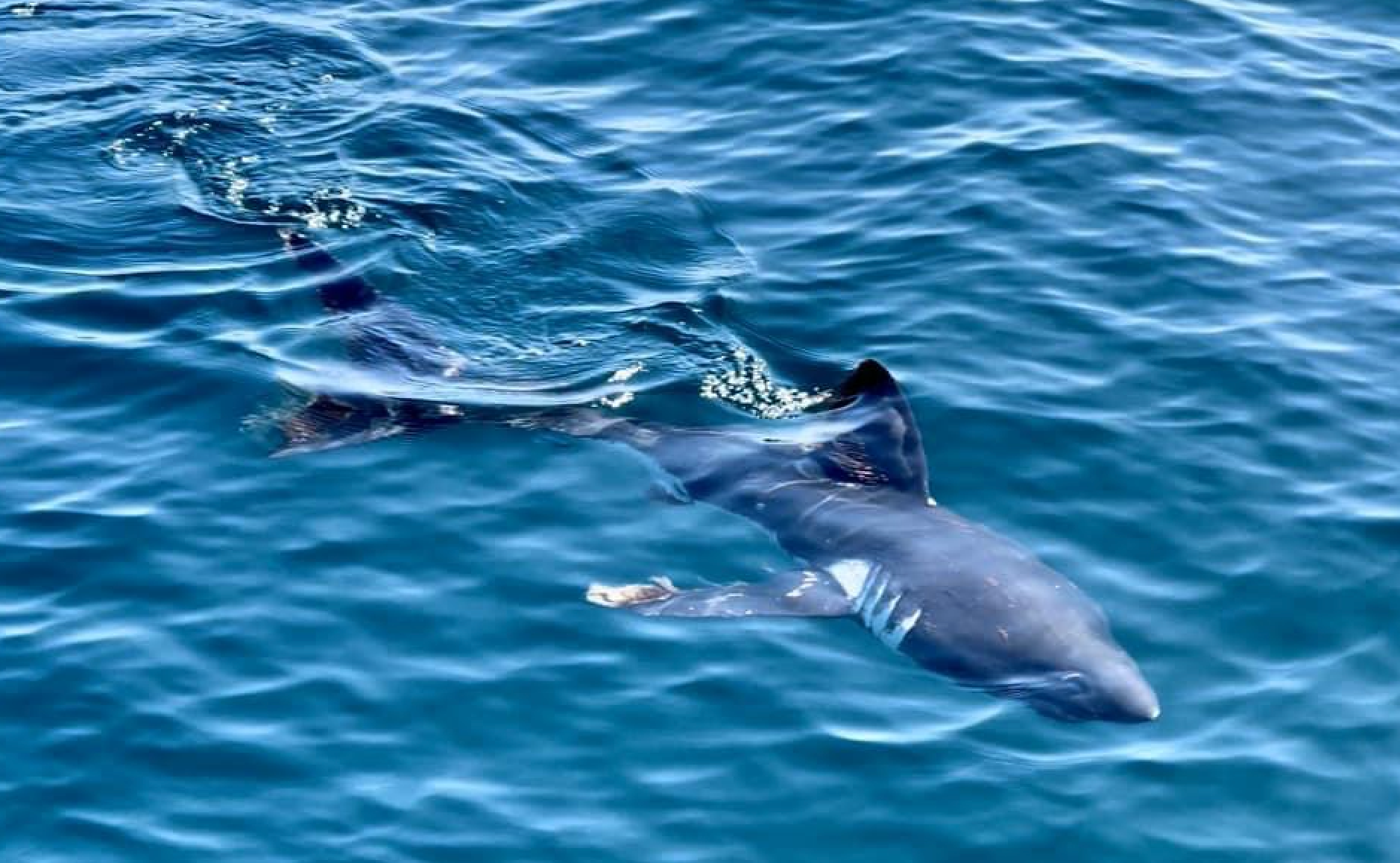
If you spend enough time on the water off Dana Point, you’ll eventually see a shark. Maybe it’s a mako launching out of the water near San Clemente Island, or a blue shark cruising past the boat on a pelagic trip. It might even be a great white spotted from the air just offshore.
One question we hear from guests all the time is: how long do these animals actually live?
The short answer is that most sharks live somewhere between 20 and 30 years. But the range across species is enormous. Some sharks barely make it to 15, while one species can live for over 400 years, making it the longest-lived vertebrate on the planet.
Here’s the breakdown by species.
Greenland Shark: The Oldest Living Vertebrate
The Greenland shark holds a record that no other animal with a backbone can touch. Scientists estimate these massive, slow-moving sharks live at least 250 years, and possibly over 500.
A landmark 2016 study published in the journal Science used radiocarbon dating of proteins in the sharks’ eye lenses to estimate their ages. The oldest individual in the study was estimated at roughly 392 years old, with a margin of error of plus or minus 120 years. Even at the low end, that makes the Greenland shark the longest-lived vertebrate ever documented.
Part of the explanation is their environment. Greenland sharks inhabit the deep, frigid waters of the North Atlantic and Arctic, where their metabolism runs incredibly slowly. They grow less than one centimeter per year and don’t reach sexual maturity until they’re over 100 years old. Their top swimming speed is under two miles per hour.
You won’t see a Greenland shark on a Dana Wharf trip (they stick to near-freezing Arctic waters), but they’re worth knowing about because they completely rewrite what we think is possible for shark longevity.
Great White Shark: 50 to 70+ Years
Great whites were once thought to live around 20 to 30 years. More recent research using bomb carbon dating (which uses radioactive isotopes from Cold War nuclear tests as a biological timestamp) has pushed that estimate significantly higher. Current science suggests great whites can live 50 to 70 years or more.
That longer lifespan also means slower maturation. Great whites take years to reach reproductive age, which makes their population especially vulnerable to overfishing and bycatch. The species is currently listed as Vulnerable by the IUCN.
Great white sharks are regularly spotted in Southern California waters, including off Dana Point, San Clemente, and the Channel Islands. They’re most commonly seen in warmer months when juvenile great whites move into shallow nearshore waters. Our boats occasionally spot them during whale watching trips, and aerial surveys have documented them within a few hundred yards of the beach.
Whale Shark: 70 to 100+ Years
The whale shark, the largest fish in the ocean, is also one of the longest-lived shark species. Scientists believe whale sharks can live 70 to 100 years or more, though pinning down exact ages remains difficult because they’re so hard to monitor in the open ocean.
Like other long-lived sharks, whale sharks grow slowly and mature late. They’re filter feeders, not predators, cruising the tropical and subtropical oceans scooping up plankton, krill, and small fish. Whale sharks are listed as Endangered by the IUCN due to bycatch, vessel strikes, and targeted fishing in some regions.
Whale sharks are tropical animals and are not found in the waters off Dana Point. But if you ever travel to places like the Sea of Cortez (just a few hours south of us), you’ll find one of the best whale shark snorkeling destinations in the world.
Spiny Dogfish: 70 to 100+ Years
The spiny dogfish is a small, unassuming shark that most people wouldn’t recognize. But it has one of the longest lifespans of any shark species, with some individuals documented at over 100 years old.
Spiny dogfish are found in temperate and subarctic waters worldwide, including the Pacific coast from Alaska down through California. They’re a deepwater species, usually found between 150 and 1,500 feet deep, and they travel in large schools sometimes numbering in the thousands.
Shortfin Mako: 28 to 35 Years
The shortfin mako is one of the fastest sharks in the ocean, capable of bursts over 40 miles per hour. They typically live around 28 to 35 years, though some researchers believe individual makos may reach 45 years.
Mako sharks are the species you’re most likely to hear about from our sportfishing fleet. They’re found in the waters off Dana Point, particularly during warmer months when they follow baitfish and squid closer to shore. If you’ve ever seen a Dana Wharf press photo of a shark launching completely out of the water, there’s a good chance it was a mako. They’re known for their incredible aerial acrobatics when hooked. The shortfin mako is currently listed as Endangered by the IUCN due to severe overfishing globally.
Blue Shark: 15 to 20 Years
The blue shark is one of the most abundant shark species in the open ocean, but it has a relatively short lifespan of about 15 to 20 years. In captivity, that number drops even further, sometimes to as low as 8 years.
Blue sharks are pelagic (open-ocean) animals that feed primarily on squid and small fish. They’re commonly encountered in deeper waters off Southern California, and our overnight fishing trips out of Dana Wharf occasionally cross paths with them in the open water beyond the shelf.
Tiger Shark: 27 to 50 Years
Tiger sharks have an average lifespan of about 27 years in the wild, though some individuals have been documented living into their 40s and possibly up to 50 years. They’re one of the larger predatory sharks, reaching 14 feet or more, and they’re famous for eating just about anything (license plates, tires, and other debris have been found in their stomachs alongside their normal diet of sea turtles, fish, and marine mammals).
Tiger sharks are primarily a tropical and warm-temperate species. They’re uncommon in Southern California waters but not unheard of. Occasional sightings have been reported during unusually warm El Nino years.
Hammerhead Sharks: 20 to 40+ Years
The great hammerhead, the largest of the nine hammerhead species, typically lives 20 to 30 years, with some individuals exceeding 40. Scalloped hammerheads have a similar range.
Hammerheads prefer warmer waters and are not common off Dana Point, though scalloped hammerheads are occasionally spotted in Southern California during warm-water events. Large schools of scalloped hammerheads gather near seamounts and offshore islands in the Eastern Pacific, including areas south of the Channel Islands.
Leopard Shark: Up to 30 Years
The leopard shark is one of the most recognizable sharks in Southern California, thanks to its distinctive dark saddle markings. They live about 25 to 30 years in the wild.
Leopard sharks are common in shallow bays, estuaries, and nearshore waters along the California coast. If you’ve waded into the water at a Southern California beach and seen a small shark cruising the sandy bottom, it was probably a leopard shark. They’re harmless to humans and feed on worms, clams, crabs, and small fish.
How Do Scientists Determine a Shark’s Age?
Aging sharks isn’t easy. Unlike bony fish, sharks don’t have otoliths (calcium structures in the inner ear that accumulate layers like tree rings). Instead, scientists have traditionally counted growth bands that form in a shark’s cartilaginous vertebrae. Each band roughly represents one year of growth.
The problem is that this method isn’t always accurate. A 2018 analysis that reviewed more than 50 studies found that shark ages are likely underestimated in about 30% of studied populations. The growth bands don’t always form at a consistent rate, especially in older sharks.
Newer techniques like bomb carbon dating have helped. Nuclear weapons testing in the 1950s and 1960s released a spike of carbon-14 into the atmosphere (and eventually into the ocean), creating a chemical timestamp in any tissue that formed during that period. By measuring carbon-14 levels in a shark’s vertebrae or eye lens proteins, scientists can estimate when those tissues were formed, and therefore how old the shark is.
This is the method that revealed Greenland sharks’ extraordinary lifespan and has also pushed up the estimated age of great whites and other species.
Sharks Off Dana Point
You might not think of Dana Point as “shark country,” but several species are found in the waters where our boats operate:
California’s waters are home to great whites (particularly juveniles in nearshore areas), blue sharks (offshore), shortfin makos (seasonally), thresher sharks (common offshore), leopard sharks (nearshore and in harbors), horn sharks (in kelp beds), and soupfin sharks (near the bottom). Our captains and crew see these animals as part of the natural ecosystem we operate in every day.
On our whale watching tours, sharks are an occasional bonus sighting. On our sportfishing trips, understanding shark behavior and habitat is part of what makes our captains so effective at reading the water and finding fish.
The sharks that swim past our boats have been navigating these waters since long before Dana Wharf was founded in 1971. Some of the great whites spotted off our coast today may still be swimming these same routes decades from now.