
How Long Do Sea Turtles Live? A Species-by-Species Guide
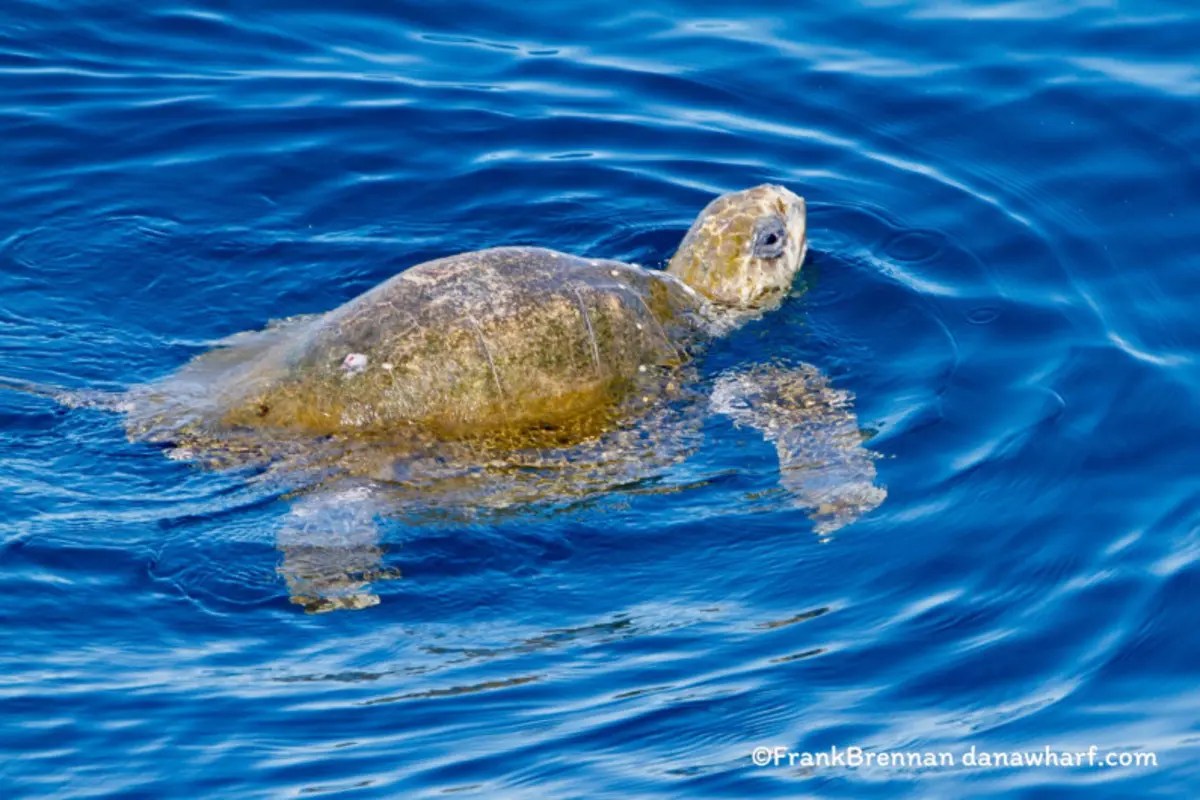
On a whale watching trip out of Dana Wharf in March 2026, our naturalist Laura Lopez reported something unusual alongside the day’s fin whales and common dolphins: a sea turtle.
It doesn’t happen every trip. Sea turtles are not an everyday sighting in Dana Point waters. But when one shows up, whether it’s an olive ridley floating near the surface or a leatherback passing through on its way from Indonesia to the Pacific Northwest, it stops everyone on the boat.
One of the first questions guests ask is how long these animals live. The answer is surprisingly close to how long we do.
The Short Answer: 50 to 100 Years
Most sea turtles live somewhere between 50 and 100 years, making their lifespans similar to humans. Some researchers believe certain individuals may exceed 100 years, though documenting exact ages in the wild is extremely difficult because sea turtles routinely outlive the research projects studying them.
Sea turtles take decades to mature. Depending on the species, they don’t reach reproductive age until they’re 10 to 35 years old. Once mature, females return to the same beach where they were born, sometimes after 30 years at sea, to lay their eggs. Some females continue nesting into their 70s and 80s.
The tragedy is that so few make it that far. Only about 1 in 1,000 hatchlings survives to adulthood. Between predators on the beach (birds, crabs, raccoons), predators in the water (sharks, large fish), and human threats (fishing nets, pollution, habitat destruction), the odds are stacked against them from the moment they hatch.
Lifespan by Species
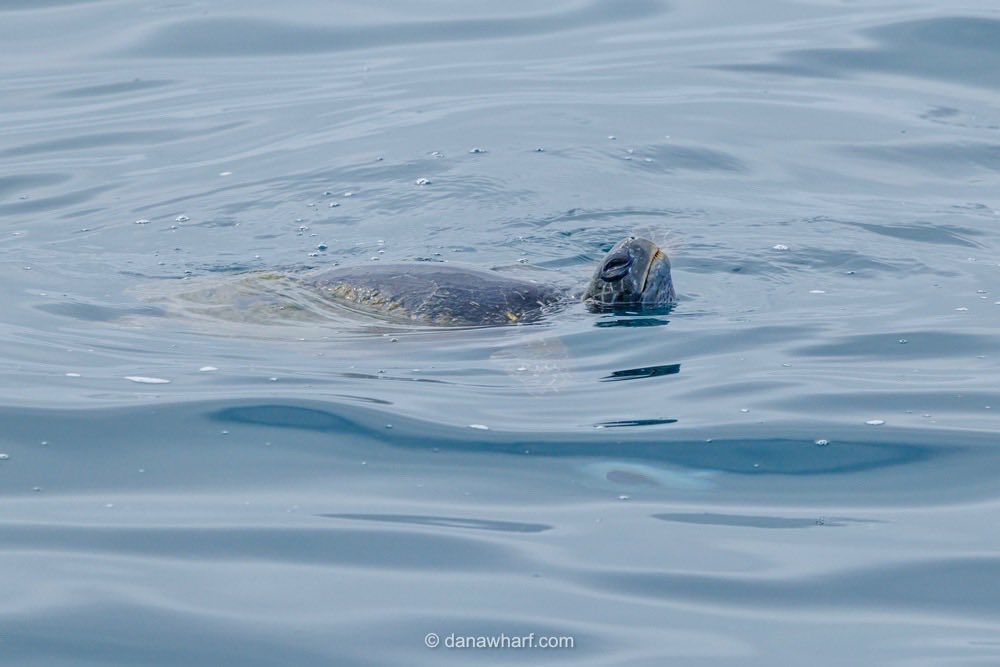
There are seven species of sea turtles on Earth. Six are classified as endangered or critically endangered. Here’s what we know about how long each one lives.
Leatherback Sea Turtle
The leatherback is the giant of the sea turtle world. Adults can reach 6 to 9 feet long and weigh up to 2,000 pounds. They’re the only sea turtle species with a soft, flexible shell instead of a hard one.
Estimated lifespan: possibly 100 years or more, though confirmed data is limited. Leatherbacks take about 15 to 20 years to reach maturity.
Leatherbacks are the species most relevant to Dana Point because they make one of the longest migrations of any marine animal, traveling over 12,000 miles round trip across the Pacific Ocean. They follow jellyfish, their primary food source, from nesting beaches in Indonesia all the way to the coast of the Pacific Northwest. Their migration route passes through Southern California waters, and occasional sightings occur off our coast.
Green Sea Turtle
The green sea turtle is the largest of the hard-shelled species, growing up to 3 to 4 feet long and weighing 300 to 350 pounds. They’re named for the green color of their body fat, not their shell.
Estimated lifespan: 70 to 80 years. Green turtles take 20 to 30 years to reach maturity, one of the longest maturation periods of any reptile.
Green sea turtles are the only herbivorous sea turtle species as adults, feeding primarily on seagrass and algae. The oldest known living sea turtle is believed to be Myrtle, a green turtle at the New England Aquarium, estimated at around 90 years old.
Loggerhead Sea Turtle
Loggerheads are named for their large heads and powerful jaws, which they use to crush hard-shelled prey like whelks and conchs. Adults are typically 3 feet long and weigh around 250 pounds.
Estimated lifespan: 80 to 100 years. Loggerheads mature at 25 to 35 years. Big Bertha, a famous nesting loggerhead tracked since 1980 in Georgia, was estimated through genetic testing to be 85 to 91 years old.
Pacific loggerheads hatch on beaches in Japan and migrate across the entire Pacific Ocean to feed in waters off Baja California. Juveniles occasionally appear in Southern California waters, particularly during warmer water years.
Hawksbill Sea Turtle
The hawksbill is one of the most beautiful sea turtles, with an overlapping pattern of colorful shell plates (scutes) that has made them a target for the illegal wildlife trade. Adults reach about 2.5 feet and weigh 100 to 150 pounds.
Estimated lifespan: 50 to 60 years or more. They mature at roughly 20 to 25 years.
Hawksbills are tropical reef dwellers that feed primarily on sponges. They’re critically endangered, and their range doesn’t include Southern California.
Olive Ridley Sea Turtle
The olive ridley is the most abundant sea turtle species but is still classified as vulnerable. They’re small by sea turtle standards, reaching about 2 feet long and 100 pounds.
Estimated lifespan: 50 to 60 years. They reach maturity at 10 to 15 years, faster than most other species.
Olive ridleys are famous for their mass nesting events called “arribadas,” where thousands of females come ashore simultaneously. Dana Point made the news in 2019 when an olive ridley was spotted off the coast three days in a row, a rare sighting for Southern California waters.
Kemp’s Ridley Sea Turtle
The Kemp’s ridley is the smallest and most endangered sea turtle species. Adults are about 2 feet long and weigh around 100 pounds.
Estimated lifespan: approximately 30 years, the shortest of any sea turtle species. They mature faster than other species, at about 10 to 15 years.
Kemp’s ridleys are found primarily in the Gulf of Mexico and western Atlantic. Their population crashed to fewer than 300 nesting females by 1986 before conservation efforts began to slowly rebuild numbers.
Flatback Sea Turtle
The flatback is the only sea turtle species not found worldwide. It lives exclusively in the waters around Australia and Papua New Guinea.
Estimated lifespan: estimated at 50 to 80 years, though data is limited because it’s the least studied of all seven species. Flatbacks are unique in having the smallest geographic range and producing the fewest (but largest) eggs of any sea turtle.
How Do Scientists Figure Out a Sea Turtle’s Age?
This is harder than you’d expect. Unlike trees, sea turtles don’t come with easy-to-read growth rings on the outside. And unlike some fish, you can’t just pull a scale and count the layers.
The primary method is called skeletochronology. Scientists take a cross-section of a bone (usually the humerus, the upper arm bone in the front flipper), remove the calcium, stain the tissue, and examine it under a microscope. The bone shows growth rings similar to tree rings, and each ring roughly corresponds to one year of growth.
The catch: this technique can only be performed on deceased turtles. You can’t do it on a living animal. This limitation, combined with the fact that sea turtles outlive most research projects, is why lifespan estimates still carry significant uncertainty.
Newer genetic techniques, like the one used to estimate Big Bertha’s age through maternal DNA in eggshells, are opening new doors. By establishing mother-daughter relationships between nesting females, researchers can estimate the minimum age of the mother based on how long it takes for daughters to reach reproductive age.
Why Are Sea Turtles Endangered?
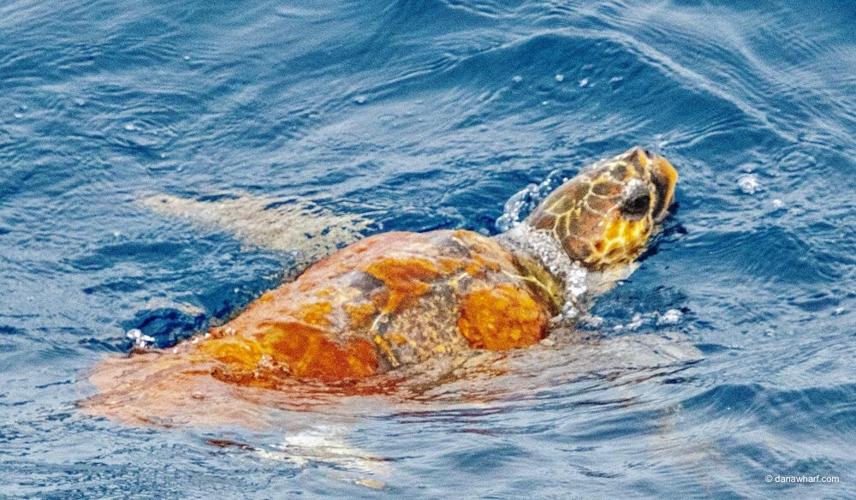
Six of the seven species are endangered or critically endangered. The primary threats are human-caused:
Bycatch in commercial fishing gear is the single greatest threat. Thousands of sea turtles drown each year when caught in shrimp trawls, longlines, and gill nets. Turtle excluder devices (TEDs) in shrimp nets have helped, but enforcement is inconsistent.
Habitat loss affects both nesting beaches and ocean feeding grounds. Coastal development, light pollution (which disorients hatchlings heading for the sea), beach erosion, and climate change all reduce the quality and availability of nesting sites. Rising sand temperatures from climate change also skew sex ratios because a sea turtle’s sex is determined by the temperature of the nest during incubation.
Plastic pollution kills sea turtles that mistake floating plastic bags for jellyfish. Entanglement in marine debris, ingestion of microplastics, and chemical contamination all compound the problem.
Illegal harvesting of eggs, meat, and shells continues in some parts of the world despite international protections.
Sea Turtles and Dana Point
Sea turtles are rare but real sightings off Dana Point. Our whale watching naturalists have reported sea turtles on trips multiple times in recent years, and the 2019 olive ridley sighting made regional news.
The most likely species to pass through our waters is the leatherback, which migrates along the California coast following jellyfish blooms. If you read our blog post about jellyfish, you know that moon jellyfish and Pacific sea nettles are found in Dana Point waters. These are exactly the prey that leatherbacks travel thousands of miles to eat.
Pacific loggerhead juveniles are also occasionally spotted in Southern California, especially during El Nino years when warmer water pushes their range northward from Baja California.
Every sea turtle sighting on a Dana Wharf trip is a reminder of how connected our local waters are to the global ocean. The turtle drifting past our boat may have hatched on a beach in Indonesia, Mexico, or Japan. It may be 50 years old or more. And it chose to be here, in the same water we’re cruising through, because the ocean off Dana Point is rich enough to attract life from around the world.
Book your next Dana Wharf whale watching trip and see what shows up.