
Are Blue Whales Endangered? Here’s Where They Actually Stand
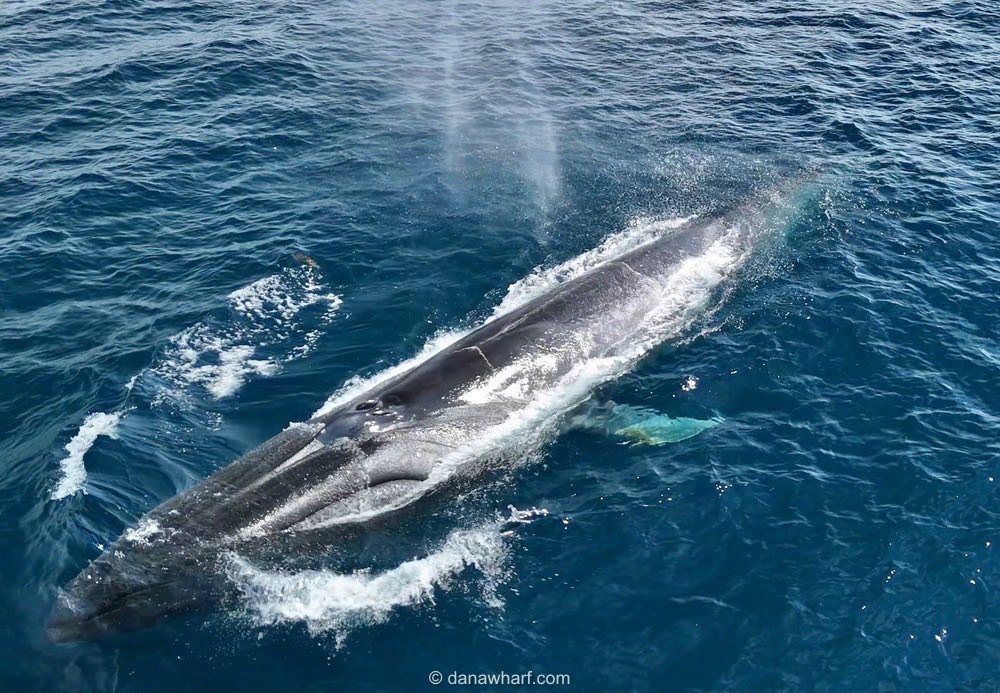
Every summer when we’re running our offshore whale watching trips out of Dana Point, somebody on the boat has a moment. A blue whale surfaces close — maybe 50 feet away — and there’s this collective silence. It happens every time. Then someone asks, almost in a whisper, “Are they endangered?”
It’s a completely understandable reaction. The more time you spend with these animals, the more you want to know they’re going to be okay. So here’s the real answer, with no sugarcoating.
Technically, Yes — But It’s Complicated
Blue whales are currently classified as “Endangered” on the IUCN Red List (International Union for Conservation of Nature), per the most recent assessment conducted in 2018. Before commercial whaling was banned, the global blue whale population was estimated to be somewhere between 200,000 and 350,000 individuals. By the time the International Whaling Commission banned commercial blue whale hunting in 1966, there were as few as 10,000–25,000 left.
Whalers specifically targeted blue whales because of their size — a single whale could yield an enormous amount of oil. The hunting was catastrophically effective.
The Recovery: Slow but Real
The good news is that blue whale populations have been recovering since the hunting ban. Current estimates put the global population somewhere between 10,000 and 25,000, which sounds small but represents real growth over several decades. The eastern North Pacific population — the ones that visit Southern California every summer — is thought to be one of the healthier subpopulations, potentially numbering around 2,000.
Scientists track individual blue whales using photo identification — specifically their mottled skin patterns, which are unique to each whale like fingerprints. Long-term monitoring has confirmed that some of the same individuals return to Southern California waters year after year.
The Ongoing Threats
Recovery is happening, but it’s not smooth sailing (pun intended). Blue whales today face a different set of threats:
Ship strikes: Blue whales travel in some of the busiest shipping lanes in the world, including the Santa Barbara Channel off our coast. Vessel strikes are one of the leading causes of blue whale mortality. There are active programs working to slow ship speeds in key whale habitats to reduce collisions.
Entanglement: Getting caught in fishing gear remains a serious issue for large whales generally. Blue whales are less susceptible than some other species due to their diet (they eat krill, not fish that tend to be in nets), but it still happens.
Climate change: Krill — the almost-exclusive food source for blue whales — are highly sensitive to ocean temperature and acidification. As water temperatures shift, krill distributions are changing, and blue whales have to work harder to find dense feeding patches.
Ocean noise pollution: Blue whales communicate using infrasound — incredibly low-frequency calls that can travel thousands of miles through the ocean. Noise from shipping traffic interferes with this communication in ways scientists are still trying to understand.
What Recovery Actually Looks Like
“Endangered” sounds urgent, and it is — but it doesn’t mean these animals are on the brink of vanishing next year. What it means is that the population is still small enough and faces enough ongoing threats that without continued protection, the recovery could reverse.
The fact that we see blue whales reliably every summer in our waters is actually a good sign. Dana Point and the Southern California Bight are critical summer foraging habitat. When we watch a blue whale feeding here, we’re seeing a success story in progress — imperfect, fragile, but real.
What You Can Do
Honestly, going on a whale watch matters more than it might seem. Whale watching generates economic value that supports conservation policy and research funding. It also changes people — it’s hard to care abstractly about an endangered species you’ve never seen. Seeing one up close tends to make it personal.
Dana Wharf also supports ocean conservation through our charity partnerships. And our partnership with the American Cetacean Society through our ACS Whale & Dolphin Information program helps connect passengers with real science.
If you want to see blue whales for yourself, our 8-Hour Ultimate Whale Watch runs in summer specifically to reach their feeding grounds. It’s worth every minute.